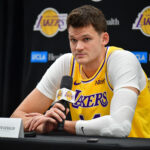

The Los Angeles Lakers have spent this offseason fixated on their stars and their hole at center.
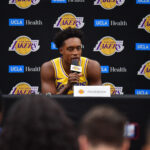
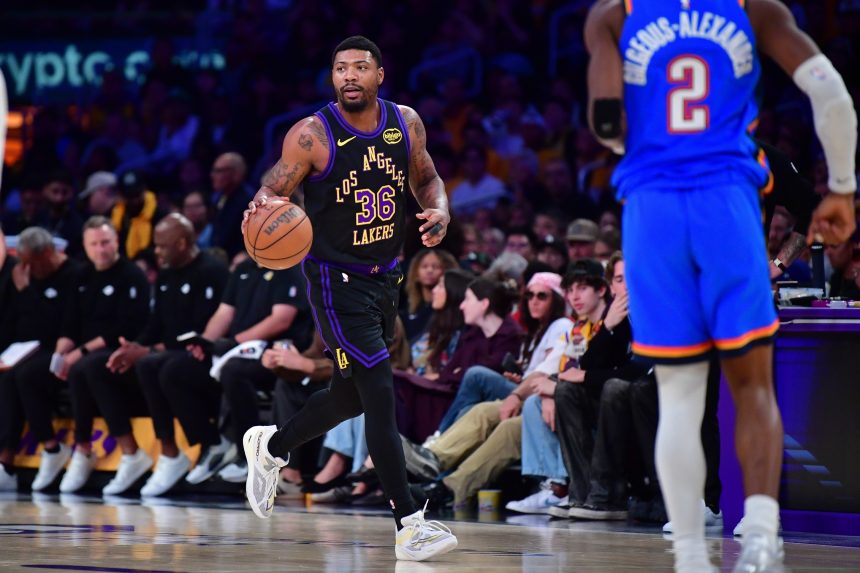
The player who could slip away first is neither. Marcus Smart, the veteran guard who turned into the heartbeat of the Lakers’ defense and bench, is weighing a decision that may pull him out of Los Angeles before free agency even opens, and a familiar Western Conference rival is waiting if he does.
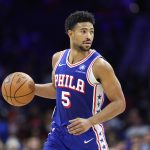
Smart is “very much” considering declining his $5.4 million player option for the 2026-27 season ahead of Monday’s June 29 deadline, Marc Stein and Jake Fischer reported on The Stein Line. If he opts out, he becomes an unrestricted free agent, and the Houston Rockets loom as a genuine threat to sign him.
Why Houston makes sense for Smart
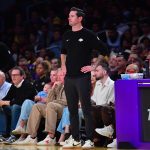
The Rockets’ interest is not random. Houston coach Ime Udoka coached Smart during the 2021-22 season in Boston, the year Smart was named Defensive Player of the Year and the Celtics reached the NBA Finals. It was the best stretch of Smart’s career, and the kind of player-coach bond that forms during a Finals run is exactly the pull that moves a free agent. Stein and Fischer cast Houston as a logical destination if Smart reaches the open market, with the Rockets in the market for backcourt help.
There is a wrinkle the Lakers will not enjoy. The team chasing Smart is the same one he helped eliminate two months ago, which turns a routine free-agency rumor into something closer to payback. For a Rockets group that watched a banged-up Los Angeles team end its season, prying away the guard who did much of the damage would be a tidy form of revenge.
What Smart meant to the Lakers
The raw numbers undersell him. Smart averaged 9.3 points, 3.0 assists and 2.8 rebounds per game on 39.5 percent shooting, with 33.1 percent from three, across 62 games this past season, per Basketball-Reference. That is a complementary line, not a featured one, and it is also beside the point with a player whose value lives on the defensive end and in the margins.
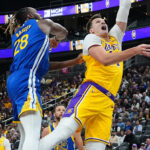
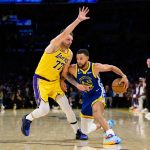
His value showed up loudest in the playoffs. In the first-round upset of those same Rockets, with Luka Doncic and Austin Reaves sidelined by injuries, Smart carried the backcourt and shouldered a creation load he had not handled in years.
His Game 3 was the signature night, a 21-point, 10-assist performance with five steals in a 112-108 overtime win that swung the series. A 32-year-old former Defensive Player of the Year is not supposed to be the engine of a playoff series, and for a week against Houston, Smart was exactly that. The Rockets saw it up close, which is part of why they are calling now.
The replacement problem
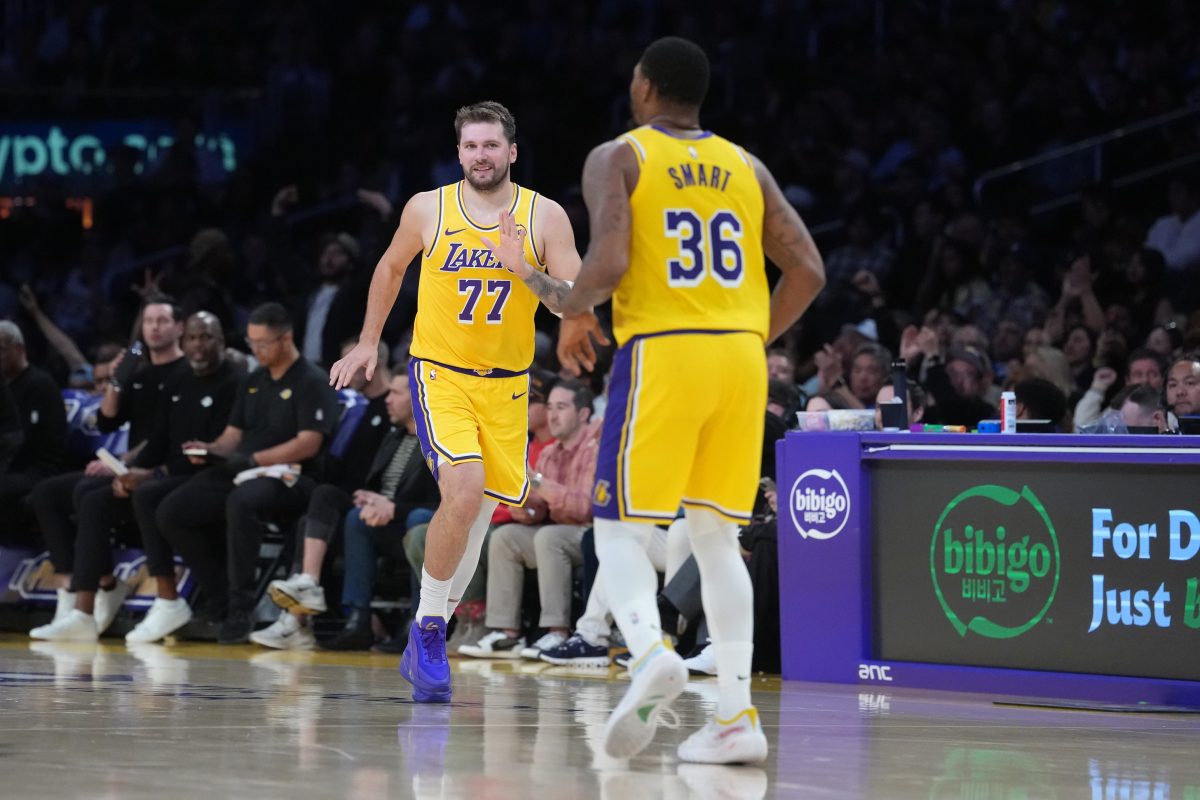
Smart did not arrive in Los Angeles by accident. He signed with the Lakers last offseason after a buyout from the Washington Wizards, and Doncic personally pushed to bring him in, the kind of internal endorsement that usually signals a player a team intends to keep. ESPN’s Dave McMenamin has reported that the Lakers are eager to retain him.
That is the bind. The Lakers want Smart back, but wanting and keeping are different problems once another team with money enters the picture. The market behind him is thin, and the specific blend he offers, point-of-attack defense, positional versatility and a veteran’s command of late-game possessions, is hard to replace at his price.
Losing him would not just subtract a rotation guard; it would remove the defensive backbone of a backcourt built around two players, Doncic and Reaves, who are not known for stopping anyone.
The cap squeeze
Here is where the romance of a reunion meets the Lakers’ ledger. Los Angeles projects to have nearly $50 million in spending power, but most of that has a destination already, since Doncic has made a starting center the team’s stated priority, and a productive center commands far more than a backup guard.
If the Lakers operate as a cap-space team to chase that center, the cleanest tool left to give Smart a raise is the room exception, worth roughly $9.5 million. That would be a meaningful bump on the $5.1 million he played for this past season, but it is not obviously enough to beat what a team like Houston, with more flexibility, could put in front of him.
The same flexibility that funds the center hunt is the flexibility that could cost the Lakers their best perimeter defender, which is the quiet tension running underneath the entire offseason. The front office already navigated this once with the Reaves contract, and the same math now applies to a smaller name with an outsized role.
Smart’s situation also rhymes with the other option decision the Lakers are tracking. Just as Deandre Ayton is expected to pick up his option, Smart is leaning the other way, toward declining his for a shot at more, and the two choices point in opposite directions for a team trying to hold its rotation together while upgrading it.
What happens next
The clock is the story now. Smart has until Monday, June 29, to make his option call, and free agency opens the following day.
If he opts out, the Lakers cannot simply match an offer the way they could with a restricted free agent, which is what makes Houston’s interest more dangerous than it would be otherwise. They would have to win him on the open market, against a coach he already trusts and a roster with room to pay.
None of this means Smart is gone. A player can decline an option, test the market and still re-sign with the team he prefers, and Smart’s fit alongside Doncic and Reaves is real.
But the comfortable assumption that he would simply be back is no longer safe. The Lakers spent the spring planning to add to this roster. The next 48 hours will tell them whether they first have to fight to keep a piece of it.