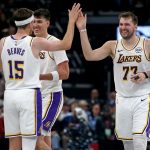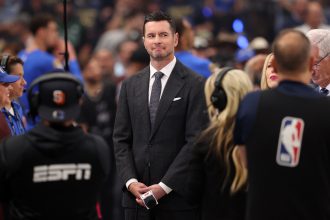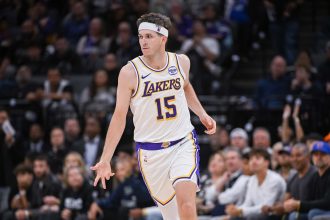

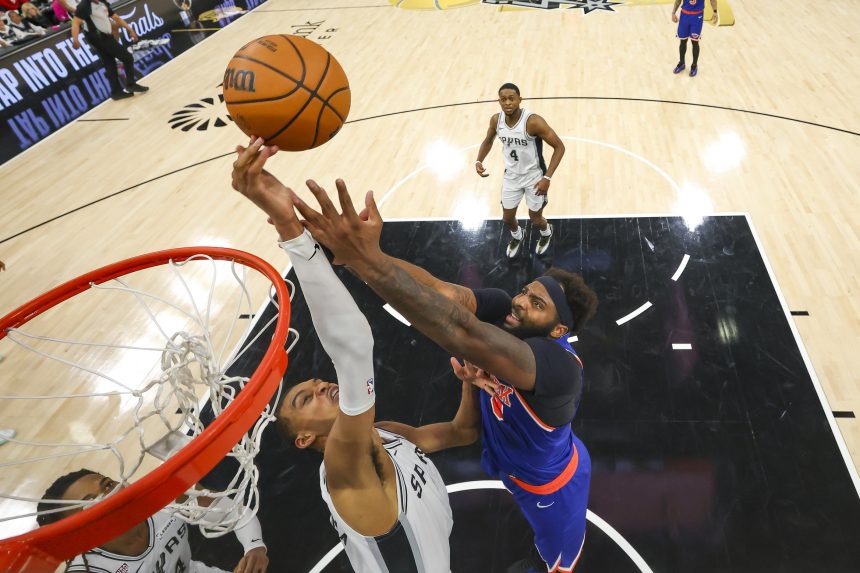
The defining question of the Los Angeles Lakers’ offseason is no longer whether they will upgrade at center. It is how.
With the 2026 NBA Draft set for Tuesday and free agency opening June 30, the front office is running out of runway to deliver on the roster overhaul it promised Luka Doncic, and the center position sits at the center of that promise. The need is not subtle.
After getting swept by the Oklahoma City Thunder in the Western Conference semifinals, the Lakers were exposed in the paint, and Deandre Ayton proved to be the wrong archetype to pair with Doncic. The front office has made a starting center its clear priority, and Doncic himself has reportedly pushed for it directly. The question now is which name the Lakers can actually land, and every realistic path comes with a different mix of cost, fit and risk. Here is the full board, broken down by how the Lakers could acquire each target.
Why a Center, and Why This Archetype
The Lakers do not just need size. They need a specific kind of big man. Doncic has built his career operating alongside vertical lob threats who can finish above the rim, protect the paint and create extra possessions on the offensive glass, the kind of player who turns one of the best passers in NBA history into an even more dangerous one.
The numbers underline the gap. Los Angeles finished near the bottom of the league in offensive rebounding last season, a glaring weakness for a team trying to contend in a Western Conference loaded with elite size in Victor Wembanyama and Nikola Jokic. Per ESPN’s Dave McMenamin, Doncic has made his preference for an “A-list center” clear to the front office, and the names the Lakers have pursued reflect that.
The Restricted Free Agents: High Upside, Real Risk
The two names that would most satisfy Doncic’s directive both come with a complication: they are restricted free agents, meaning their current teams can match any offer sheet.
According to McMenamin’s reporting for ESPN, Detroit’s Jalen Duren and Utah’s Walker Kessler are the two restricted bigs who fit the bill. Duren is the flashier option, a 22-year-old who averaged 19.5 points and 10.5 rebounds during the regular season and earned an All-Star nod and All-NBA Third Team honors as Detroit claimed the East’s top seed. The catch is twofold: his playoff production dipped to 10.2 points and 8.5 rebounds per game, and Detroit has shown no interest in letting him walk.
McMenamin captured Detroit’s stance bluntly, relaying that he had already heard from inside the Pistons organization after his initial report.
“I already heard from someone in the Detroit organization today that said, ‘Hey, tell Luka to leave [Jalen Duren] alone,'” McMenamin said.
Kessler may be the more realistic target of the two. At 7-foot-2, he is one of the league’s premier rim protectors and shot-blockers, and the links between Kessler and the Lakers predate Doncic’s arrival. His value got a boost from an unexpected direction: per The Athletic’s Sam Amick, Kessler is unhappy in Utah and wants out after turning down a five-year, $140 million extension offer. That friction is the kind of opening the Lakers need to make a restricted bid worthwhile.
The structural problem applies to both. Once a player signs an offer sheet, his current team has up to 48 hours to match, a window that would tie up a large chunk of the Lakers’ available cap space while Detroit or Utah decides. That risk could cost Los Angeles a shot at other targets, which makes the restricted route powerful in theory but inefficient in practice.
The Unrestricted Options: Cleaner, But Fragile
The unrestricted market offers a simpler path, no match window, no offer sheet, just a direct signing, but the best fits there carry durability questions.
Mitchell Robinson has been the most frequently cited attainable target. He is an elite offensive rebounder who ranked near the top of the league in that category despite limited minutes, exactly the second-chance production the Lakers lacked. The complication is that his market may be drying up.
Per Jake Fischer of The Stein Line, Robinson is “very open” to remaining with the New York Knicks, and ESPN’s Brian Windhorst reported the Knicks have engaged in cursory negotiations to keep him.
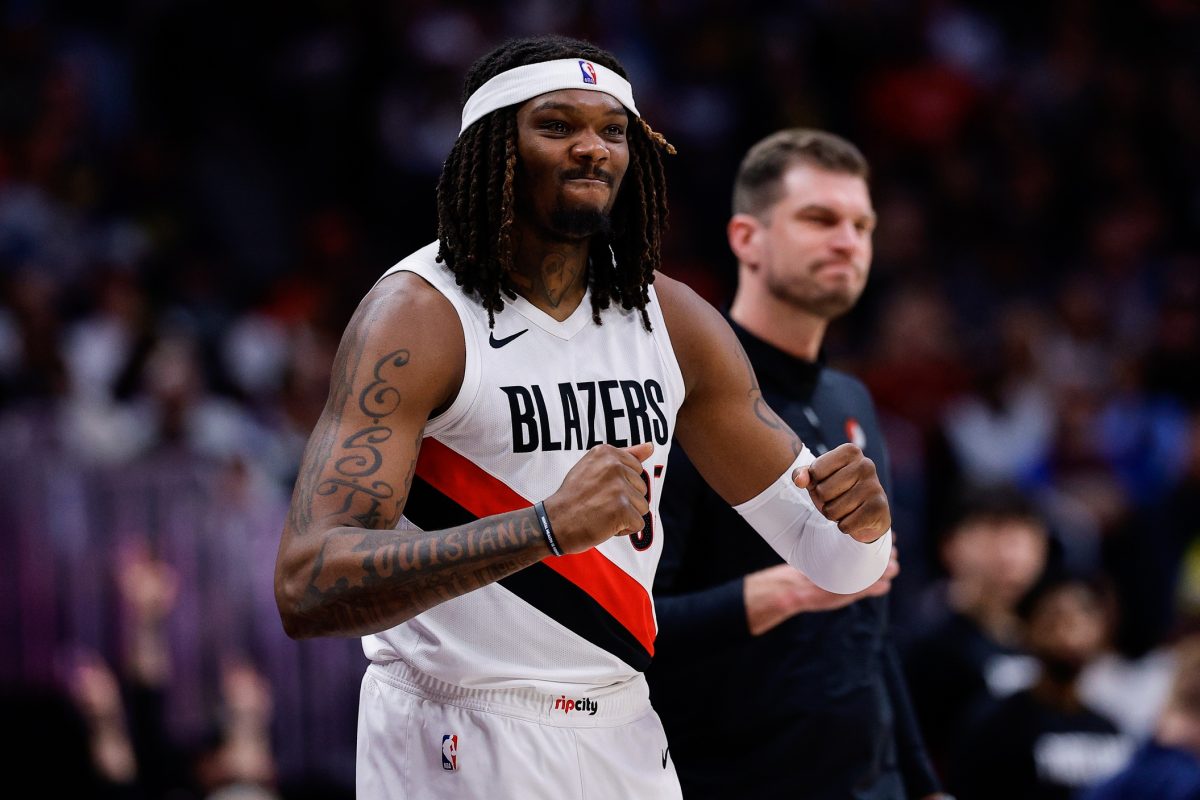
The same Fischer report linked the Lakers to Portland’s Robert Williams III, another athletic, lob-catching defensive presence who fits the Doncic blueprint. The problem with Williams is availability in its starkest form. As Fischer noted, both Robinson and Williams are open to staying put, and Williams has played more than 60 games just once in eight seasons, an injury history that makes counting on him for a full starting workload a gamble.
For a lower-cost fallback, Nikola Vucevic represents a different kind of target, a steady, proven veteran who will not stress a defense vertically but rebounds, holds his ground and does not need plays drawn up for him. At 35, he profiles as a stopgap on a short deal rather than a long-term answer, useful only if the more appealing paths fall through.
The Trade Route: Nic Claxton
If free agency does not deliver, the Lakers could pivot to the trade market, where Brooklyn’s Nic Claxton has surfaced as a fit. Claxton offers the defense and athleticism the Lakers covet, and coach JJ Redick has been a vocal admirer for years. As a media awards voter before he returned to coaching, Redick rated Claxton’s defense notably higher than his peers did, an outlier endorsement that signals real belief in his game.
The trade path avoids the restricted match window entirely, but it carries its own cost: draft capital and young players. Any package built around Claxton would likely require Los Angeles to part with assets like the No. 25 pick or a future first, a meaningful price for a team with limited tradable picks. It is a cleaner mechanism than a restricted offer sheet, but not a cheaper one.
The Cap Reality Tying It All Together
Every option on this board runs through the same financial bottleneck. The Lakers could have close to $50 million in cap space, but that figure is fragile and depends almost entirely on their own free agents. The team must first sort out Austin Reaves, who is heading for unrestricted free agency, and LeBron James, whose own number directly affects how much room is left for anyone else.
As The Athletic’s Sam Amick has detailed, paying Reaves at market value could leave little room to keep James content, which means the money available to chase a center is not fixed. It is whatever is left after the Lakers settle their two highest priorities.
That is the real tension of this offseason. The Lakers have identified the need, done their homework on the targets and created genuine flexibility. Whether they can convert that into an A-list center depends on solving a cap puzzle that is still missing several pieces, with the clock running down to a draft on Tuesday and free agency a week later.