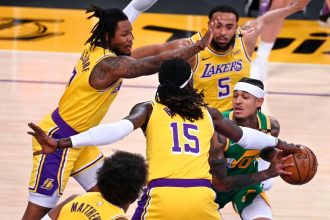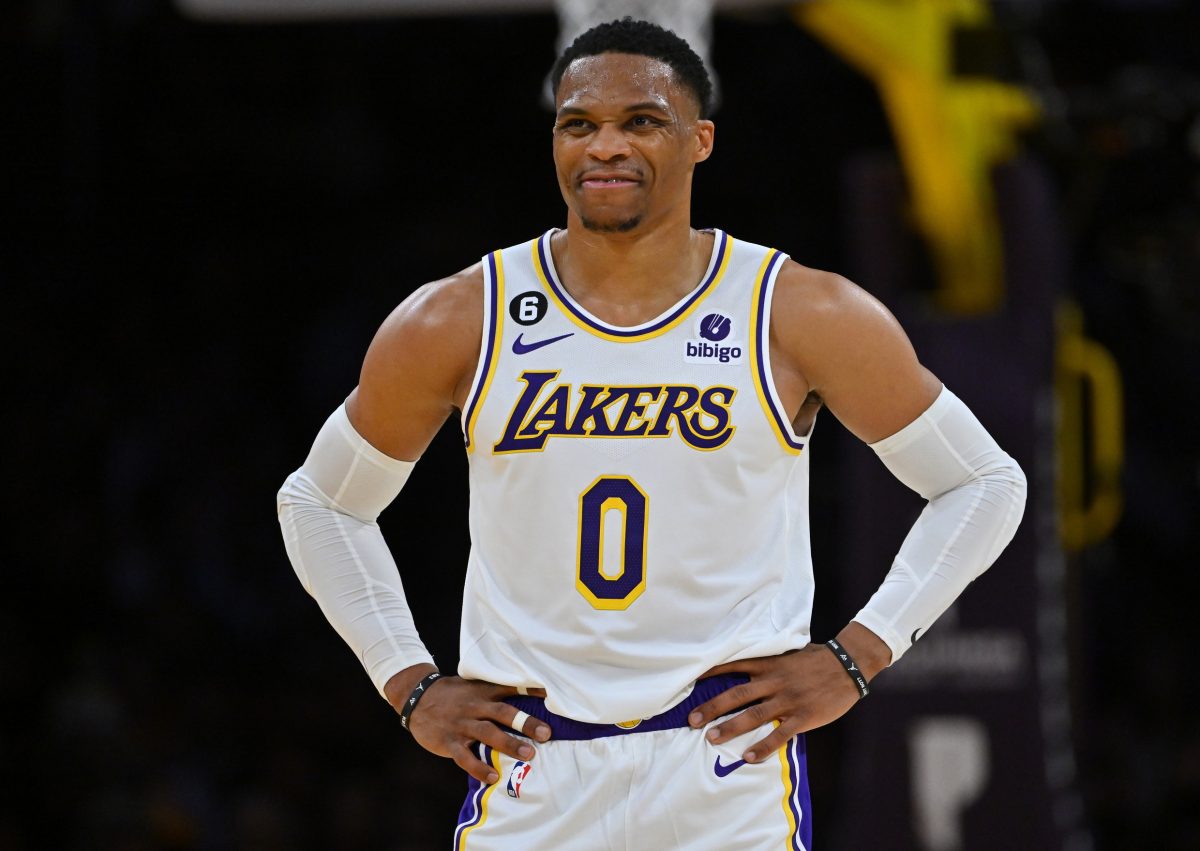

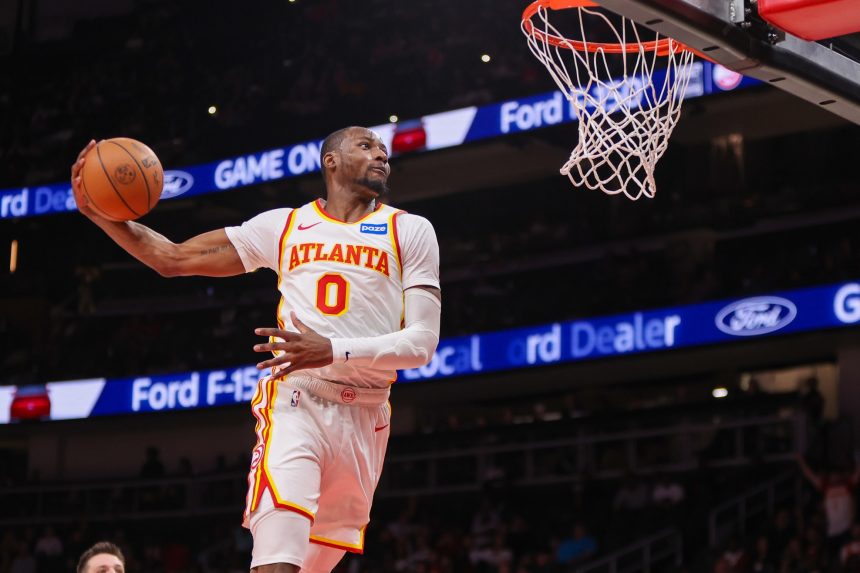
The Lakers spent July answering nearly every question LeBron James’ departure created.
They traded for Walker Kessler, brought back Austin Reaves, and added Quentin Grimes, Collin Sexton, Kevon Looney, Sandro Mamukelashvili, Ziaire Williams and Matisse Thybulle to a roster rebuilt around Luka Doncic. One question survived all of it, and it happens to be the position James himself vacated: who starts at power forward on opening night?
That question moved back to the front of the conversation Thursday, when Lakers insider Jovan Buha joined the Chase Thomas Podcast for an episode built largely around it, with one segment devoted to whether P.J. Washington or Jonathan Kuminga ends up as the replacement and another to the mechanics of a potential Kuminga sign-and-trade with the Atlanta Hawks.
The fact that a 36-minute podcast published on July 30 is still litigating the 4 spot tells you how unresolved it remains, because the reporting over the last two weeks suggests the Lakers have quietly closed off every external route to filling it.
The Roster Is Full and the 4 Spot Isn’t
Three starting jobs are settled beyond argument. Doncic runs the offense, Reaves starts next to him and Kessler anchors the middle after the sign-and-trade that hard-capped the Lakers at the first apron. Grimes, signed to be the point-of-attack defender this roster lacked, is the heavy favorite at one forward spot.
That leaves the other forward position open, and the group currently positioned to compete for it — Jake LaRavia, Jarred Vanderbilt, Adou Thiero, Mamukelashvili, Ziaire Williams and Thybulle — contains useful rotation players but nobody the front office has treated as a settled answer.
The roster construction makes that plain. Los Angeles has neither cap room nor an open roster spot, which is why the front office kept chasing a starting-caliber forward through trade and sign-and-trade channels even after the roster filled.
The chase itself is the tell. A team comfortable with its internal options does not spend a month working the phones on this position.
Why the Kuminga Path Stalled
The preferred answer, for most of the summer, was Kuminga. ESPN’s Shams Charania reported on July 13 that the Ziaire Williams signing had not changed the front office’s primary aim, and that the 23-year-old remained the player Los Angeles wanted for a starting forward role. Two things have gone wrong since.
The first is money and momentum. Dan Woike reported in The Athletic that the pursuit had lost steam, with a sizable gap between what Kuminga’s camp wants and what Los Angeles will pay, and a front office “not overly motivated to push significant draft capital into sign-and-trade scenarios.”
League sources told The Athletic that Cleveland comes up more than any other team besides the Lakers, and the Cavaliers’ interest only sharpens now that James’ decision is settled in Philadelphia rather than Ohio.
The second problem is arithmetic. The Thybulle signing pushed the roster to the point where any Kuminga construction now starts with moving out two players just to clear the seat. Atlanta has shown no appetite for absorbing Vanderbilt’s contract, which strips the most obvious salary-matching piece out of the framework and forces the kind of multi-team gymnastics the Lakers have been unwilling to fund with draft capital.
None of that makes a deal impossible. All of it explains why one has not happened.
The Door the Lakers Closed Themselves
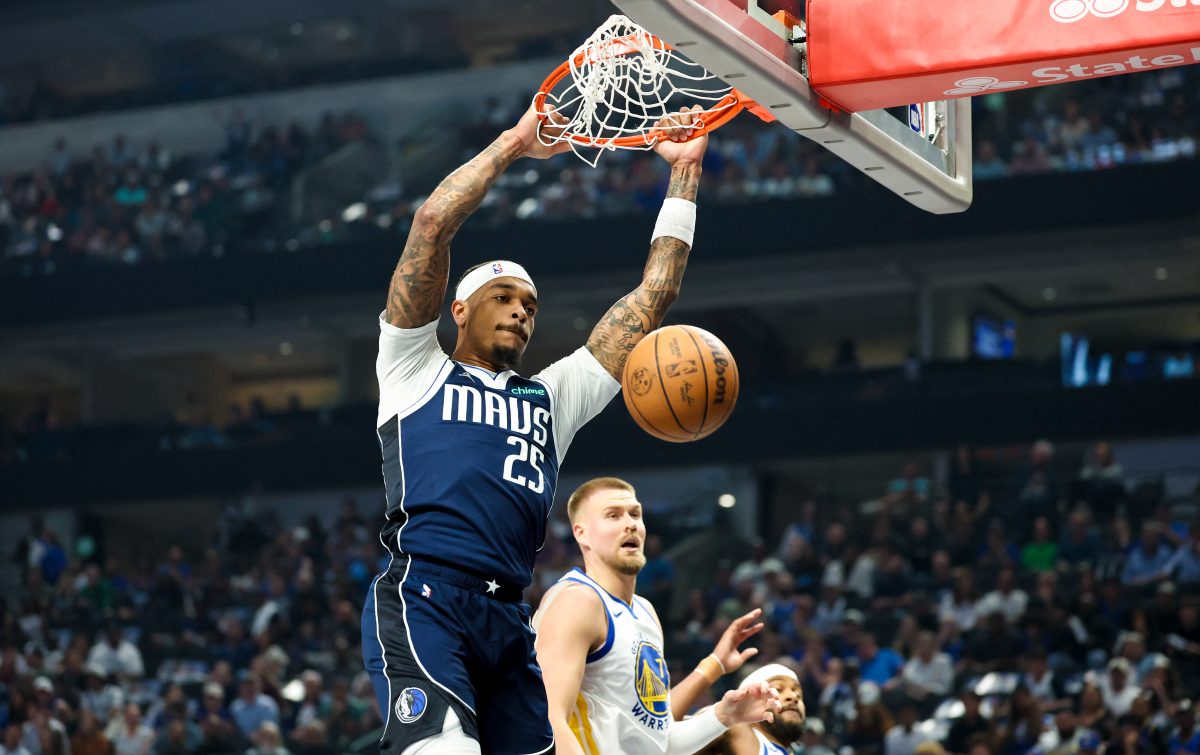
If Kuminga was Plan A at the four, Washington was the name fans kept in reserve, and for understandable reasons. He is 27, he is an established two-way starter and he spent a season and a half as Doncic’s teammate in Dallas.
Buha said on his own show earlier this month that Dallas has reoriented its roster around Cooper Flagg’s age group, which is why veterans like Washington and Daniel Gafford can be had, adding that “PJ Washington is now more gettable.” The Mavericks’ asking price has been a first-round pick that no team has yet paid.
The complication is that the interest appears to run one direction. Khobi Price of the California Post reported on July 23 that the Lakers do not plan to pursue Washington even if the Kuminga pursuit dies, because the money is the sticking point: Washington is owed $88.8 million fully guaranteed across the next four seasons, and the front office does not view that commitment as a fit for where this roster is headed.
Put the two reports together and the picture is stark. The one available starting-caliber forward the Lakers could realistically trade for is one they have decided not to want.
The In-House Option and the Hard Cap Reality
That leaves the path nobody in the fan base finds satisfying, which is the one the calendar is quietly choosing for them. The hard cap matters here in a way casual roster talk tends to skip.
Because the Kessler deal locked the Lakers under the first apron, the front office cannot simply aggregate salary or absorb money midseason the way an uncapped team could, which shrinks the menu of January consolidation trades before the season even starts.
So the internal competition is real, and it is more interesting than it looks. Thiero played sparingly as a rookie but enters camp as the most natural athletic fit for the role, and the search demand around his name suggests the fan base already senses it.
Ziaire Williams arrives as a defensive wing with starter-level tools and no starter-level track record. LaRavia and Mamukelashvili offer the shooting and connective passing JJ Redick’s offense rewards, while Vanderbilt and Thybulle profile as situational defenders rather than opening-night answers.
None of the six is a proven starting 4. One of them may have to become one anyway.
Why This Might Not Resolve Before Camp
Thursday’s podcast conversation is worth noting less for any single answer than for what its structure concedes. Three days from August, the most plugged-in Lakers reporter working is still framing the 4 spot as an open question between two external players the reporting says are stalled and ruled out respectively.
That is not how solved situations get discussed. The realistic outcome is that the Lakers open training camp with the job unsettled and let the roster sort it out, starting informally at the four-day Slovenia minicamp Doncic is hosting in August.
A midseason trade remains possible if a Kuminga resolution elsewhere or a Dallas price cut changes the math, but the front office’s own choices this month suggest it would rather carry the question into the season than overpay to answer it in July.
For a team whose margin in the West depends on Doncic’s supporting cast fitting cleanly, that is either admirable discipline or the one bet from this offseason that ages badly, and the competition to decide which begins in Ljubljana.