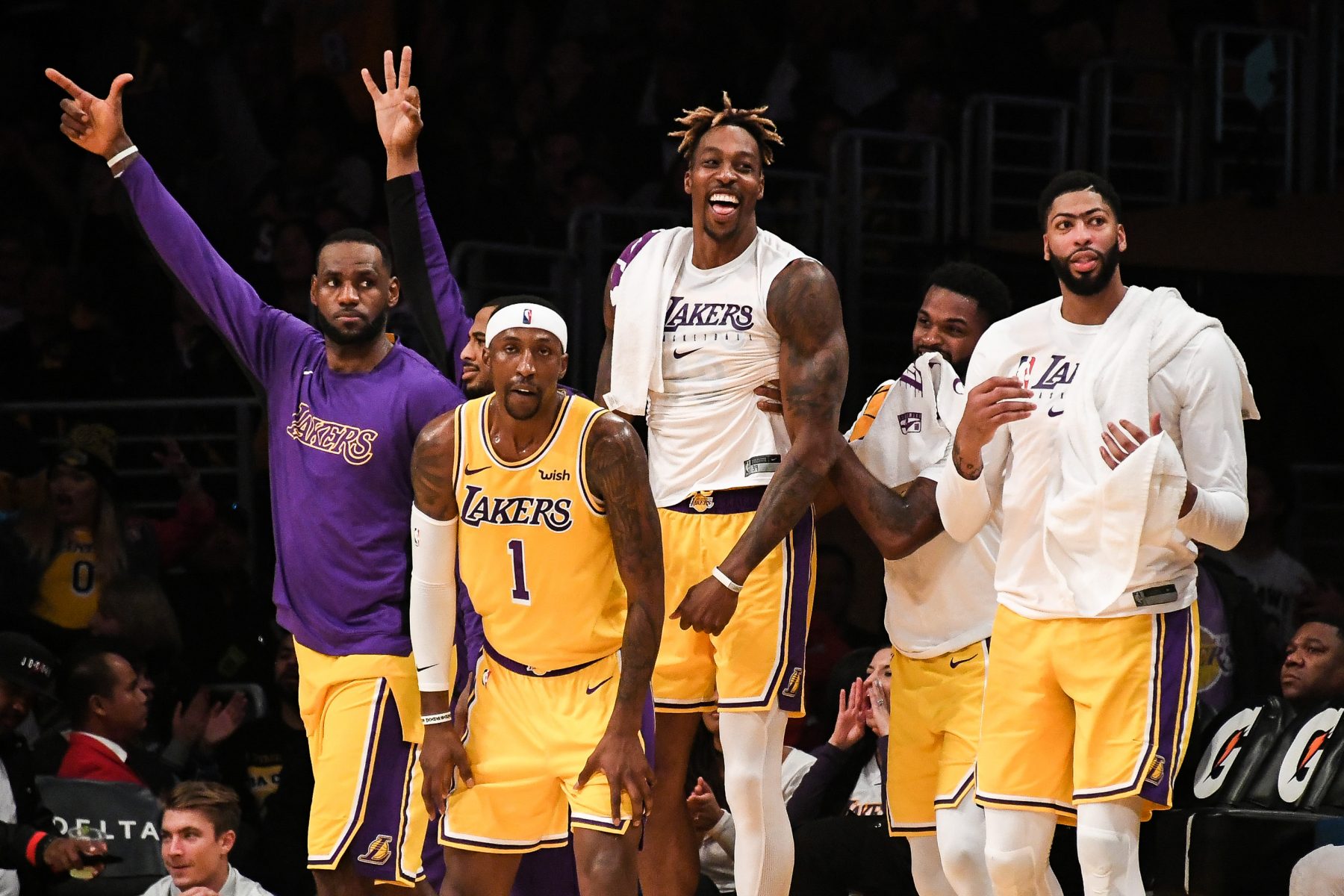

The Los Angeles Lakers will be on the clock at No. 25 on Tuesday night, and for the first time in two years they hold a first-round pick with a clear mandate attached to it.
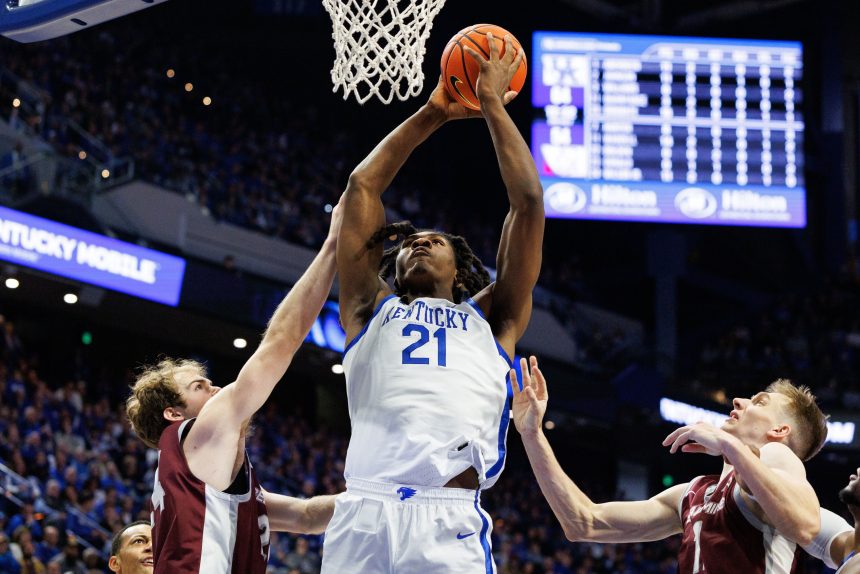
Rival front offices expect that pick to be spent on a big man, according to Jake Fischer of The Stein Line, who reported over the weekend that the Lakers have been connected to Kentucky’s Jayden Quaintance and Connecticut’s Tarris Reed Jr.
The two names point in nearly opposite directions. One is an 18-year-old with lottery-level tools and a surgically repaired knee. The other is a 22-year-old coming off one of the most productive seasons of any center in the country. Choosing between them, if both are even on the board, comes down to how the Lakers weigh upside against certainty with the only selection they own in this draft.
Why the Lakers are hunting a center
The roster logic is not subtle. Luka Doncic has made an elite center his stated priority since arriving in Los Angeles, and the front office has spent the offseason chasing one on every available avenue.
Deandre Ayton and Jaxson Hayes remain on the roster, but neither has settled the position alongside Doncic. On the free-agent market, the Lakers have been tied to Walker Kessler, Jalen Duren, Mitchell Robinson and Robert Williams III, though those paths run through restricted-free-agent matching rights and lengthy injury histories. The draft is the cheaper and more controllable route, even if a rookie is unlikely to start in October.
That is what makes this selection matter more than a typical late first-rounder. The Lakers have not added a meaningful first-round contributor since Moritz Wagner in 2018, having traded the pick away from 2019 through 2022 and most recently spending selections on Jalen Hood-Schifino and Dalton Knecht.
With cap sheets tightening across the league, a productive rookie on a rookie-scale deal is exactly the kind of value the front office cannot afford to waste.
Jayden Quaintance: the high-upside swing
Quaintance is the kind of prospect who rarely slides into the 20s without a complication attached. He measured 6-foot-9 barefoot with a 7-foot-5 wingspan and a 9-foot-1 standing reach at the combine, though he did not go through athletic testing while continuing to recover from his knee. Born July 11, 2007, he will not turn 19 until next month, which makes him one of the youngest players in the entire class despite already having two college seasons behind him.
The defensive resume is what carries his stock. As a freshman at Arizona State in 2024-25, he averaged 9.4 points, 7.9 rebounds, 2.6 blocks, 1.5 assists and 1.1 steals per game while earning Big 12 All-Freshman and All-Defensive honors, becoming only the fifth player in conference history to claim both in the same season. His block rate ranked among the top 10 nationally, and evaluators have long pointed to the combination of length, mobility and timing that lets him guard in space and protect the rim at once.
The complications are real. Quaintance tore the ACL in his right knee late in that freshman season and underwent surgery in March 2025. He transferred to Kentucky but appeared in only four games last season as the program managed his recovery cautiously.
His offense also remains a work in progress, as he made just 6 of 32 attempts from 3-point range and shot 47.9 percent from the free-throw line during that Arizona State season. For a team that wants a vertical finisher to play off Doncic’s passing, the appeal is the shot-blocking and rim-running ceiling. The risk is whether the knee and the offensive polish ever catch up to it.
Tarris Reed Jr.: the higher floor
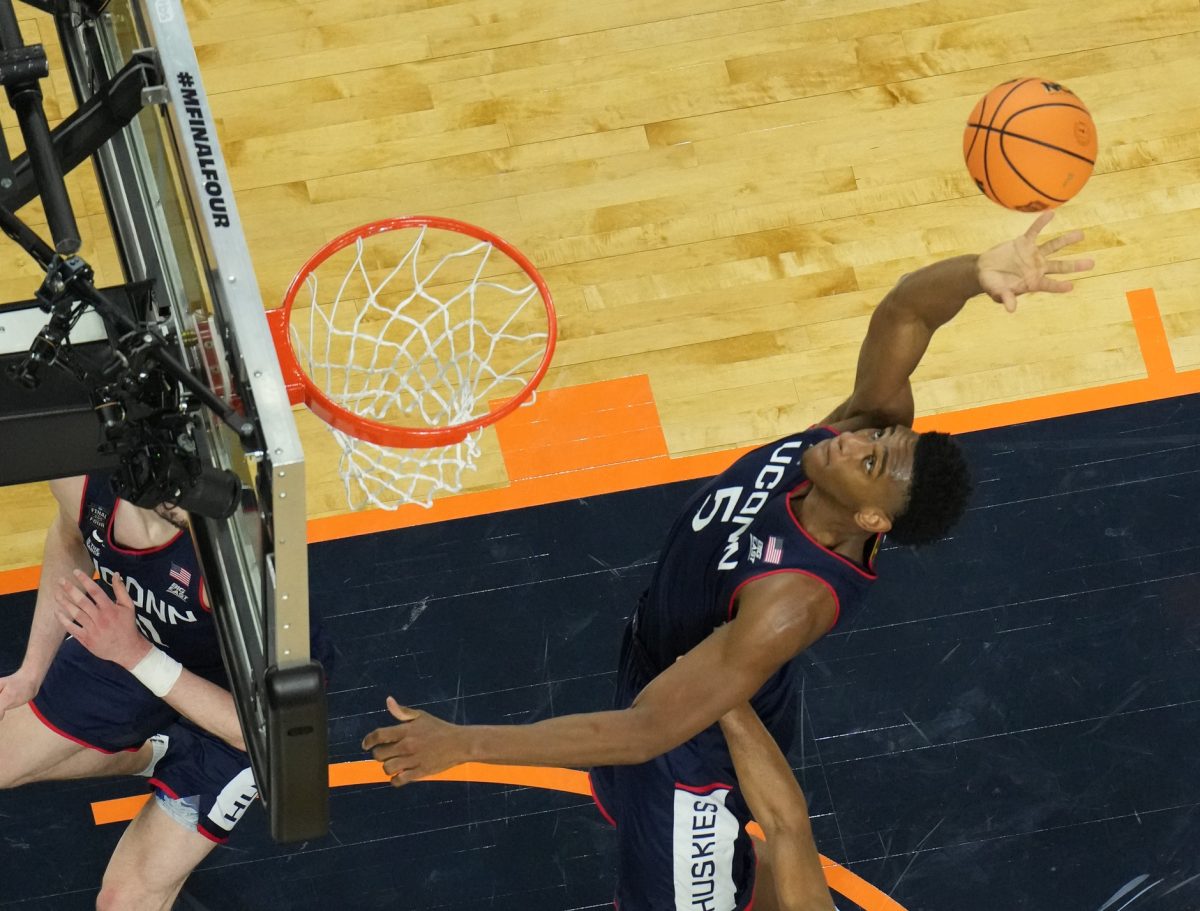
Reed offers almost the inverse profile. A four-year college player who spent two seasons at Michigan before two at Connecticut, he is older at 22 and far more proven. As a senior he averaged 14.7 points, 9.0 rebounds, 2.3 assists and 2.0 blocks per game on a league-leading 60.7 percent from the field, earning first-team All-Big East honors.
He closed his career with a dominant NCAA Tournament run, leading the field with 117 points and 79 rebounds across six games and carrying UConn to the national championship game, where the Huskies lost to his former school, Michigan.
The physical profile fits a specific Lakers weakness. At a combine-measured 6-foot-9¾ barefoot and 263 pounds with a 7-foot-4¼ wingspan, Reed was among the heaviest and strongest prospects in the class, and he is regarded as one of its best offensive rebounders.
The Lakers ranked among the league’s worst offensive-rebounding teams last season, and Reed’s second-chance creation and screen-setting address that hole directly. He has also worked out for the Lakers, per ESPN’s Dave McMenamin, a sign the interest is more than mock-draft speculation.
What gives teams pause is his ceiling rather than his readiness. Reed is a below-the-rim athlete, having posted a 29.5-inch standing vertical at the combine, and some evaluators question whether he has the verticality to anchor as a full-time NBA center. He projects more as a dependable rotation big than a long-term starter, which is the opposite of the bet Quaintance represents.
Will either be on the board at No. 25?
The complication is that the Lakers may not get a clean choice. Quaintance has been one of the centers most frequently mocked to Los Angeles through the pre-draft process, widely regarded as a first-round talent whose stock slipped primarily because of the medical questions rather than the on-court tools.
Reed has graded lower across most boards but carries his own late momentum after a standout NCAA Tournament run. With the order of this run of bigs still unsettled heading into draft night, a rival could gamble on Quaintance’s upside before No. 25, while Reed’s surge could just as easily carry him off the board ahead of the Lakers.
Fischer, for his part, cautioned that Reed has drawn interest well before the Lakers pick.
“Another big man who’s been connected to the Lakers is UConn center Tarris Reed Jr., who I’ve also heard has interest from teams as high as the late teens,” Fischer wrote.
There is also the possibility the Lakers move the pick entirely. They hold additional first-rounders in 2031 and 2033, giving them ammunition to package if a veteran becomes available instead.
For a franchise whose summer will be defined by bigger swings in free agency, the center it takes at No. 25, if it keeps the pick, is the kind of low-cost decision that can quietly tilt a season. Whether the Lakers chase Quaintance’s ceiling or Reed’s certainty will say a great deal about how patient this front office is willing to be.