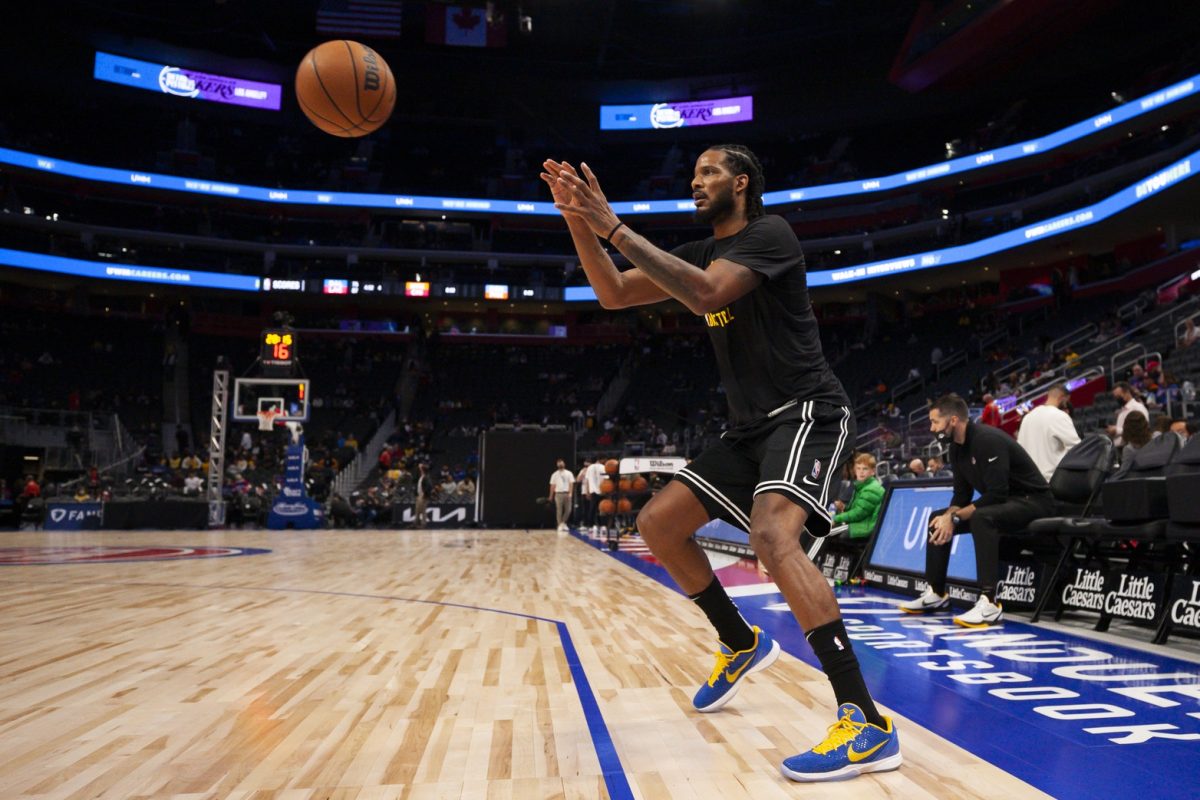

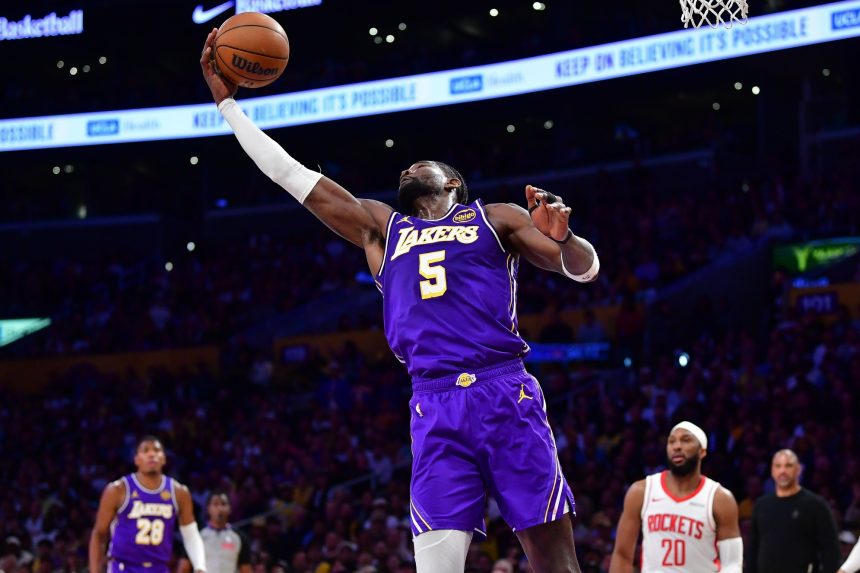
The Los Angeles Lakers spent the past two weeks waiting on a quiet decision in the middle of their roster, and the first real signal arrived Saturday.
Deandre Ayton is expected to pick up his $8.1 million player option for the 2026-27 season and return to the Lakers, NBC Sports’ Kurt Helin reported as part of a wider rundown of league free-agency intel.
That answers a question that has hung over the Lakers’ frontcourt since the season ended — the same fork Ayton appeared to be weighing only days ago. It does not, however, settle much else. Picking up the option keeps Ayton on the books at a friendly number, but it does not guarantee he opens next season in a Lakers uniform, and that distinction is the entire story.
What Ayton’s expected opt-in actually means
For Ayton, the reasoning is simple enough. Opting in secures $8.1 million in guaranteed money rather than gambling on a soft market for centers who graded out the way he did this past season. If the report holds, it suggests Ayton and his representatives surveyed the open market and decided the certainty was worth more than the chase. He would then be positioned to reach unrestricted free agency in 2027, with a cleaner platform if he plays well.
For the Lakers, the opt-in functions less as an endpoint than as a tool. A center the front office has openly tried to upgrade now returns on an expiring, movable contract, which is arguably more useful to general manager Rob Pelinka than an empty roster spot would have been. Keeping Ayton at this number does not mean the Lakers intend to keep him at all.
The center search Pelinka still has to solve
None of this changes the Lakers’ stated top priority. Luka Doncic has pushed the front office to land a genuine upgrade at center, a desire that’s been described as Doncic’s first request of the offseason. The franchise spent two seasons pointing Doncic toward the summer of 2026 as the moment it would build a contender around him, and that window is now open with little margin left.
Helin’s report tied the Lakers to two names on that front. New York’s Mitchell Robinson remains the most frequently cited target, with the Lakers prepared to discuss a longer-term deal in the neighborhood of the non-taxpayer mid-level exception, roughly $15.1 million. Dallas’ Daniel Gafford has also drawn Lakers interest, and he could become more available after the Mavericks added a young big man in this year’s draft. Both fit the profile the Lakers have chased all along, a rim-running, shot-blocking 5 who finishes lobs and anchors the paint.
Robinson carries the obvious caveat. He is one of the league’s best offensive rebounders and rim protectors when available, but a lengthy injury history has limited his minutes and made a long-term commitment a risk. The Lakers have also done their homework on the restricted-free-agent route, with names such as Utah’s Walker Kessler and Detroit’s Jalen Duren fitting the directive, though restricted free agency hands those teams a match window that can freeze Los Angeles’ money while it waits. The full board of realistic center targets is wider than any one name, and Ayton’s decision sets the terms for how the Lakers attack it.
Ayton as a trade chip: the cap math
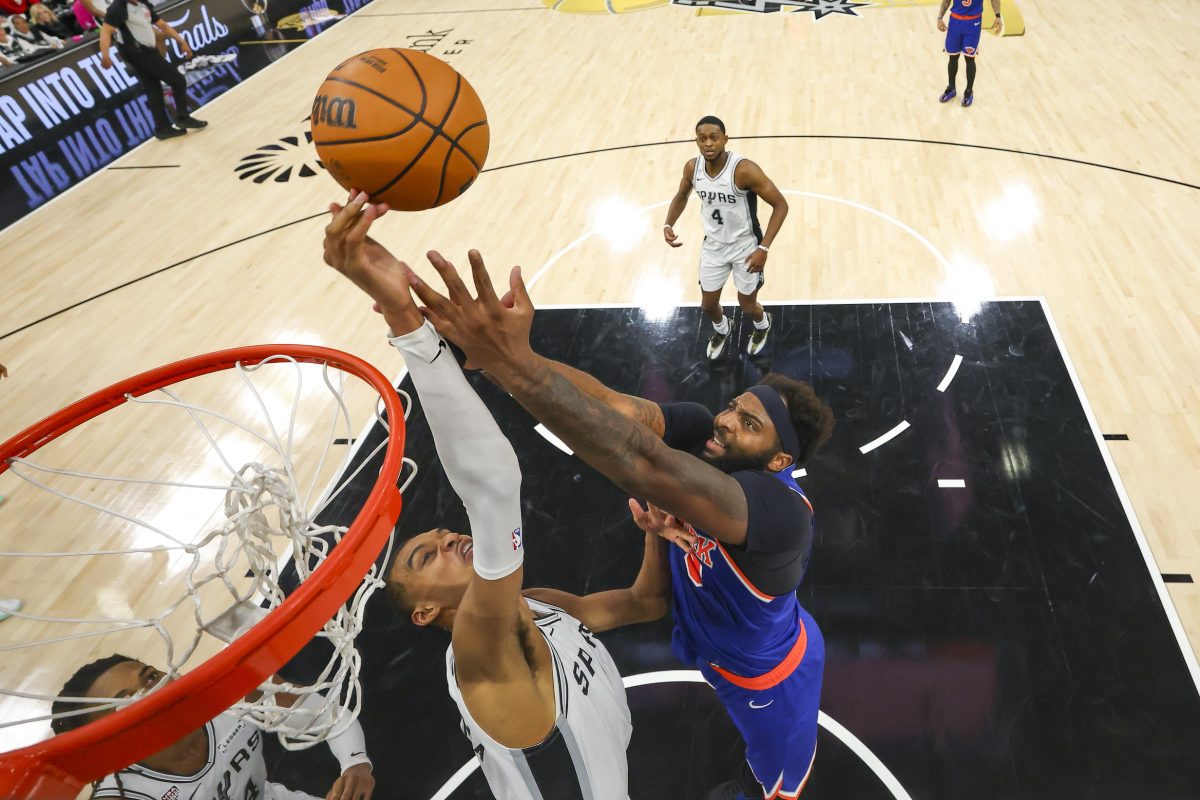
Here is where the opt-in earns its keep. By picking up the option, Ayton hands the Lakers $8.1 million in matching salary that can be folded into a trade rather than evaporating in free agency. Pair it with Jarred Vanderbilt’s $12.4 million and the front office can route roughly $20 million in outgoing salary through a single deal, with future first-round picks available as sweeteners. Los Angeles still controls its 2031 and 2033 firsts after spending this year’s selection on Cameron Carr, giving Pelinka real draft capital to attach.
That flexibility survived the offseason’s first major move. Austin Reaves’ four-year, $185 million maximum agreement, reported by ESPN’s Shams Charania, did not drain the Lakers’ projected room because of Reaves’ low cap hold, leaving the team with roughly $48 million in space to pursue a center. The full breakdown of what the Reaves deal does to the cap sheet explains why the backcourt commitment and the center hunt are not mutually exclusive. Ayton’s salary is simply one more lever sitting on top of that room.
Why Ayton never quite fit next to Doncic
The on-court case is more complicated than the contract. Ayton, the No. 1 overall pick in the 2018 draft, averaged 12.5 points, 8.0 rebounds and 1.0 block per game on 67.1 percent shooting across 72 games this past season, per Basketball-Reference. His career marks of 15.8 points and 10.1 rebounds per game sit above that line, and a starting-caliber center at $8.1 million reads, on paper, like a bargain most contenders would carry happily.
The playoffs told the more important story. Ayton was strong in the first round against the Houston Rockets, posting a double-double and holding his own defensively against All-Star center Alperen Sengun as the Lakers won the series. He then faded in the second-round sweep by the Oklahoma City Thunder, and his quiet finish to that series became the lasting image of his first Lakers season.
The deeper issue is fit. Doncic’s value as a passer comes from bending defenses and finding rim-runners on the move, the same way he turned bigs into easy offense in Dallas. Ayton, more of a face-up, mid-range big than a vertical lob threat and rim protector, has never been a clean match for that style. His effort and consistency also frustrated parts of the fan base across the year. The 27-year-old, who turns 28 in July, can produce, but not in the specific shape the Lakers have repeatedly said they need next to their franchise guard.
A decision deadline, then the real work
The timeline is tight. Player and team options across the roster must be resolved by the June 29 deadline, with free agency opening June 30. If Ayton’s expected opt-in becomes official, the Lakers will enter the market with their backcourt set, their cap room intact and a tradeable center already in hand, a far cleaner starting position than a hole at the five and a renounced contract.
The complication that does not go away is LeBron James. He is an unrestricted free agent, has signaled he will take his time deciding on a 24th season, and every dollar the Lakers commit to bringing him back is a dollar subtracted from the center pursuit.
The order of operations this summer matters as much as the targets, and Doncic’s patience is part of the equation; the same reporting that put the Lakers “on the clock” with him has not softened. The franchise’s own long-term stakes with Doncic are the backdrop to all of it.
What the Lakers will not have, yet, is the player Doncic actually asked for. Ayton picking up his option does not answer the center question. It hands Pelinka a cleaner set of tools to answer it with. Turning roughly $48 million in room and a stack of movable salary into a center who fits is the work that will define the rest of this Lakers summer.