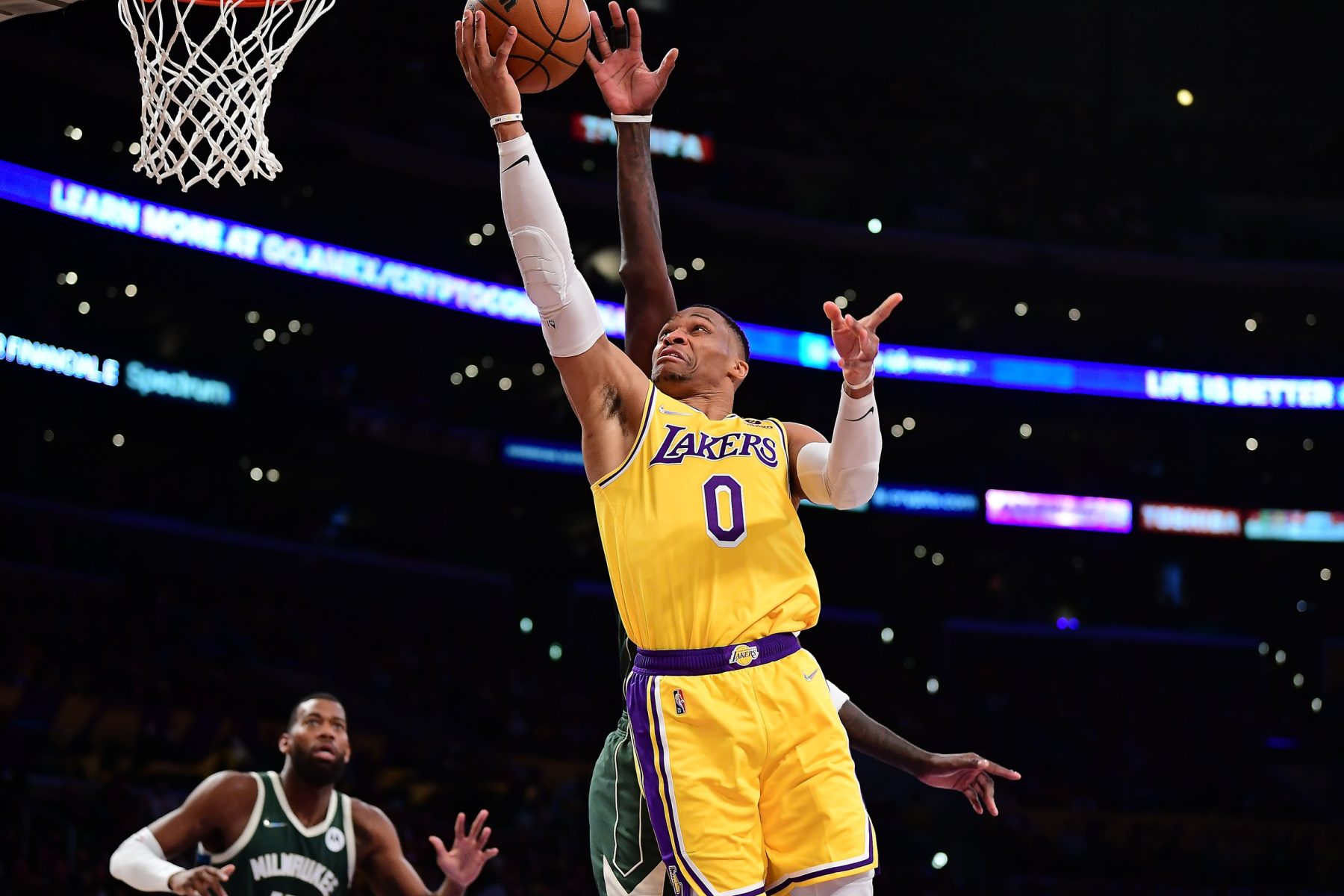

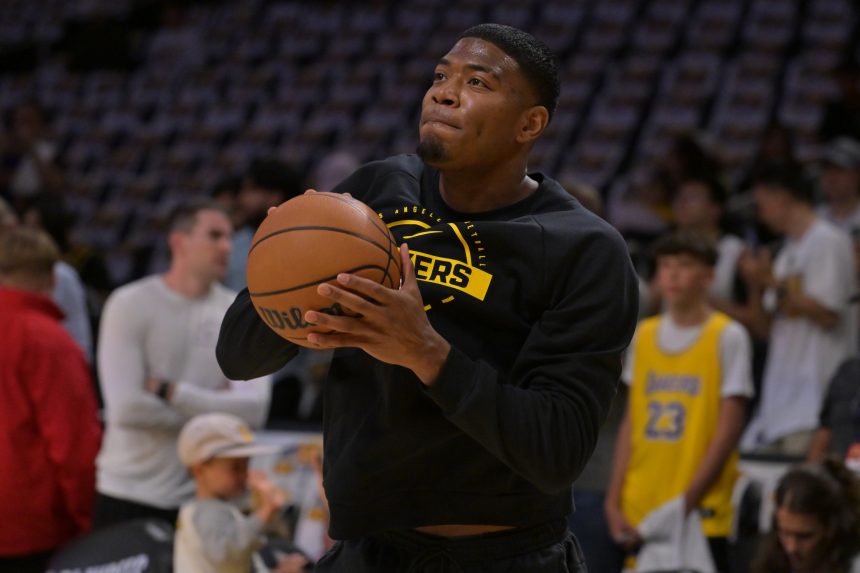
Austin Reaves’ new four-year, $185 million maximum contract settled the Los Angeles Lakers’ backcourt on Wednesday.
However, it also tightened a vise on one of the team’s most important returning free agents. Every option on the roster must be resolved by June 29, free agency opens June 30, and the veteran whose situation grew more complicated the moment Reaves signed is Rui Hachimura.
Hachimura is an unrestricted free agent coming off the strongest stretch of his Lakers career, and that is precisely the problem. A role player who raises his price in May is a role player a capped-out contender can struggle to keep. The Lakers would like him back. Whether the math allows it is a different question, and it is the one hanging over the rest of their summer.
A career-best season at the worst possible time
The case for Hachimura is not complicated. He averaged 11.5 points and 3.3 rebounds per game during the regular season while shooting 51.4 percent from the field and 44.3 percent from 3-point range, then raised every number when it counted.
Across 10 playoff starts he put up 17.5 points, 4.0 rebounds and 1.7 assists per game on 54.9 percent shooting overall and a scorching 56.9 percent from 3-point range, capped by a 25-point outing in the Lakers’ Game 4 loss to the Oklahoma City Thunder. For a stretch 4 who can defend and shoot, that is the kind of postseason that draws calls.
It also draws a warning. In a recent intel piece for ESPN, Dave McMenamin reported that Hachimura registers as the team’s biggest question mark this offseason, with league sources viewing him as the player most likely to be pushed out and forced to find his money elsewhere. The very performance that earned Hachimura a raise is what makes that raise hard for Los Angeles to fit.
The phantom cap space problem
On paper, the Lakers look like a team with money to spend, with projections placing them near $50 million in cap space. In practice, that figure is more theoretical than real, and Hachimura is one of the reasons why.
A departing free agent’s salary does not vanish from the books the instant his contract expires. It remains as a cap hold until the team either re-signs the player or renounces his rights. James carries a hold of roughly $59.5 million, and Hachimura’s sits at about $27.4 million. ESPN’s Brian Windhorst has described the Lakers’ flexibility as more illusion than reality for exactly this reason: Those holds count until they are cleared.
That creates a bind with no clean answer. To open meaningful cap room, the Lakers would have to renounce holds, and renouncing Hachimura’s hold would mean surrendering the Bird rights that let them re-sign him without using that very space.
Keeping him at his new market value, on the other hand, works against creating the room in the first place. Stack Reaves’ new $185 million deal and a likely LeBron James return on top of that, and the dollars left for a wing whose value is climbing start to disappear. The cap space the team promised Luka Doncic it would use is real only in the version of the summer where someone is left out, and Hachimura is the name that keeps surfacing.
Where Hachimura’s market actually sits
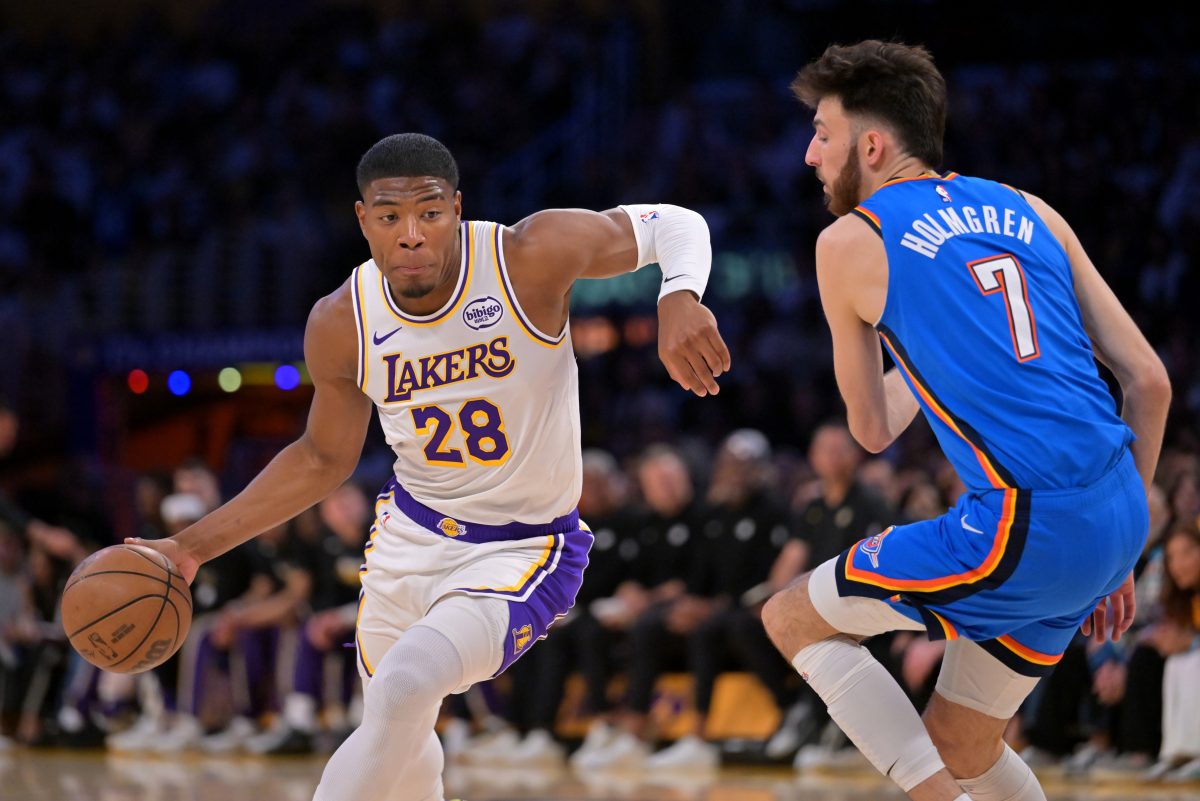
The saving grace for the Lakers, if there is one, is a thin leaguewide market. With so few teams holding real cap space, the expectation around the league is that Hachimura’s market tops out near the mid-level exception rather than the kind of long-term, big-money deal his playoff tape might otherwise command. That gives Los Angeles a window to retain him without breaking the bank, provided the front office moves before another suitor does.
The catch is that Hachimura is under no obligation to wait. If he wants a deal done early and the Lakers want to see how the rest of free agency unfolds before committing, the timelines do not match, and an outside team can step in.
The San Antonio Spurs have been floated as a possible landing spot, a reminder that a 28-year-old shooter with size does not lack for interested parties even in a tight market. Losing him for nothing would sting twice over, because the Lakers are already short on proven wings around Doncic, and replacing what Hachimura provides from a depleted free-agent pool would not be simple.
Why the Lakers still want him back
None of this means the Lakers are eager to move on. Hachimura has been a steady contributor since arriving from the Washington Wizards, and the franchise has spoken about him as a player who rewards stability. At his end-of-season press conference, president of basketball operations Rob Pelinka pointed to the trust and comfort Hachimura built inside the organization as the engine behind his growth, framing him as someone who improves the longer he stays in a familiar setting.
That fit matters on a roster built around a creator like Doncic. A forward who spaces the floor and attacks closeouts is the archetype the Lakers have wanted around their star, and Hachimura’s postseason proved he can be more than a complementary piece when asked. The front office values what he brings. The constraint is not desire; it’s arithmetic.
What to watch before June 30
Hachimura’s outcome is tied to decisions that have not been made yet. The Lakers’ other looming call, the center search, runs on the same limited budget, and so does the question of what number it takes to bring James back. Every dollar committed to those priorities is a dollar that cannot go toward matching a raise for a wing whose stock has never been higher.
If the Lakers handle the sequence well, they keep Hachimura on a reasonable deal and preserve the depth that carried them through an injury-marred spring. If they wait too long, or if a rival moves fast, the player who arguably made the strongest case for a new contract this season becomes the one they could not afford to keep.
Reaves is locked in and the backcourt is set. The frontcourt and the wing are still in flux, and Hachimura sits right at the point where the Lakers’ ambitions meet their cap sheet.