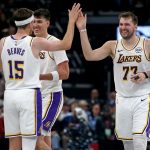

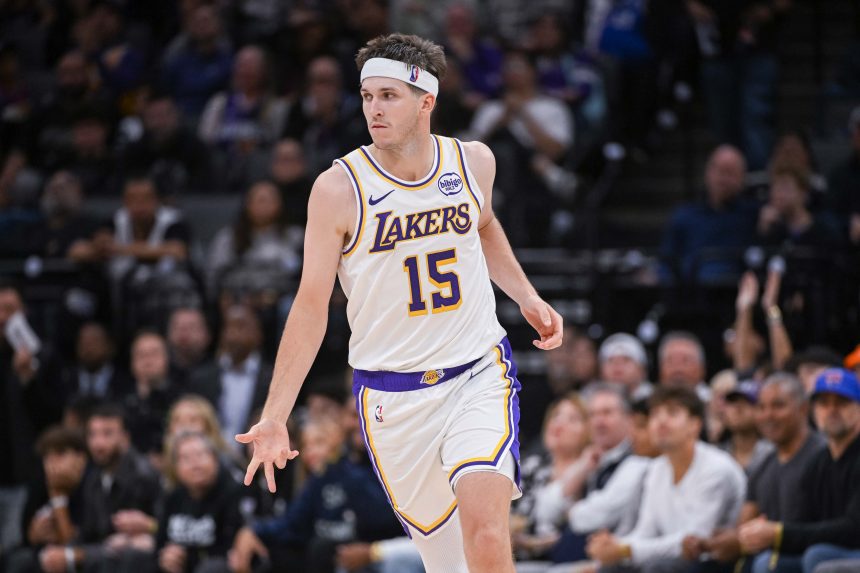
The contract Austin Reaves actually signed is not the contract everyone spent three weeks reporting. The deal runs four years and $180 million with a player option on the final season, coming in $5 million below the $185 million figure that had stood in every account since the two sides reached their agreement in late June.
Update on Austin Reaves’ contract with the Lakers: Final terms are four years, $180 million, with a player option in 2029–30, league sources tell me. Reaves agreed to a lower amount than the previously reported $185 million to help give Los Angeles more future flexibility.
— Jovan Buha (@jovanbuha) July 13, 2026
According to Buha, Reaves accepted the smaller number voluntarily, with the specific purpose of giving the front office more room to operate down the road.
That last part is what separates this from a rounding error. Five million dollars across four years barely registers against a total this size, and Reaves will not notice the difference in any way that matters. The Lakers will.
The way the discount is structured points directly at a specific date on the calendar — July 2027 — and at the one roster-building tool this front office has left after a summer in which it spent nearly everything else.
The $5 million that moved
The original agreement, reported by ESPN on June 24, was a four-year maximum worth $185 million — the largest contract ever given to an undrafted player.
Nothing about the shape of the deal has changed since then: still four years, still the 2029-30 player option, still a record for an undrafted player. What changed, in the window between the June agreement and the signing that was the total.
Per ESPN’s Dave McMenamin, league sources confirmed the revised terms and the reasoning behind them: The reduction preserves the Lakers’ ability to pursue a player with the non-taxpayer mid-level exception next summer. That is not a side effect of the discount, but the point of it.
How the discount actually works
The mechanics matter here, because Reaves did not simply lop $5 million off the top. According to contract figures from Spotrac, Reaves’ salary still begins at the full $41.2 million maximum for 2026-27. The give-back comes after that.
Rather than taking the full 8 percent annual raise the collective bargaining agreement allows a returning player, Reaves accepted roughly half of one, landing at $42.9 million in 2027-28.
Measured against the cap, his salary actually shrinks year over year — from 25.3 percent of the 2026-27 cap to 24.7 percent the following season.
If that structure sounds familiar, it should. The Lakers built the same dip into Sandro Mamukelashvili’s contract this summer, with his salary dropping from $13 million in Year 1 to $12.4 million in Year 2.
Two contracts, negotiated separately, both bending downward in the same season is not a coincidence. It is a front office sculpting its 2027-28 payroll with a specific number in mind.
What it buys: the 2027 mid-level path
That number is the line below which the non-taxpayer mid-level exception remains usable — a tool worth more than $15 million in starting salary, and functionally, the only significant one the Lakers will have left.
Consider what this offseason cost. The Walker Kessler sign-and-trade consumed the last of the tradable draft capital. The cap room went to Kessler, Quentin Grimes, Collin Sexton and Mamukelashvili.
The minimum signings of Kevon Looney and Ziaire Williams filled out the margins, and with Williams aboard the roster sits at 15 players. Whatever happens with the front office’s remaining wing ambitions this summer, the honest accounting is that the Lakers have no cap space coming, no first-round picks to trade and no obvious path to another meaningful addition — except one.
A team that stays under the right thresholds next July can hand a free agent the full non-taxpayer mid-level. A team that drifts over them cannot.
Reaves’ half-raise, stacked on Mamukelashvili’s dip year, is the difference between those two versions of the 2027 Lakers. Seen that way, the $5 million is not a gesture. It is the down payment on the roster’s next upgrade, made a full year before the front office can shop for it.
A quiet answer to the LeBron question
The discount also landed on the same day Reaves faced reporters for the first time since signing, in Las Vegas on Monday, and the timing gave his answers a different weight.
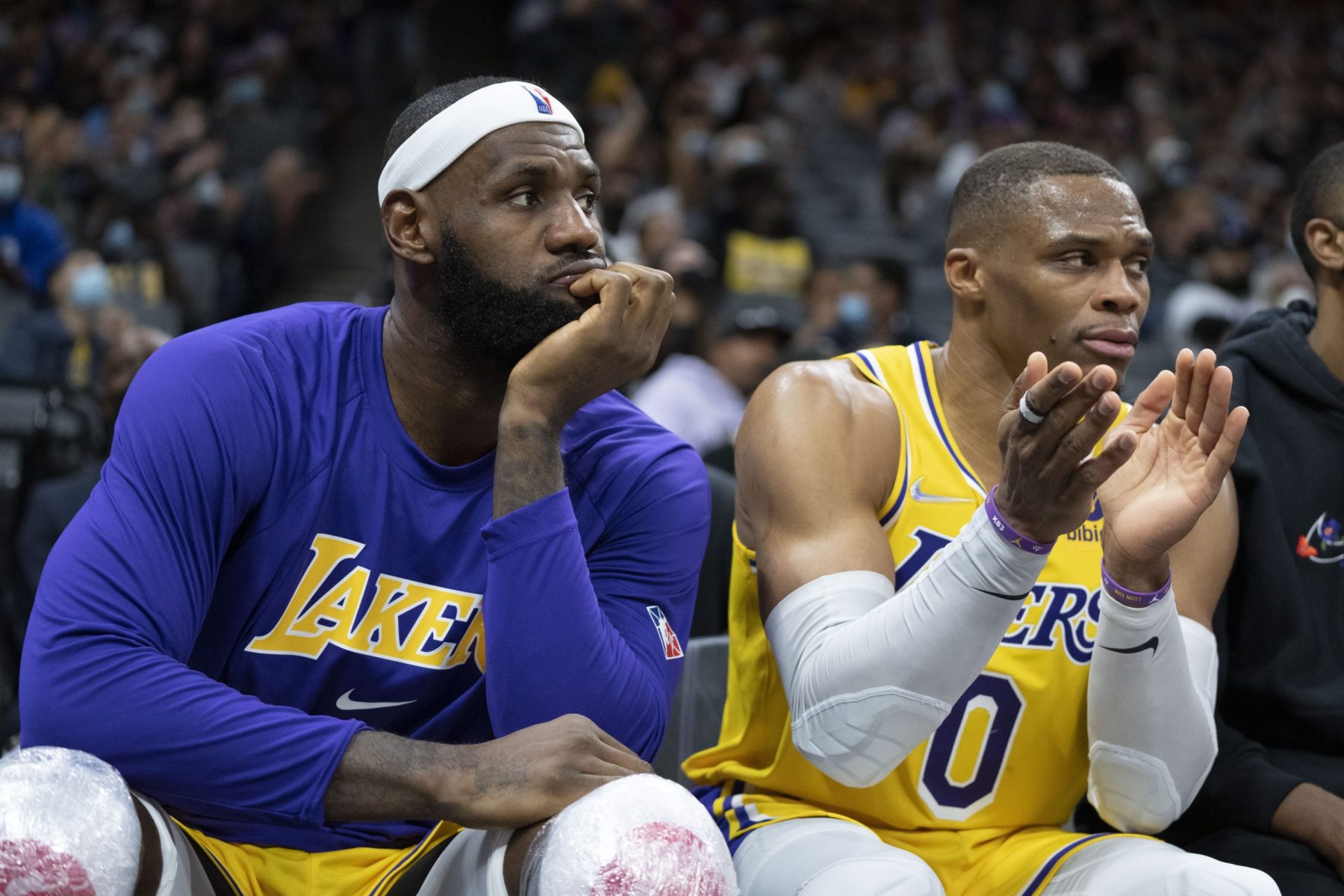
This is the first Lakers roster of his career that does not include LeBron James, who informed the team through agent Rich Paul on June 30 that he would not be returning after eight seasons. Reaves told reporters he has not fully absorbed the idea of opening a season without James, describing him as a constant presence across his entire career and saying he holds nothing but respect for the decision.
He was more expansive about what kept him in Los Angeles: the organization, the coaching staff and above all, Luka Doncic, whom he described as one of his closest friends and a near-daily correspondent — mostly, he joked, about golf swings.
Asked about the free agency process that briefly made him one of the market’s most discussed names, Reaves shut the door on the idea that leaving was ever seriously in play.
“My heart was in L.A. the whole time,” Reaves said.
The money now backs up the sentiment. A player angling for every dollar does not reopen a finished negotiation to hand $5 million back.
A player planning to be the face of a franchise’s next half-decade — alongside Doncic, with the keys JJ Redick’s staff is about to hand him — might. Reaves averaged 23.3 points, 4.7 rebounds and 5.5 assists per game last season, and the leadership share of the offense that once belonged to James is now his and Doncic’s to split.
The bottom line
The revised deal costs Reaves almost nothing in practical terms and buys the Lakers their only realistic route to another rotation-grade addition in the summer of 2027.
It also tells you how this front office is operating in the post-LeBron era: With the assets gone, flexibility itself has become the asset, and the Lakers are now negotiating for it contract by contract. Reaves gave them the first piece. Mamukelashvili’s structure gave them the second.
Whatever the mid-level buys them in a year, the receipt will trace back to a July evening in Las Vegas when the final number came in $5 million light — on purpose.