
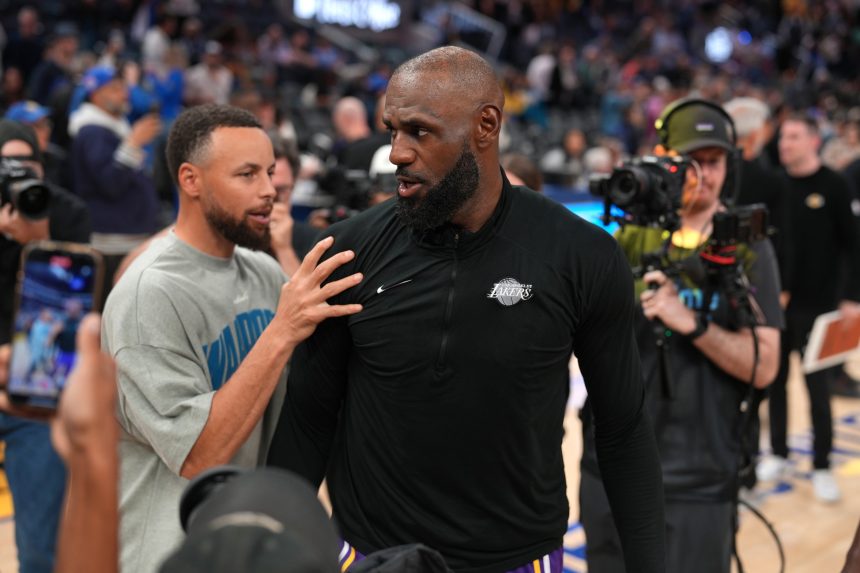
NBA free agency negotiations open Tuesday, June 30, and the Los Angeles Lakers have already checked one major box by re-signing Austin Reaves to a four-year, $185 million deal.
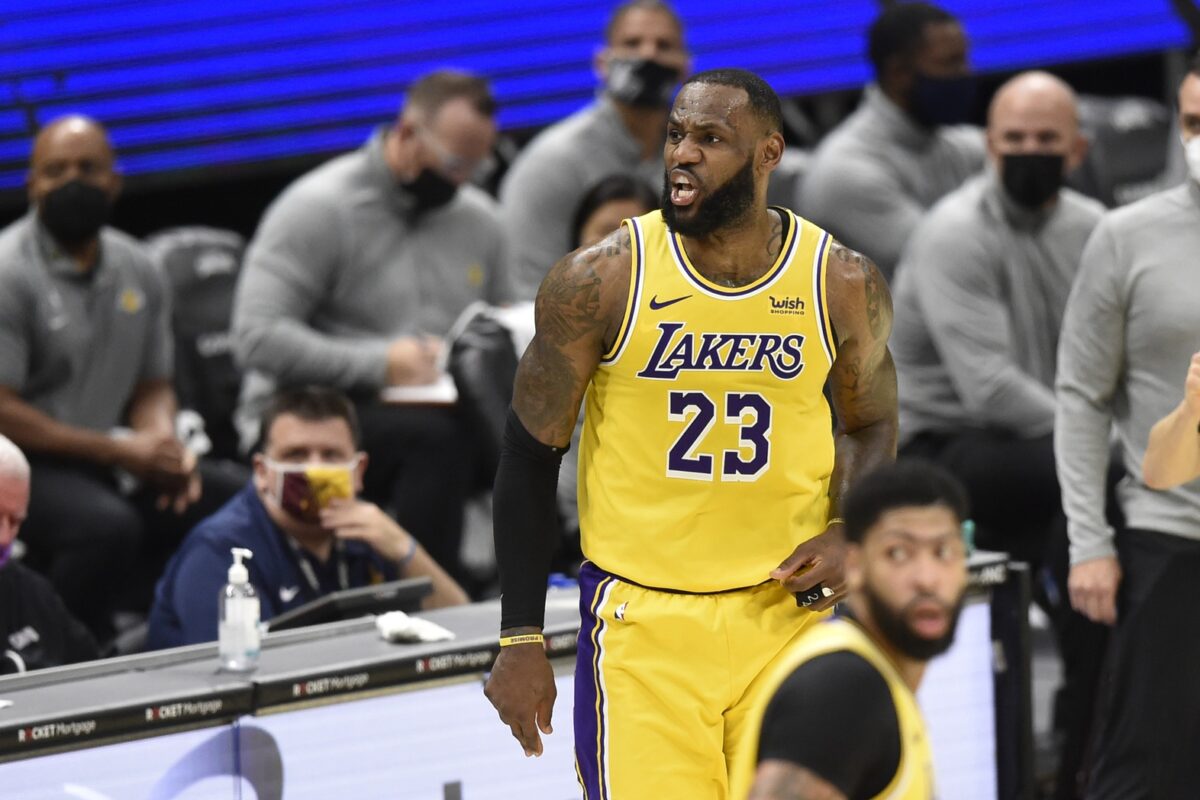
They are chasing a starting center to play next to Luka Doncic and are also looking for a defensive-minded wing. What they have not done, with the clock running down, is put a contract in front of LeBron James — and the longer that goes, the louder the speculation about his exit becomes.
That speculation now has a notable source attached to it. Jovan Buha, who covers the Lakers for The Athletic, laid out a path this weekend in which Los Angeles loses James to the Miami Heat, and the reasoning came down to one number.
What Jovan Buha said about LeBron James and the Heat
Speaking on Colin Cowherd’s “The Herd” on Saturday, Buha argued that the Lakers risk alienating James simply by spending their money elsewhere first, according to a clip of the appearance.
“If the Lakers decide, ‘Hey, we’re gonna go pursue these restricted free agents or we’re gonna make a trade for somebody and now we only have X amount of money left over for you,’ I could see that being offensive to LeBron and him just being like, ‘Alright, well if you’re gonna pay me $15 million, I’m just gonna go get that from Miami,'” Buha said.
He then framed Miami as a real landing spot rather than a throwaway hypothetical.
“If the negotiations sour, and [the two sides] decide it’s not the right fit, I think Miami would be one of the top suitors,” Buha said.
The $15 million figure Buha referenced lines up with the $15.1 million non-taxpayer mid-level exception, the tool a contender like the Heat could use to sign James outright. Miami already reshaped its offseason by trading for Giannis Antetokounmpo, and a James addition would slot him alongside Antetokounmpo and Bam Adebayo.
The cap math that created the squeeze
The reason this is even a conversation is the Lakers’ books. Los Angeles is projected to have somewhere between $48 million and $52 million in cap space this summer, with Deandre Ayton’s $8.1 million player option as one swing variable and salaries like Jarred Vanderbilt, Jake LaRavia and Dalton Knecht as movable pieces if the front office wants to open up more.
That space exists even after the Reaves agreement because his deal has not been formally processed yet, so the team is still carrying a temporary cap hold of roughly $21 million on his number. In practical terms, the Lakers can operate as a cap-space team now and convert Reaves to his full salary using his Bird rights later.
The catch is what that money is earmarked for. If the Lakers spend the bulk of it on a center and a wing, the figure left over for James shrinks toward that mid-level range — and that is exactly the scenario Buha described as a potential insult to a player of James’ stature.
James made $52.6 million last season on the back end of a two-year, $101 million contract, and there has been reporting all offseason that he would resist a steep discount after feeling underappreciated, as ESPN’s Ramona Shelburne detailed on “SportsCenter.”
Why the center comes before LeBron
The order of operations is the whole story. Doncic has made an upgrade at center his clear priority this offseason, and the front office has treated that as the summer’s defining task rather than a James reunion. That is a real shift in hierarchy for a player who has anchored the franchise for eight seasons.
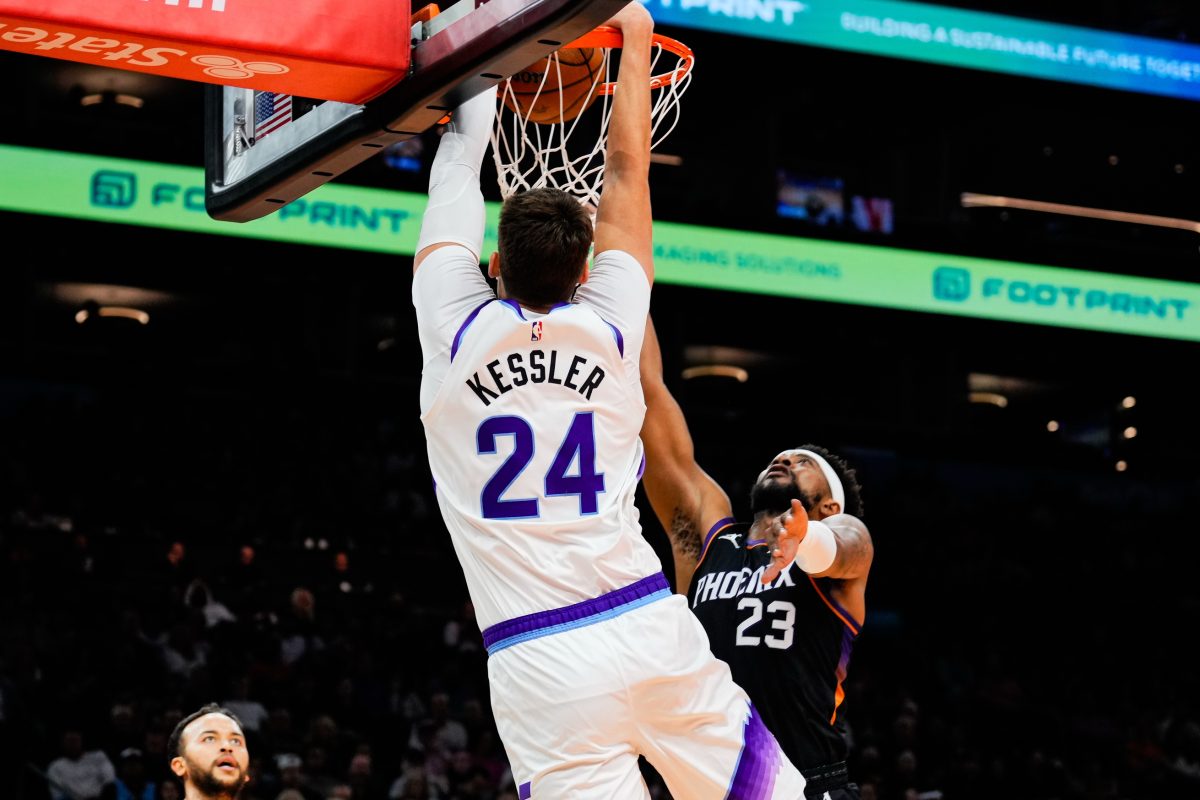
It is also happening as the center market thins out by the day. The options have dried up: Kel’el Ware is now in Milwaukee, Nic Claxton landed in Chicago, and the reporting around Walker Kessler points to him staying in Utah, with Jalen Duren viewed as even less likely to be available. The shrinking board only raises the stakes on getting the center right, which in turn raises the pressure on the dollars that would otherwise go to James.
Jake Fischer captured the same dynamic on ESPN Cleveland on Friday, reporting that finding a big man had become the Lakers’ top priority with James’ contract taking a back seat for the moment.
The growing belief that LeBron could actually leave
For years, James’ free agency has functioned as a formality in which the only suspense was the length and the number. This one feels different, and the people covering it are saying so out loud.
“It might even be more likely than not that he leaves Los Angeles than stays with the Lakers,” Fischer said Friday, pointing to belief around the league and around Klutch Sports that James has more outcomes on the table than usual.
The hedge there is that James’ realistic alternatives are financially limited. The Golden State Warriors have maintained a longstanding interest but can only offer the mid-level. The Cleveland Cavaliers, his hometown team, have even less flexibility.
Miami can clear the mid-level too, but only after additional moves. None of those teams can match what the Lakers can technically offer using James’ full Bird rights, which is why the league-wide expectation has long been that the two sides find a number.
That assumption is now being tested. Shelburne reported that James “has not even fully committed to returning next year” in early conversations, and the Lakers and his camp have not engaged in much back-and-forth since an initial check-in once the negotiating window opened. The Lakers have until Tuesday to talk exclusively with James before the rest of the league gets access.
What it means for the Lakers
None of this guarantees a divorce. James still lives and does business in Los Angeles, his son Bronny James remains under contract, and his preferred outcome, by most accounts, is to stay. The likeliest version of this still ends with a deal that lets the Lakers keep their core intact.
But the framing has changed, and Buha’s comments are the clearest sign yet that even the people closest to the Lakers see a real fork in the road. If the front office spends first and circles back to James with whatever is left, it may get the roster it wants around Doncic and lose the most accomplished player in franchise history in the process. For a team that has spent the offseason signaling this is now Doncic’s team, that may be a tradeoff it is willing to make.
The next 48 hours will tell us a lot. James averaged 20.9 points, 6.1 rebounds, 7.2 assists and 1.2 steals per game last season on 51.5 percent shooting and 31.7 percent from 3-point range across 60 games, per Basketball-Reference, and he made another All-Star team at 41.
He is not the player the franchise is building around anymore, but he is still good enough that letting him walk over a number would be a statement. Whether the Lakers are ready to make it should become clear once free agency opens.