
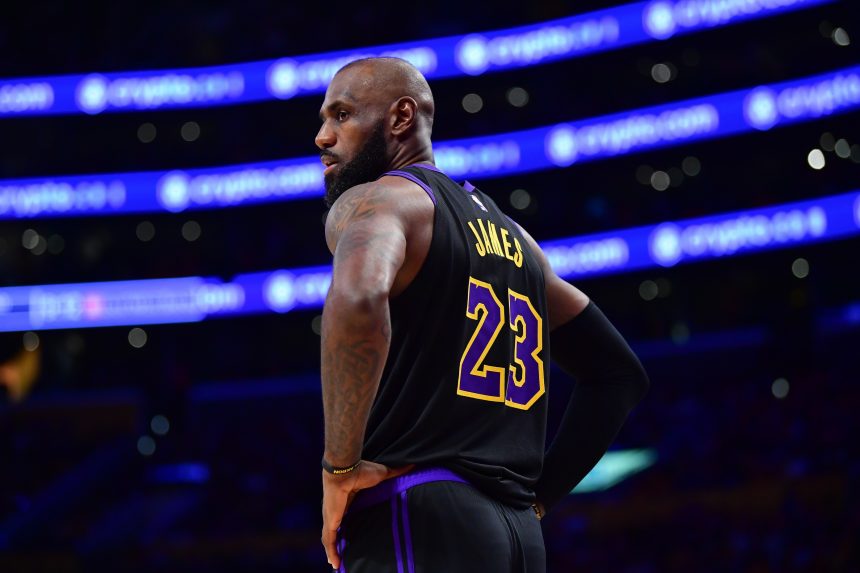
With Austin Reaves locked into a four-year, $185 million maximum, the Los Angeles Lakers have settled the easier of their two franchise questions. The harder one is still unresolved. LeBron James is the last domino of the Lakers’ offseason, and how, and whether, he decides to keep playing will shape almost everything the front office can do next.
The reason is money. James is an unrestricted free agent, his decision gates the rest of the Lakers’ cap sheet, and for the first time in a long time the question is not whether he commands a maximum salary but how the two sides bridge the gap between what he has earned and what the roster can afford. Reaves was the priority the Lakers could control. James is the one they cannot.
The cap fork only LeBron can resolve
Start with the number that governs everything. James carries a cap hold of roughly $59.5 million, the largest figure on the Lakers’ books that the team itself controls. That hold is the hinge the entire offseason swings on.
The Lakers have two incompatible paths. They can operate over the cap, keep James through his Bird rights, retain their own free agents and use the $15.1 million non-taxpayer mid-level exception to add outside help, changing the roster mainly through trades. Or they can renounce James’ hold to open up the roughly $48 million to $50 million in cap space the Reaves deal was structured to preserve, sign an outside player with real money, and then bring James back only on the $9.4 million room mid-level exception.
That second path is the rub. Bringing James back on a $9.4 million exception would mean a staggering pay cut from the $52.6 million he made last season, a number it is difficult to imagine him accepting. The practical effect is that James’ choice does not just decide whether he returns. It decides which kind of team the Lakers get to be this summer, and how much is left over for the center Luka Doncic has been asking for since he arrived. Every dollar committed to James is a dollar subtracted from that pursuit.
What the Lakers can actually offer
The ceiling is clear and almost beside the point. Los Angeles could technically offer James a maximum of three years and $182 million, but nobody around the league expects the team to come anywhere close to that figure, per ESPN’s Dave McMenamin. The realistic conversation lives far below it.
ESPN reported the Lakers could beat a rival offer with a deal in the $20 million to $30 million range while still re-signing Reaves and filling out the roster. Outside observers have floated specific structures along those lines. Brad Turner of the Los Angeles Times suggested a two-year, $50 million deal, while ESPN’s Bobby Marks pitched a one-year, $30 million contract with a no-trade clause, per Bleacher Report.
The throughline is a pay cut, and that is the part without precedent. Outside of his rookie contract, the only time James has signed for less than the maximum was when he joined the Miami Heat in a sign-and-trade in 2010. Asking him to take a steep discount now, in service of a roster built around a younger star, is the negotiation the Lakers are walking into.
Where LeBron’s head is
For now, there is more silence than signal. James’ agent, Klutch Sports CEO Rich Paul, has said he is waiting to discuss with James on whether his client wants to play a 24th season at all. Paul has been pointed about how little is settled.
“Believe nothing that’s out there because I haven’t had one conversation with him,” Paul said on the “The Pat McAfee Show.”
What is known is that James has options. Paul has said roughly 10 to 12 teams inquired about his client, and that title contention remains James’ priority above any dollar figure. The expectation across the league is that James returns to Los Angeles if he plays at all, but expectation is not commitment, and retirement has not been ruled out.
None of the hesitation is about decline. James remains a high-level player, averaging 20.9 points, 6.1 rebounds, 7.2 assists and 1.2 steals per game across 60 games last season at age 41, and he carried the Lakers’ offense during stretches when Doncic and Reaves were hurt. The basketball case for keeping him is real. The financial case is what makes it complicated.
The wild card: a LeBron-for-Jarrett Allen sign-and-trade
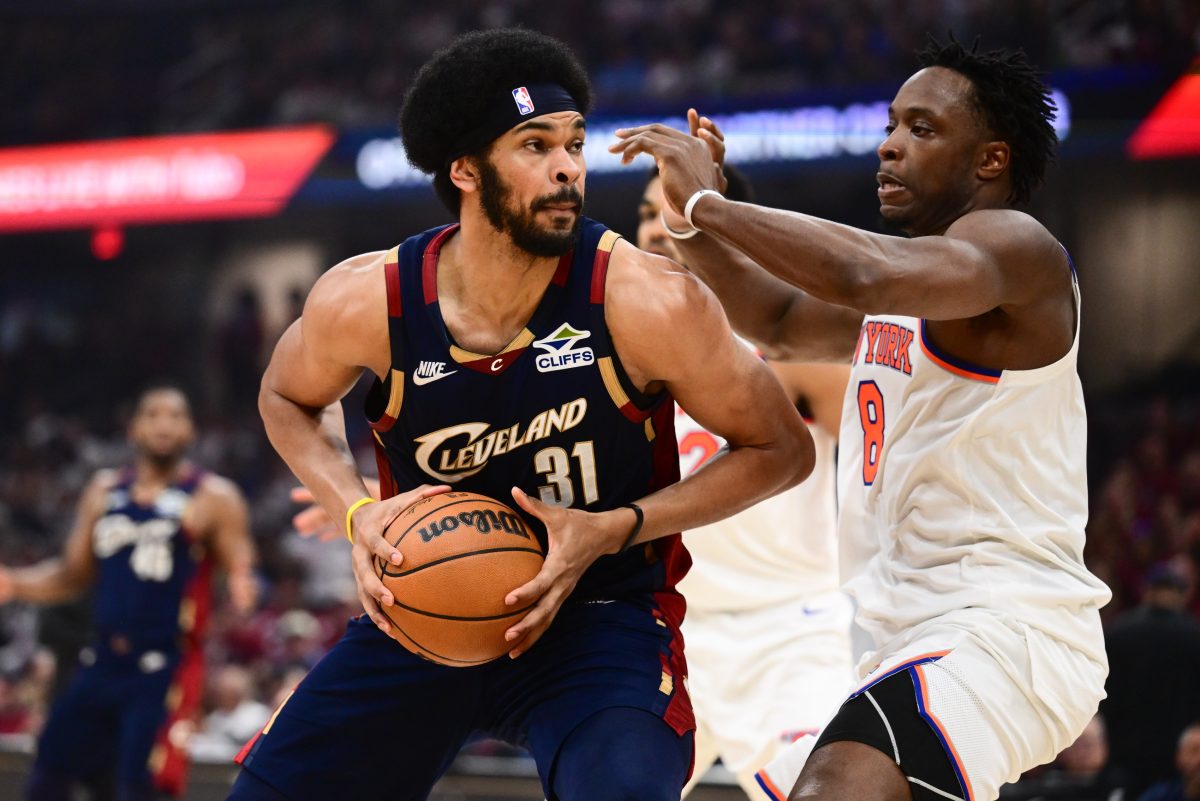
The most dramatic branch surfaced on Wednesday. Brian Windhorst said on ESPN 850 in Cleveland that the Lakers would be willing to orchestrate a sign-and-trade sending James to the Cleveland Cavaliers in exchange for center Jarrett Allen.
The appeal from the Lakers’ side is obvious. Allen would instantly be the most accomplished center Doncic has played alongside in years, and acquiring him through James would solve the roster’s biggest hole without spending cap space.
The catch is just as obvious. The framework requires James to agree to return to Cleveland, and to this point that does not appear to be a serious consideration for him. It is a scenario worth tracking because the Lakers are reportedly open to it, not because it is likely to happen.
The alternatives: Warriors, Heat, retirement
If James does leave, the landing spots are limited by the same cap math working against everyone. The Golden State Warriors have been cited as a realistic second option, but as currently built they could offer only the $15.1 million non-taxpayer mid-level exception, roughly $37 million less than James made last season. The Miami Heat have also been mentioned, though it is unclear how much enthusiasm James would have for either destination.
Then there is the option that ends the conversation entirely. James has not committed to playing a 24th season, and a clean retirement remains on the table. For a player chasing championships rather than counting stats, the decision may come down to whether he believes this Lakers roster, center included, can actually contend.
What Lakers fans are saying
The fan base is pulled in two directions. Most want James back, but not at a number that swallows the money earmarked for a center, and there is real unease about a pay-cut standoff given his salary history and his stated belief that his recent sacrifices have gone underappreciated. A smaller group is ready to move on if it clears the path to a true center, and the Allen sign-and-trade scenario drew equal parts intrigue and alarm.
What unites the reactions is impatience. The Lakers have until June 30 to negotiate exclusively with James before every other team gains access, and the rest of their plan, the center search most of all, cannot fully take shape until his number is known. Reaves is settled and the cap room is preserved, but the single biggest variable of the Lakers’ offseason is still a decision that only one man can make, and he has not made it yet.