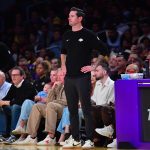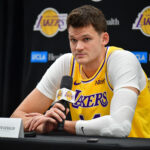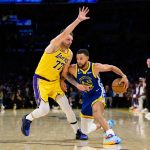

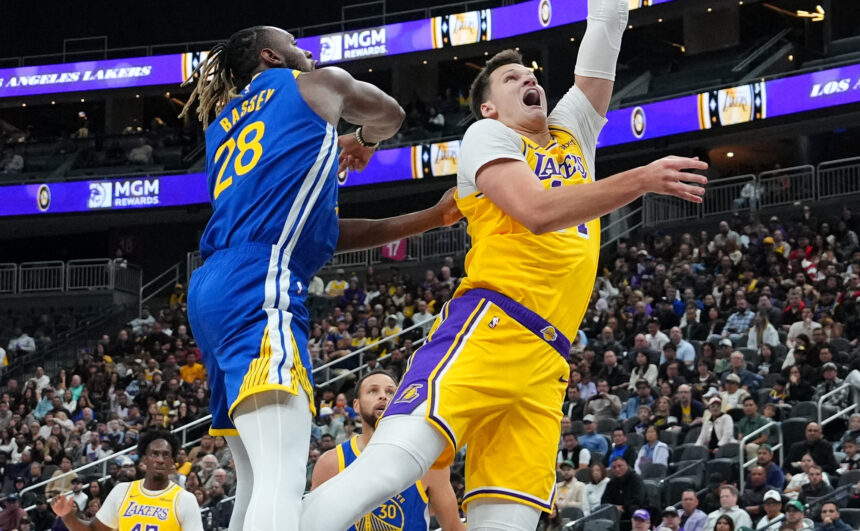
Walker Kessler’s first appearance with the Los Angeles Lakers gave JJ Redick an encouraging look at his starting center. It also left the coach discussing a problem Kessler cannot solve from the bench.
After Tuesday’s 101-89 preseason loss to the Golden State Warriors, Redick pointed to a sharp difference on the glass between the two halves. Golden State had two offensive rebounds before halftime and 13 afterward, when Kessler did not play.
Redick described rebounding as a concern throughout the Lakers’ four preseason games, extending the discussion beyond one center’s successful debut.
That’s an area of concern through the four preseason games,” Redick said. “We’ve got to be able to do a better job of rebounding, in general, whether he’s on the floor or not.”
"I think he's (Kessler) a great fit for our team… Overall, just really good for someone who didn't play for whatever is 10 days."
JJ Redick talks to the media after the #Lakers 101-89 loss to the Warriors in Las Vegas. pic.twitter.com/B5H7lzZIh6
— Spectrum SportsNet (@SpectrumSN) October 14, 2026
That leaves Los Angeles with two separate tasks: building on what worked with Kessler and finding combinations that can finish defensive possessions when he rests.
Walker Kessler gives Lakers an encouraging first look
Kessler finished with 11 points on 4-of-6 shooting, nine rebounds, one steal and one block in approximately 16 minutes. All of his playing time came before halftime.
Los Angeles finished his minutes ahead by 15 points. Golden State won the minutes without him by 27.
The appearance followed a long absence. Kessler had not played in an NBA game since Oct. 31, 2025, before undergoing surgery on his left shoulder.
A jammed left pinkie then delayed his Lakers preseason debut. His return supplied more than rebounding.
Austin Reaves credited Kessler’s movement toward the rim with creating open perimeter opportunities, while Sandro Mamukelashvili praised his physical play and rim protection.
“I mean he created probably four or five really good looks for us from 3 by just rolling hard,” Reaves said.
Those contributions matter together. A center who draws attention near the basket can help create a clean shot without receiving an assist.
At the other end, securing a rebound allows his team to begin its next possession instead of defending another attempt.
Tuesday offered an initial look at those benefits. It did not establish how consistently the Lakers can reproduce them, or what their best alternative will be when Kessler leaves the floor.
The rebounding split needs context
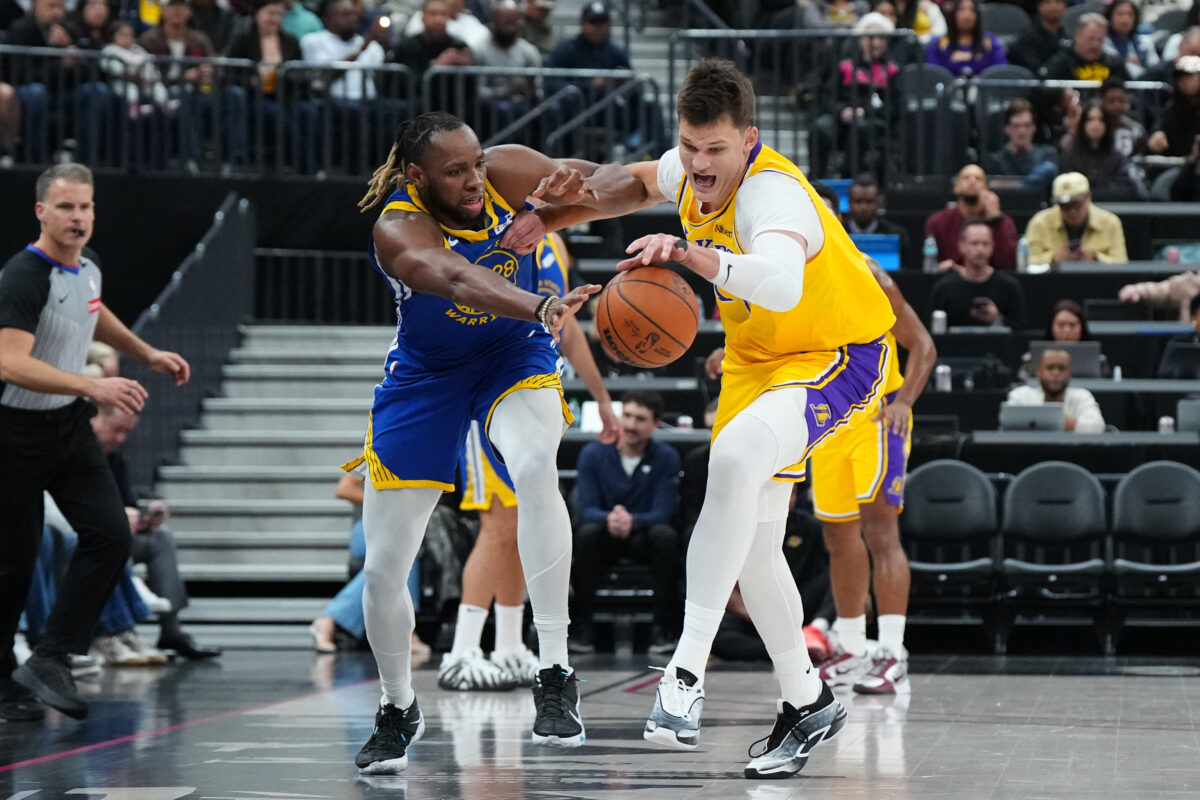
The halftime comparison is striking, but it is not a controlled test of Kessler against the Lakers’ other centers.
He played part of the first half, not the entire half. Golden State’s two offensive rebounds before the break therefore cannot be treated as a total accumulated exclusively against him.
Different combinations also shared the floor throughout the game. Similarly, an offensive-rebound count does not tell the whole story without considering the number of available misses.
13 offensive rebounds shows repeated second chances, but a rebounding percentage would better describe how often the Lakers failed to collect an opponent’s missed shot.
The score differential carries its own limitations. It includes everything that happened offensively and defensively during those minutes, not just rebounding.
It should not become a projection that Los Angeles will lose ground at the same rate whenever Kessler sits.
Redick’s concern nevertheless deserves attention because he placed it within a broader preseason pattern. His message was about a team responsibility that must hold up across different groups.
For the coaching staff, the next question is which possessions broke down and why. Was the center pulled away from the basket?
Did a perimeter defender lose contact with a player cutting toward the rebound? Did the group force a miss but fail to secure the ball?
Those are film-review questions, not conclusions established by the final score.
JJ Redick already outlined a possible lineup adjustment
The coach had identified one potential response before Kessler returned.
Following Saturday’s practice, Redick discussed using bigger perimeter players alongside the backup center. Doncic, Adou Thiero and Mamukelashvili were among his examples.
He also emphasized fundamentals.
“I think in film it’s pretty apparent we need to do a better job of boxing out, just simple stuff and gang rebounding,” Redick said Saturday.
That approach makes the rebounding discussion relevant to the wing rotation as well as the center position. Adding size around a backup big could give Los Angeles more players capable of contesting a loose ball or preventing an opponent from reaching it.
Mamukelashvili’s position changes the available combinations. Using him beside another center would give the Lakers additional frontcourt size. Using him at center would leave a different player responsible for providing that support.
Neither arrangement guarantees improvement. The larger lineup still has to communicate, maintain its defensive assignments and make contact when a shot goes up.
Lakers were missing pieces of that plan
Tuesday did not give Redick access to every combination he had described.
As detailed in the pregame availability update, Doncic rested while Thiero, Ziaire Williams, Collin Sexton and Cameron Carr were also unavailable. Redick distinguished Doncic’s night off from the other players’ day-to-day injury situations.
Doncic and Thiero’s absences are particularly relevant to the rebounding discussion because both appeared in Redick’s earlier examples of bigger players who could support those units.
Their absence limits what Tuesday can establish about that proposed approach. It does not erase the missed rebounds, but it prevents the game from serving as a complete evaluation of the combinations the coach wants to explore.
The next useful comparison is how those groups perform when more of the roster is available. The Lakers need to see whether added size produces cleaner defensive possessions while preserving enough spacing and ballhandling at the other end.
Kessler’s debut gave Redick a positive starting point. The work around him remains unfinished: Los Angeles still needs a reliable way to turn an opponent’s miss into a change of possession when its starting center takes a seat.