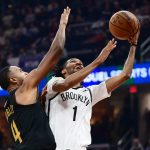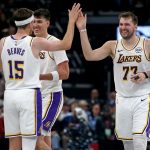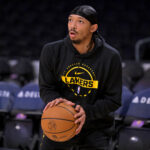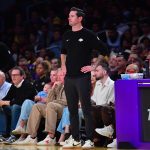

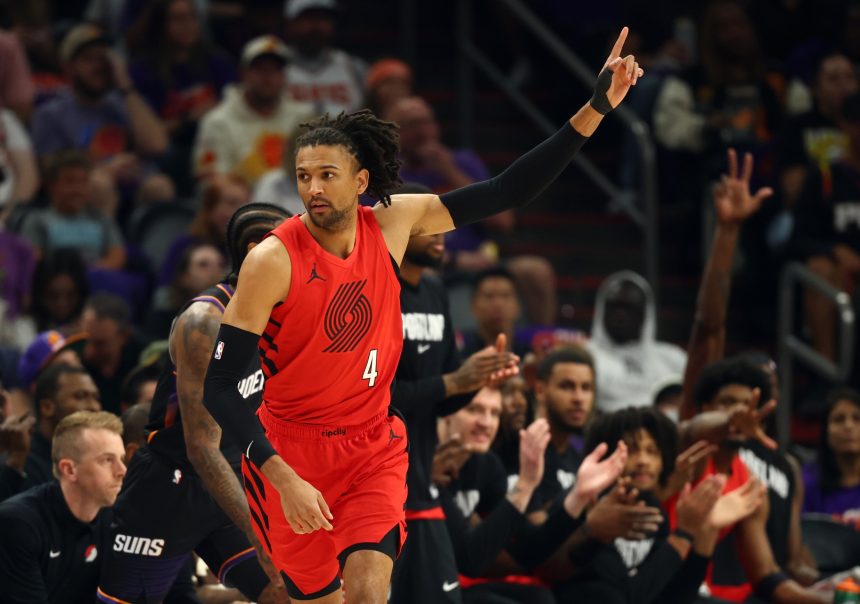
Matisse Thybulle could give the Los Angeles Lakers another option for the final minutes of a close game. Earning that role would require him to help a lineup survive possessions at both ends, including the ones when an opponent tries to make him the player who decides the outcome.
That is the question worth following as JJ Redick sorts through his perimeter combinations: Can Thybulle stay on the floor through several consecutive trips, with the Lakers needing a basket one moment and a stop the next?
His defensive reputation gives him a case. He has two NBA All-Defensive selections. Yet a finishing lineup has to function as a unit, and putting a disruptive defender beside Luka Doncic and Austin Reaves creates decisions about spacing, matchups and who secures the rebound after a missed shot.
There is a plausible path for Thybulle to earn those minutes. It depends on three tests, each of which would tell the Lakers more than where his name appears on an opening-night depth chart.
1. Make the defense account for him on offense
For this role, Thybulle would not need an offense built around his scoring. He would need to make the possessions created by Doncic and Reaves worthwhile, especially when a defender leaves him to crowd the ball.
Consider a late-game pick-and-roll with Doncic handling and Walker Kessler screening. If Thybulle is stationed in the weak-side corner, his defender could help toward Kessler’s roll and try to recover when the pass goes outside.
That becomes a favorable defensive choice if Thybulle hesitates long enough to let the possession reset. Taking the available shot promptly would be one way to punish that help.
Moving into a clearer passing window or cutting behind a defender who has completely turned toward the ball could be another. The appropriate response would depend on where Kessler is and whether the lane is already occupied.
The distinction matters because a player can stand beyond the arc without creating useful spacing. The real question is how much ground his defender is willing to surrender, and whether the Lakers can turn that decision into an advantage before the defense recovers.
There is reason to be cautious about declaring the shooting question settled. Thybulle went 1-for-11 from three across four playoff appearances against San Antonio in April.
That is a small sample, far too small to predict his next postseason. It does illustrate why a closing role should be evaluated over more than a few promising shooting nights.
The Lakers would need to see whether his decisions remain useful when the first attempt misses and the opponent keeps helping off him. Redick could also explore using Thybulle as a screener.
If his defender is the player most willing to leave an assignment, bringing that defender directly into the action might make the coverage less comfortable. A slip toward open space could create a passing option, although it would require coordination with the other screener or interior player.
None of that requires Thybulle to become a primary creator. It requires a dependable response when the ball reaches him: Shoot an available attempt, move it to the next advantage or attack a closeout without giving the defense time to recover.
2. Improve the defense without leaving another opening
A potential group worth examining would put Thybulle alongside Doncic, Reaves, Quentin Grimes and Kessler. This is a lineup proposal, not a reported decision by Redick, and its usefulness would depend heavily on the opponent.
The appeal would be the ability to distribute difficult perimeter assignments. Thybulle could take one threatening ball handler while Grimes takes another, allowing the Lakers to consider less demanding initial assignments for their offensive creators.
But the first assignment is only the beginning of a possession. An opponent could use the player guarded by Doncic or Reaves as a screener, forcing Los Angeles to decide whether to switch, show help or keep the original matchup.
Thybulle would have to remain useful through those decisions rather than simply picking up the most dangerous guard at the start. If Kessler stays closer to the basket in a drop coverage, the perimeter defender’s responsibility would include pursuing the ball handler and limiting comfortable pull-up opportunities.
If the Lakers switch, their next responsibility would be containing the resulting matchup without sending unnecessary help from elsewhere. Those are different tasks.
A lineup that handles one well might still need adjustments against an opponent who can change the angle of a screen or place a stronger scorer in the post. Thybulle’s case for closing would therefore depend on how the whole group responds, including what happens away from his assignment.
The rebound is another part of that evaluation. If Kessler steps up to contest a drive, someone else must make contact with the opposing big man or protect the space behind him.
A smaller perimeter group cannot count a difficult shot as a successful stop until it has possession of the ball. That is where the comparison with other wings becomes more useful than a simple ranking of individual defenders.
As the Lakers’ discussion around Ziaire Williams’ potential role shows, there are other combinations to consider on the perimeter. Thybulle would need to justify the particular balance his group offers.
Against a team leaning on guard creation, that balance might favor him. Against a larger lineup repeatedly generating interior mismatches or second chances, Redick could have a stronger reason to use another forward. Those outcomes would reflect different jobs rather than a permanent verdict on Thybulle’s value.
3. Give the Lakers a combination they can practice and repeat
Availability is the third condition as Thybulle does have recent injury interruptions
For a prospective closing group, continuity would have practical value. Players need repetitions to recognize when to exchange assignments, when to stay attached to a shooter and where a teammate expects help.
A possession with little time remaining leaves limited room to correct a misunderstanding. Thybulle would also benefit from offensive repetitions with both primary ball handlers.
The passing window on a drive can shift quickly, and a cut that helps one possession could crowd another. Learning those details would give the Lakers a better basis for deciding when his inclusion improves the group.
That does not mean he would need to play starter-level minutes to finish games. Redick could use a smaller role earlier in the night and still choose him for a particular closing stretch.
The relevant question would be whether that group has enough shared experience to execute when the game becomes less forgiving. The Lakers’ earlier rotation analysis explored the competition for minutes.
Closing games adds another layer: a player can have a regular place in the rotation while being a less suitable choice for the final matchup, or enter late because a specific assignment suits him.
What would establish Thybulle as a closing option?
The most persuasive evidence would be a run of complete possessions. Does his offensive involvement prevent the opponent from loading up on Doncic?
Can he navigate a screen without forcing an emergency rotation? Does the group finish the stop with a rebound and remain organized on the next trip?
Those questions also change with the score. Protecting a lead could favor another perimeter defender; chasing a deficit could increase the value of an additional shooter or creator.
A timeout might allow Redick to substitute for one possession, while an uninterrupted stretch would demand a group capable of doing both jobs.
Thybulle’s opportunity is to make that second decision easier. If he can stay involved offensively, contribute to a sound team defense and provide enough continuity to build trust, the Lakers could have a useful finishing option even on nights when he begins on the bench.