
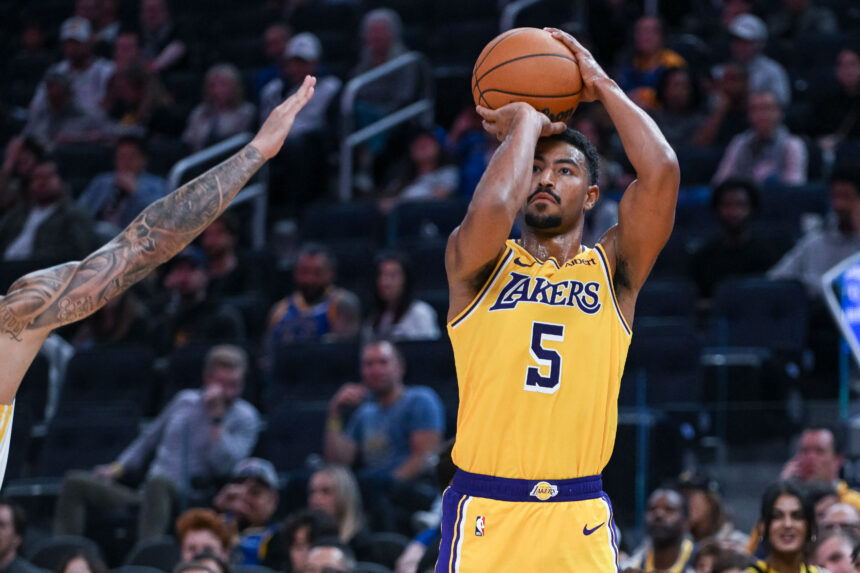
Quentin Grimes says the Philadelphia 76ers did little to bring him back before he chose the Los Angeles Lakers, where an established relationship with JJ Redick helped make the decision easier.
In a report published Thursday by Andscape’s Marc J. Spears, Grimes described Philadelphia’s limited pursuit and explained Redick’s importance to his move. The guard agreed to a four-year, $60 million Lakers contract during the offseason.
“He was the main selling point,” Grimes said. “I saw the [offensive] freedom he gave guys the last two years. Being a part of that offense will be a great opportunity for me to take my game to the next level and hopefully take my team to the next level as well.”
Grimes also recalled becoming emotional when news of the agreement reached him during a workout.
“I kind of broke down when the news broke with Shams and everything,” Grimes said.
His account adds a personal perspective to a departure that followed two very different summers: restricted free agency in 2025, then the opportunity to choose a new destination in 2026.
How Grimes reached the open market
The earlier negotiations help explain why a multiyear commitment mattered. On Oct. 1, 2025, Grimes had accepted Philadelphia’s one-year, $8.7 million qualifying offer.
That agreement gave Grimes the ability to reject trades during the following season and positioned him to become an unrestricted free agent in 2026. He secured another NBA season but postponed the longer-term decision.
His agent David Bauman told ESPN that Philadelphia had proposed four years and $39 million, followed by a one-year offer of $8.8 million that required Grimes to surrender his trade veto.
Neither proposal produced an agreement. Grimes’ representatives subsequently proposed one year at $17 million or two years at $34 million with a player option.
Philadelphia declined those alternatives. Those details concern the 2025 talks, not the summer when Grimes joined Los Angeles.
His latest comments address what happened after he completed that additional season with the Sixers. The Lakers’ agreement averages $15 million per season.
The earlier four-year Philadelphia proposal would have averaged $9.75 million, a difference of $5.25 million annually and $21 million in total contract value.
That comparison illustrates the larger commitment Los Angeles made, but it is not a complete accounting of what Grimes gained or risked.
The contracts would have covered different seasons, and the qualifying-offer year separated the two decisions. Comparing their headline totals alone would leave out part of the timeline.
What the Lakers are asking Grimes to provide
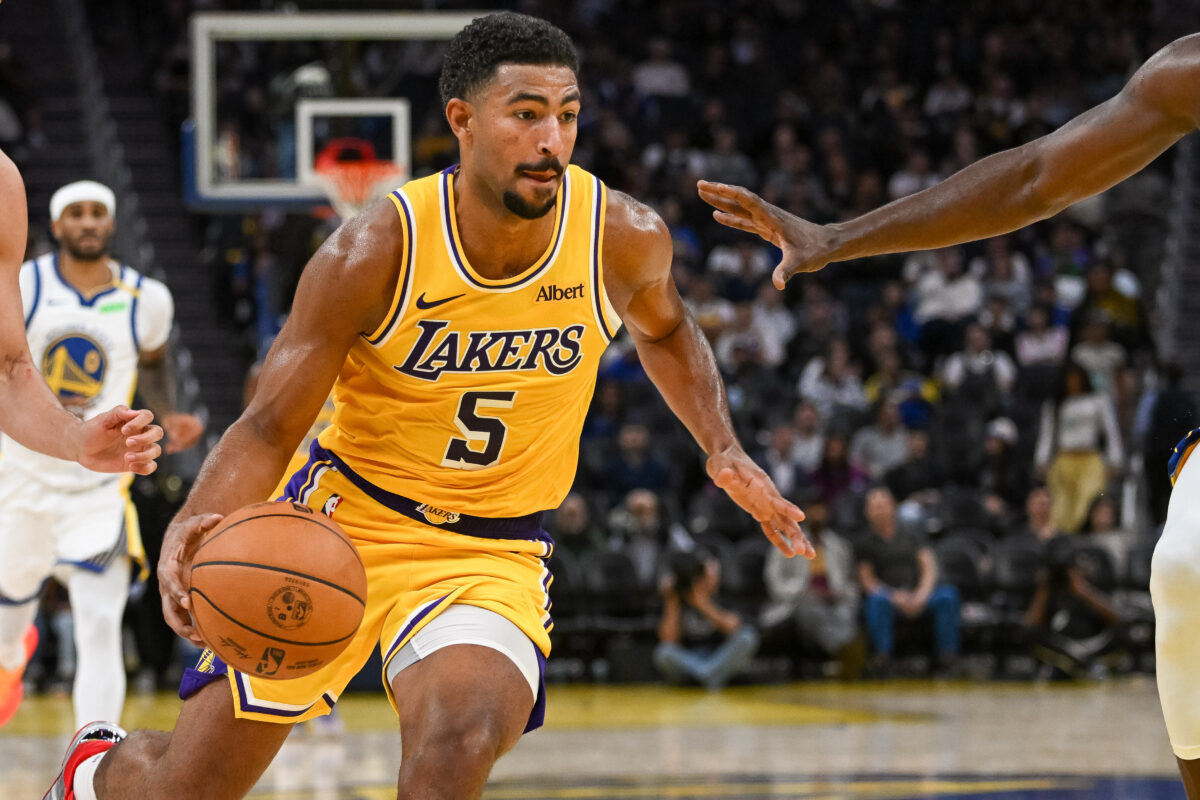
Los Angeles added Grimes as part of a broader offseason investment in players around Luka Doncic and Austin Reaves. The main additions were Grimes, Collin Sexton and Sandro Mamukelashvili following the agreement to acquire Walker Kessler.
Grimes averaged 13.4 points, 3.6 rebounds and 3.3 assists per game for Philadelphia last season. Those numbers describe a player capable of contributing beyond spot-up shooting, even without being the first option on every possession.
For the Lakers, the important distinction is between adding another scorer and adding someone who can keep an offense moving around its established creators.
Grimes does not need to match Doncic’s workload to influence a possession. Attacking an opening or delivering the next pass can be valuable before a defense gets organized again.
Redick’s more recent assessment gives that potential role a clearer shape. After Tuesday’s game against Golden State, he discussed Grimes’ ability to initiate an advantage or capitalize on one created elsewhere.
The coach also praised his work without the ball on the other end.
“I think his commitment to the defensive end has been really good throughout camp and in these first two games,” Redick said.
That is a relevant standard for evaluating the signing. A productive scoring night does not necessarily answer whether a player fits next to Doncic and Reaves.
The defensive assignments he can handle, and the decisions he makes when he is not shooting, help determine which combinations Redick can use.
It also connects Grimes’ role to the roster priorities Redick recently explained: more ways to create offense and a group whose skills work together.
Two preseason games offer an early look
Grimes’ opening appearances have provided a small sample of both his scoring and the work still ahead. He scored 16 points on 5-of-7 shooting against Sacramento, then had 12 points on 3-of-8 shooting against Golden State.
Across those games, he made 8-of-15 attempts overall and 4-of-9 from 3-point range. Those totals are encouraging, but 15 shots cannot establish how efficiently he will score across a full season or against opponents preparing specifically for him.
The better use of preseason is to examine how the opportunities arise. Can Grimes contribute when the first action does not generate a shot?
Can the lineup remain balanced when the Lakers make substitutions? Those questions are more useful than projecting a season-long scoring average from two exhibitions.
Lakers Daily’s earlier examination of the competition for two starting positions considered the different combinations around Doncic, Reaves and Kessler. Grimes’ early production strengthens his case for a significant role, but a preseason start and a long-term contract are not substitutes for an announced regular-season lineup.
The financial commitment is already in place. What remains is the basketball question: whether Grimes can make himself consistently useful across the different groups Redick needs.
His first opportunities have offered reasons for optimism, while the coach’s emphasis on defense makes clear that scoring will be only part of the evaluation.