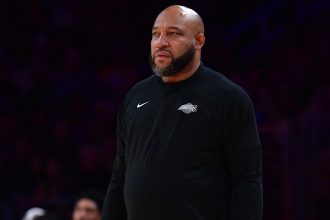

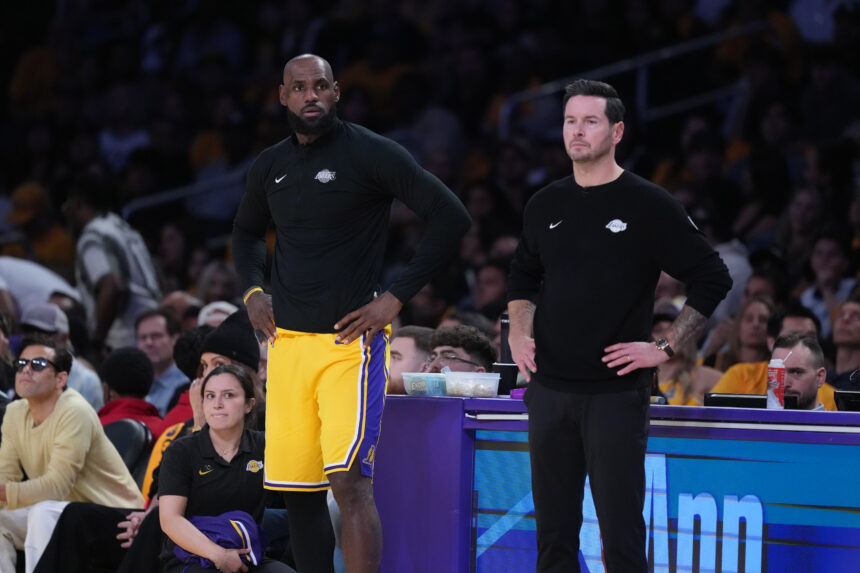
JJ Redick has given a more specific explanation for his confidence in the Los Angeles Lakers’ remodeled roster, identifying the basketball needs behind a comment that drew attention after LeBron James’ departure.
In remarks to The Athletic’s Sam Amick, Redick emphasized the combination of depth, perimeter help and interior defense.
“When I said the pieces fit, that’s more about having depth, having multiple ballhandlers besides Luka and AR, having more shooting, more volume shooting, having an elite rim protector — the combination of all those pieces,” said Redick.
That explanation gives the Lakers a practical set of questions to answer. Can they keep creating good shots when the first action fails?
Can their perimeter players stay connected to the protection behind them? And can Redick make substitutions without sacrificing one entire side of the floor?
Those are more useful tests of this roster than treating every preseason result as a verdict on the team’s ceiling. They also connect the current discussion to a problem Redick had identified well before training camp.
Redick wanted depth that could survive injuries
At his end-of-season news conference, Redick explained that the Lakers needed more dependable options beyond their preferred rotation. His concern included the players farther down the roster who would be needed when injuries changed the plan.
“That depth typically comes in roster spots 10 through 15,” Redick said.
He described repeatedly having to use combinations he had not anticipated when preparing for the season. His comparison was to opponents with enough playable options to absorb disruptions, rather than simply having a strong first group.
That distinction matters when evaluating any offseason. A coach might be comfortable with his starting lineup and still lack a substitute who can handle a particular defensive assignment or organize the offense.
An injury can then change several roles at once, forcing healthy players into jobs they are less suited to perform.
The relevant question for the Lakers is whether the new options let them preserve a workable approach through those changes. Having additional names available only helps if their responsibilities still fit together when someone is missing.
Walker Kessler changes the defensive plan
Redick had already described a specific role for Kessler at the team’s Sept. 24 news conference. The coach explained that he wanted the new center positioned to defend the basket after relying heavily on switching in previous seasons.
The offseason also brought in Quentin Grimes, Collin Sexton, Matisse Thybulle, Ziaire Williams, Kevon Looney and Sandro Mamukelashvili, among others. Redick expected that deeper group to affect how he used his bench.
“We’re going to play more guys this year,” Redick said. “We’re just naturally deeper.”
Keeping a center near the basket can give a perimeter defender a clearer destination when steering a ball-handler away from the middle. But the arrangement depends on both players doing their jobs.
If the first defender is beaten too easily, the center may have to choose between challenging a shot and leaving another player unattended. The remaining defenders matter just as much.
They have to recognize the help, cover the next pass and rebound when a shot goes up. That is why the value of a defensive addition cannot be assessed entirely through blocks or a single matchup.
More creators could make the rotation less fragile
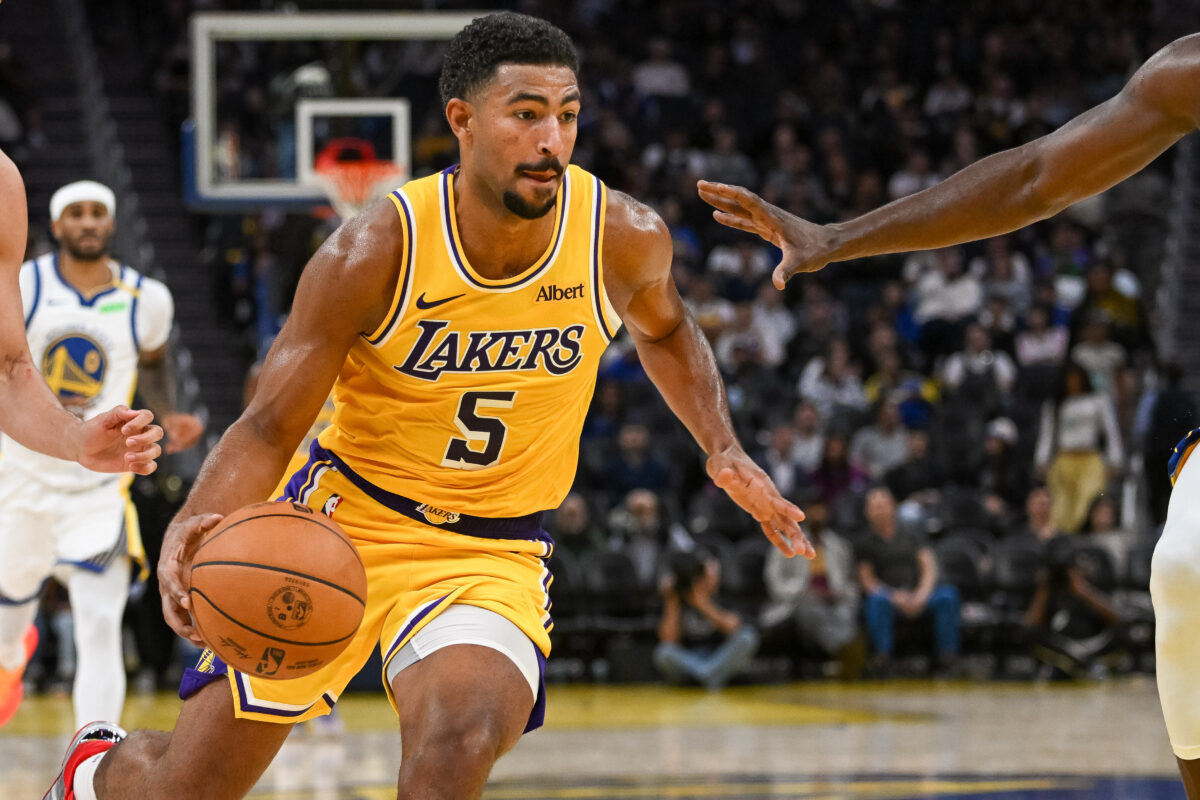
There is a useful offensive parallel: A possession should not have to restart whenever a defense takes the ball away from its primary creator.
A second ball-handler can attack a defender who is still recovering, make the next pass or move directly into another screen. A player who hesitates instead can allow the defense to restore its original shape. The first successful action then produces little lasting benefit.
Redick’s substitution plan is relevant here. The coach planned to generally stagger Luka Doncic and Austin Reaves, giving the lineup a lead creator as the other rested.
That approach creates two related decisions: Who supports Doncic, and who makes the Reaves-led group function?
The same combination does not necessarily answer both questions. A unit might need another player capable of handling pressure, a different screening option or more movement away from the ball.
The challenge becomes sharper when the opponent changes its coverage. If a second defender commits to the ball, the recipient of the next pass needs to turn the resulting advantage into a useful shot.
Redick can evaluate that response even on a possession that ends in a miss.
The early games offer evidence, with limits
The Lakers beat Sacramento 127-103 in their preseason opener.
Afterward, Redick praised the team’s decision-making and the connection between its defense and offense. He emphasized the benefit of moving the ball and turning defensive success into offensive opportunities.
“Obviously, the defense being able to force turnovers helped our offense. Getting stops helped our offense,” Redick said.
That is a useful point of evaluation beyond shooting accuracy. A possession against a retreating defense asks different questions from one against five defenders already in position.
Creating the former can help an offense, but the Lakers still need reliable answers when the opponent gets organized.
The next night brought a 124-98 loss at Golden State with seven Lakers unavailable. Lakers Daily has already covered Redick’s criticism of that performance.
The contrast should discourage sweeping conclusions from either night. A convincing win does not settle the rotation, and a depleted lineup’s struggles do not demonstrate how the preferred group will perform.
Coaches can still evaluate execution, communication and individual decisions within those circumstances.
The remaining lineup decisions will test the fit
The Lakers’ competition for two starting positions illustrates how these responsibilities overlap. Choosing a player for one skill changes what the other four must cover, and it also changes the personnel left for the bench.
A useful evaluation would follow those effects through the first round of substitutions. Does the lineup retain enough shooting after one change?
Who handles the ball against pressure? When the center helps, which player is responsible for the rebound?
For example, using a defender to screen can force his opponent into the action instead of allowing that opponent to wait in a help position. Sending the same player on a cut can also create a passing option near the basket.
Either choice requires timing with the ball-handler and enough room for the movement; simply placing another defender on the floor does not settle the offensive question.
The closing group presents another test. An opponent may force a different matchup late in a game, making the most effective finishing lineup different from the starting five.
Versatility becomes valuable when Redick can respond without abandoning the principles that made the group effective earlier. For the players competing for minutes, that makes the quieter possessions important.
An early rotation, a quick pass or a well-timed cut can keep a teammate from having to solve a harder problem. Those contributions will matter alongside scoring when Redick decides which combinations to trust.
His explanation creates a standard that can be tested as the roster takes shape. The Lakers need their additional options to produce connected basketball across different lineups, especially when the original plan is disrupted.