
Jake Fischer spent Friday morning doing something NBA insiders rarely do in public: correcting the internet’s version of his own reporting.
The number that spread across aggregator headlines overnight — that Jonathan Kuminga wants more than $25 million per year — is not what Fischer says he reported, and the distinction matters more than it might look for a Lakers front office trying to figure out whether its top remaining target is actually reachable.
Fischer wrote on X that what he said on Thursday’s Bleacher Report livestream from Las Vegas was that Kuminga is seeking “more in the $25 million AAV ballpark” when measured against the Lakers’ previously reported two-year, $20 million offer — in that range, not north of it.
He followed up minutes later with a second post aimed at an aggregator that had run with the inflated version, writing that he had literally just clarified the point. “Y’all gotta do better,” he added.
The correction, and why the wording matters
The difference between the two phrasings is the difference between a negotiation and a dead end. A player demanding more than $25 million per year in a market with no cap space is asking for something that does not exist this summer.
A player whose target sits in the $25 million range — the neighborhood of the $22.5 million he earned in 2025-26 and the $24.3 million team option Atlanta declined at the end of June — is naming a reference point that a creative sign-and-trade could plausibly approach.
Fischer’s fuller reporting Friday in The Stein Line supports the softer reading. Kuminga, he wrote, is “open to various contract structures below his 2025-26 season salary of $22.5 million” depending on how sign-and-trade scenarios come together. His post on X added that the forward is weighing fit and role with suitors including the Lakers and Cavaliers, not simply chasing the top line on the contract.
That is a materially different player than the one described in Thursday night’s headlines. It is also a materially cheaper one.
The gap is still real — but it’s a range, not a wall
None of this means the two sides are close. The Lakers’ standing offer averages $10 million per year — a figure that tracks with what was reported earlier this week, where Los Angeles was the most aggressive suitor in the market that still had not put a signable number on the table.
If Kuminga’s target lives in the $20 million-plus range, the gap between the parties is still more than double the current offer. Marc Stein, sharing the stage with Fischer on the Thursday livestream, argued the market itself has become Kuminga’s problem: With league-wide cap space gone this deep into July, even the Lakers’ two-year, $20 million proposal reads differently than it did two weeks ago.
Stein also questioned whether Kuminga is the point-of-attack defender the roster is missing, framing the pursuit as a bet on talent rather than a clean positional fit. The answer to that concern has been consistent since the pursuit began: Kuminga is the best remaining swing on the board, young enough to grow on Luka Doncic’s timeline, which is the organizing principle of everything the front office has done since it moved Kuminga ahead of Rui Hachimura on its wing board.
A framework both sides have now rejected
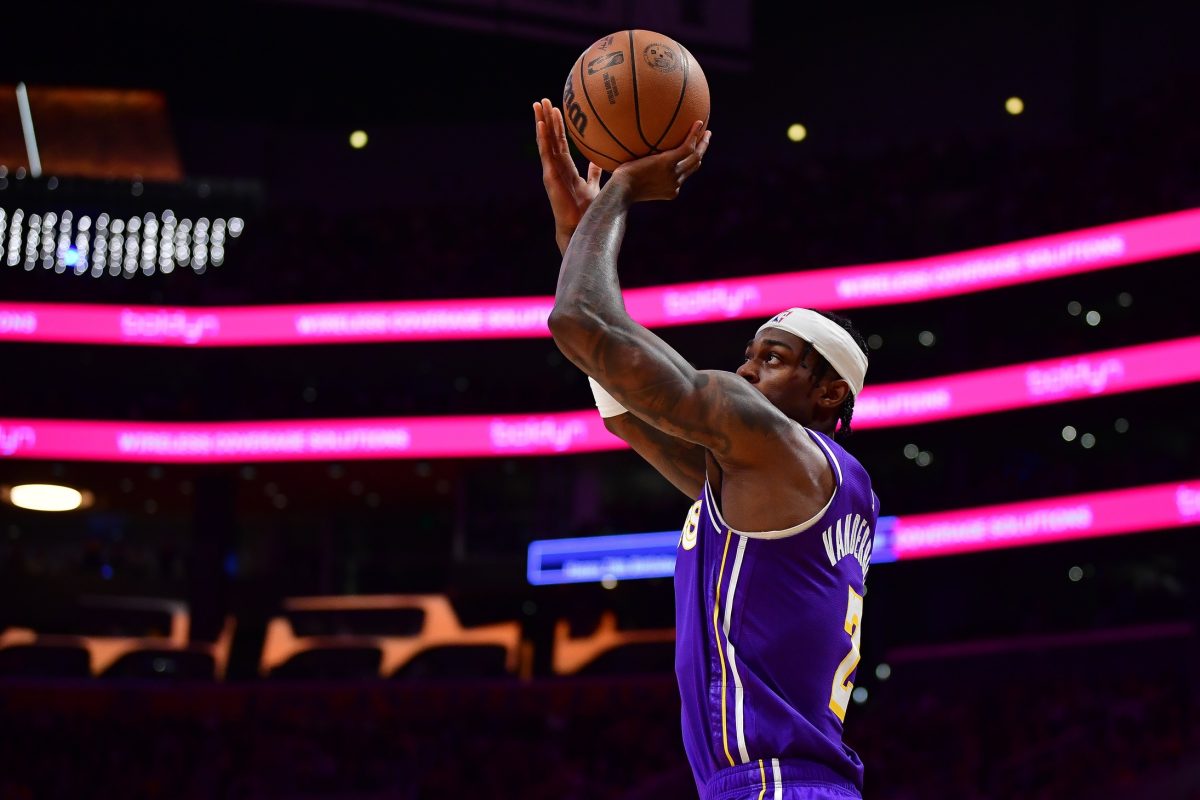
The number was never the only problem, and Friday’s reporting made that unavoidable. Earlier this week, Khobi Price of The California Post reported a framework Atlanta would accept — Kuminga to Los Angeles for Jarred Vanderbilt and the Lakers’ 2032 first-round pick swap.
Fischer’s Stein Line reporting now cuts against the foundation of that framework. Sources told him the Lakers hope to build a sign-and-trade around exactly that Vanderbilt-plus swap package — but that Atlanta has not considered taking Vanderbilt back in any deal that sends Kuminga out. And the Lakers have their own objection to their own proposal: Jovan Buha reported on his podcast this week that the front office is “reluctant to give up that swap in that specific deal.”
Read those together and the picture is a negotiation in which each side has rejected a different half of the only framework on the table. Atlanta does not want the player the Lakers most need to move. The Lakers do not want to pay the draft cost attached to moving him there.
Fischer’s reporting points to the workaround: multi-team constructions that route Vanderbilt to a third club, which would remove Atlanta’s objection and free the Lakers to raise their offer beyond the two-year, $20 million baseline. He also noted that Kuminga’s agent, Aaron Turner, has stayed in steady dialogue with the Lakers about the role waiting next to Doncic — a reminder that the relationship is not the obstacle. The machinery is.
The cap math that forces the sign-and-trade
Everything routes through the same constraint we have been tracking since the pursuit began: The Walker Kessler sign-and-trade hard-capped the Lakers at the first apron, and after the spending spree that added Quentin Grimes, Collin Sexton, Sandro Mamukelashvili and Kevon Looney, the minimum exception is effectively the only signing tool left. A minimum does not land the top name on the team’s board.
Because Atlanta declined Kuminga’s option rather than renouncing him, the Hawks kept his Bird rights — which makes them the only mechanism through which he can be paid anything close to his range this summer.
Fischer’s conclusion in The Stein Line was blunt on this point: If Kuminga changes teams, it will almost certainly happen through a sign-and-trade rather than cap space.
That path carries its own constraint, one we flagged in our framework breakdown — league rules require a sign-and-trade contract to run at least three years, though only the first season must be fully guaranteed. The short-term prove-it deal both sides once discussed does not exist on this road.
Where this leaves the pursuit
The correction does not close the gap, but it changes the shape of the story. Thursday night’s version — a player demanding a number the market cannot produce — suggested a pursuit destined to stall.
Friday’s version describes a 23-year-old with a defined range, documented flexibility below his previous salary and an agent in constant contact with the team pursuing him. What stands between the sides is less the ask than the transaction required to meet it.
Kuminga remains the productive, unfinished player two franchises have already bet on. He averaged 12.2 points, 5.6 rebounds and 2.3 assists per game on 46.3 percent shooting across 36 games split between Golden State and Atlanta last season, and the athletic profile fits the post-overhaul roster’s clearest hole, as our projected depth chart makes plain.
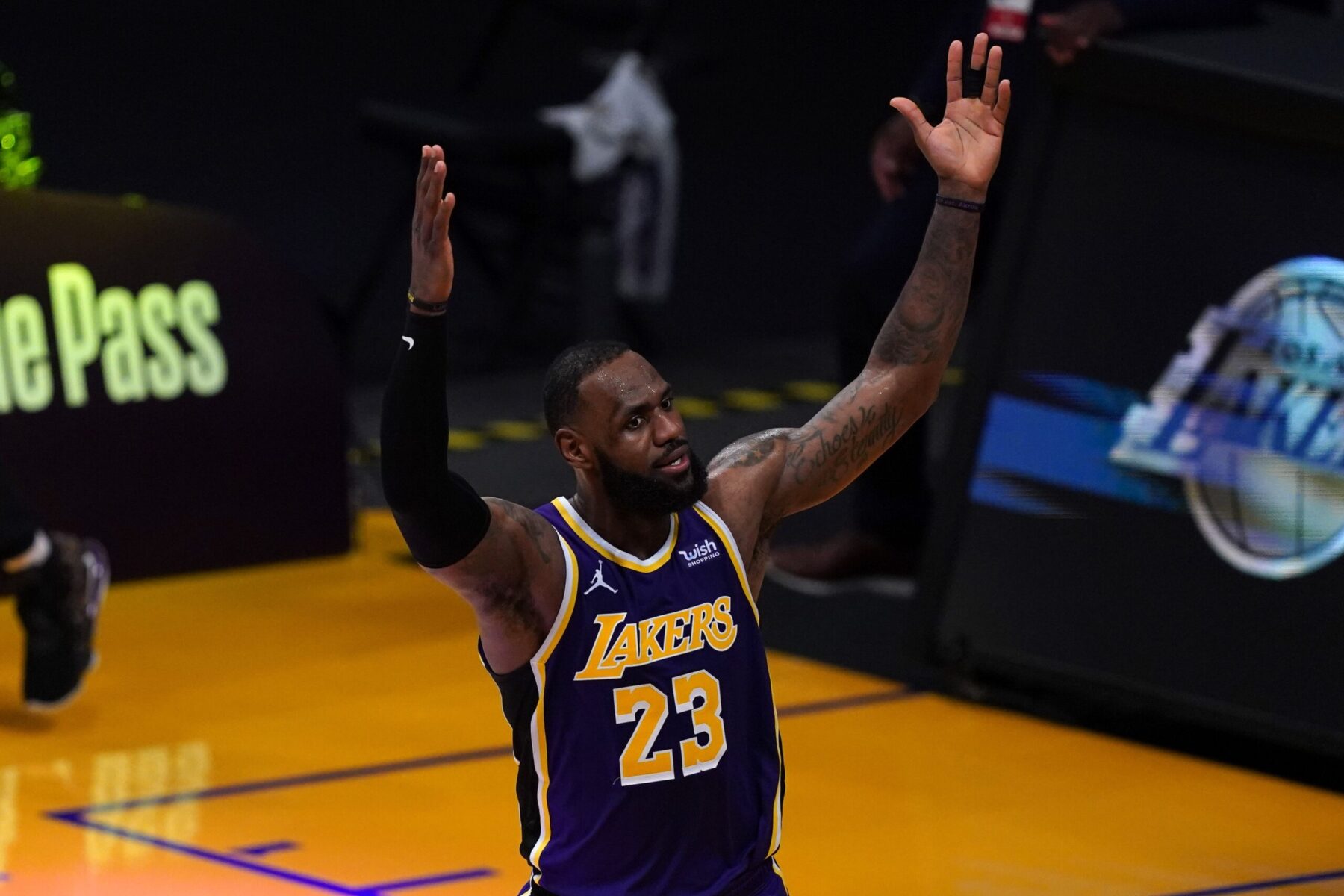
The field, meanwhile, is quiet for reasons that will not last. Cleveland’s interest is real but frozen until LeBron James picks a team, and once that decision lands, the Lakers may no longer be bidding against themselves.
Fischer sounded skeptical Thursday about the path running through Atlanta at all, saying on the livestream he was “not so certain how willing the Hawks are to play ball” with Los Angeles.
As of Friday, with both halves of the known framework rejected and a three-team construction the likeliest remaining route, that skepticism is the most honest summary of where things stand — a pursuit whose price just got clearer, attached to a trade that got harder.