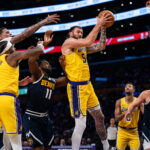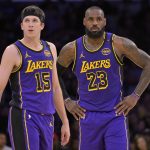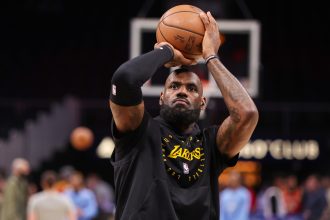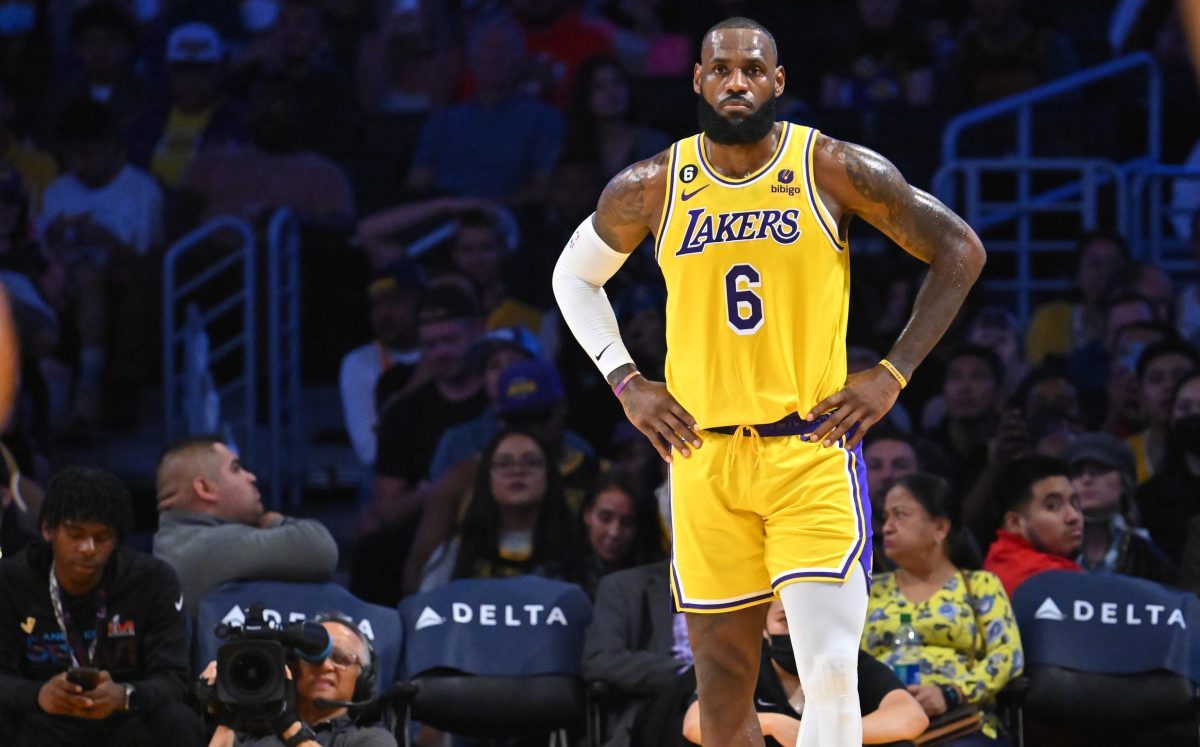

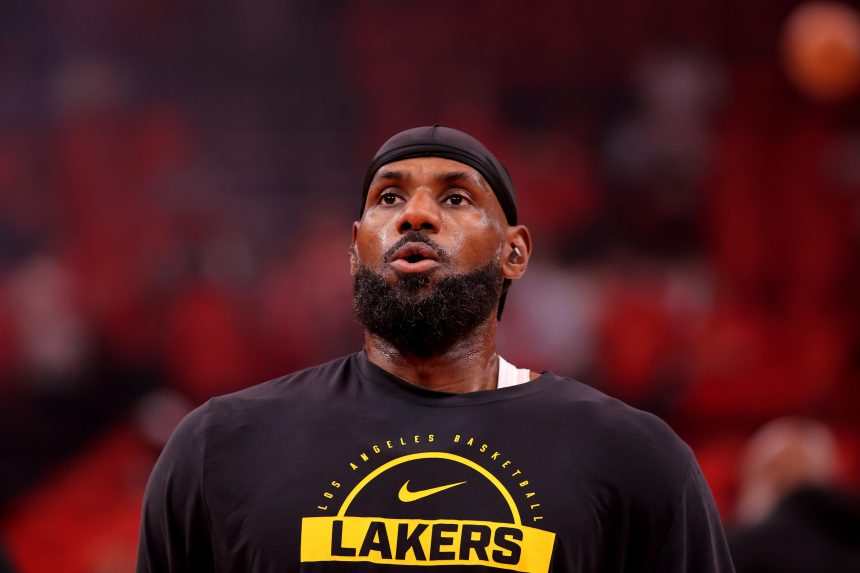
Free agency negotiations across the NBA open Tuesday at 6 p.m. EST, and the Los Angeles Lakers are walking in without having had the one conversation that matters most. As of Monday, the team and LeBron James had not sat down to discuss his future, and the front office had not put a contract offer in front of him.
That detail, reported by multiple insiders over the past 24 hours, has turned a quiet offseason holding pattern into the defining story of the Lakers’ summer. James is an unrestricted free agent for the first time since 2018, the Golden State Warriors are circling, and the clock is running.
The meeting that hasn’t happened
ESPN’s Brian Windhorst laid out the timeline on “Get Up” on Monday, describing a front office that moved early to signal its intentions but has not been able to get its franchise icon in a room.
“The Lakers, as soon as the NBA Finals ended, reached out to LeBron and his representatives, expressing an interest in retaining him,” Windhorst said. “And since that time, they have been interested in having a meeting with LeBron, but they have not made an offer. And from what I have been told, LeBron has just not been available for the meeting. … I don’t know why LeBron has not been available, but he has not been available for the meeting.”
NBA insider Chris Haynes framed Monday’s state of play the same way, and added that the standstill is expected to break soon precisely because Golden State is forcing the issue.
“LeBron James and Los Angeles Lakers still have yet to have a conversation regarding his future but that’s expected to change in light of Golden State Warriors’ strategic maneuvering to position themselves as a landing spot, sources tell me,” Haynes reported.
Why the silence is loud
Some of the explanation is procedural. On his “The Hoop Collective” podcast, Windhorst said the Lakers told James’s agent, Rich Paul, that they want him back, but that the dialogue has not moved past that opening message. James wants to understand both the money and the roster plan before he commits to anything, which means a below-max offer would need to come with a clear explanation of how the savings get spent.
That is where the leverage comes in. The Lakers have already made their biggest financial commitment of the offseason, re-signing Austin Reaves to a four-year, $185 million max, which trims the room they have left and sharpens the exact question James’ camp keeps asking. If the front office wants a discount, it has to sell a vision to go with it.
And some of it is genuine uncertainty about whether James wants to keep playing in Los Angeles at all. ESPN’s Ramona Shelburne reported that in early conversations James never fully committed to a return, that no contract terms were discussed and that retirement remained a live possibility. None of that points to a deal that is close.
Golden State turns up the heat
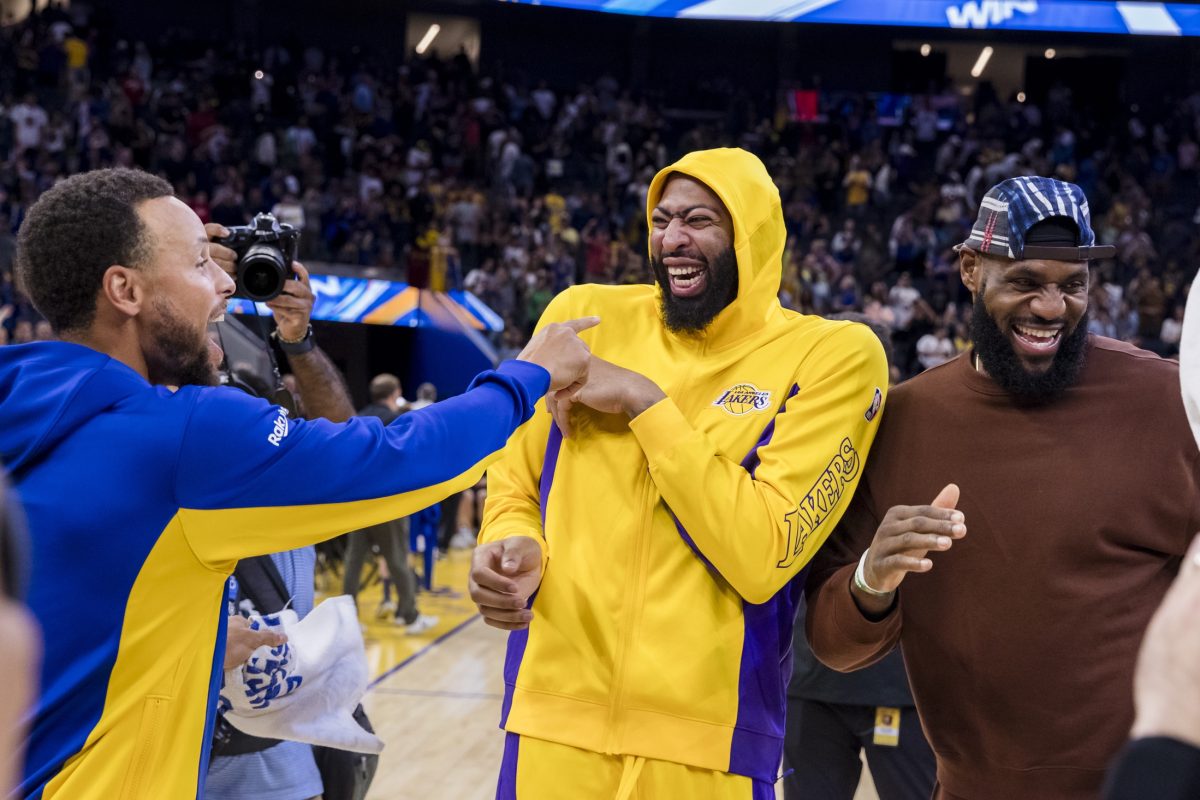
The Warriors spent Monday making the standoff more uncomfortable. Forward Draymond Green declined his $27.7 million player option to become a free agent, a decision Shams Charania reported gives Golden State the flexibility to pursue James in free agency and to chase a trade at the same time. Green, who shares an agent in Klutch Sports’ Rich Paul with James, would then be in line to re-sign at a lower number.
Windhorst had flagged the option deadline hours earlier as a potential domino. By opting out, Green cleared the path for the Warriors to dangle their mid-level exception, worth roughly $15 million, at a free agent who may or may not be James. The broader Golden State blueprint runs through a separate and far more complicated route. What matters for Los Angeles is the simpler version of it: A real suitor now has both the motive and a mechanism, and the Lakers still have not made their own pitch.
What the Lakers were doing instead
The front office was not idle on Monday. It just spent the day on everyone except James. Guard Marcus Smart declined his $5.4 million player option to test the open market, a move that could cost the Lakers one of their best perimeter defenders, with the Houston Rockets viewed as a genuine threat to sign him.
Center Deandre Ayton went the other direction, opting into his $8.1 million salary for next season, which keeps a stopgap on the books while the front office keeps hunting for a starting-caliber upgrade.
Both decisions fit a roster being shaped around Doncic and Reaves. Neither one answers the LeBron question, and both underline how much of the Lakers’ planning is downstream of an answer they do not have yet.
How real is the threat?
The league is not treating any of this as a formality. Jake Fischer, reporting for Marc Stein’s Substack and ESPN Cleveland, said the belief around the league, and out of Klutch Sports itself, is that James is weighing a wide range of outcomes.
“It might even be more likely than not that he leaves Los Angeles than stays with the Lakers,” Fischer said.
There are reasons for caution on that read. James has had openings to leave Los Angeles before and stayed each time, his business interests are based in the city, and his son, Bronny James, is under contract with the Lakers. A move to Golden State, or to any other contender, would almost certainly require a steep pay cut, because no team with a realistic title path has max money available. If the priority is one more championship run, the leverage tilts back toward whoever can build the best roster fastest.
The complication for Los Angeles is that it has not removed any of the doubt. The negotiating window opens Tuesday, and with the moratorium running until July 6 before deals can be signed, there is still time for the meeting to happen and for both sides to land where much of the league still expects them to. But for the first time in James’s eight years with the Lakers, the franchise is entering free agency without control of its biggest decision, while a rival up the coast does everything it can to take that decision away.