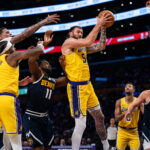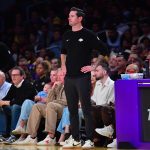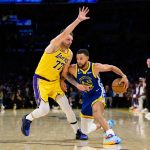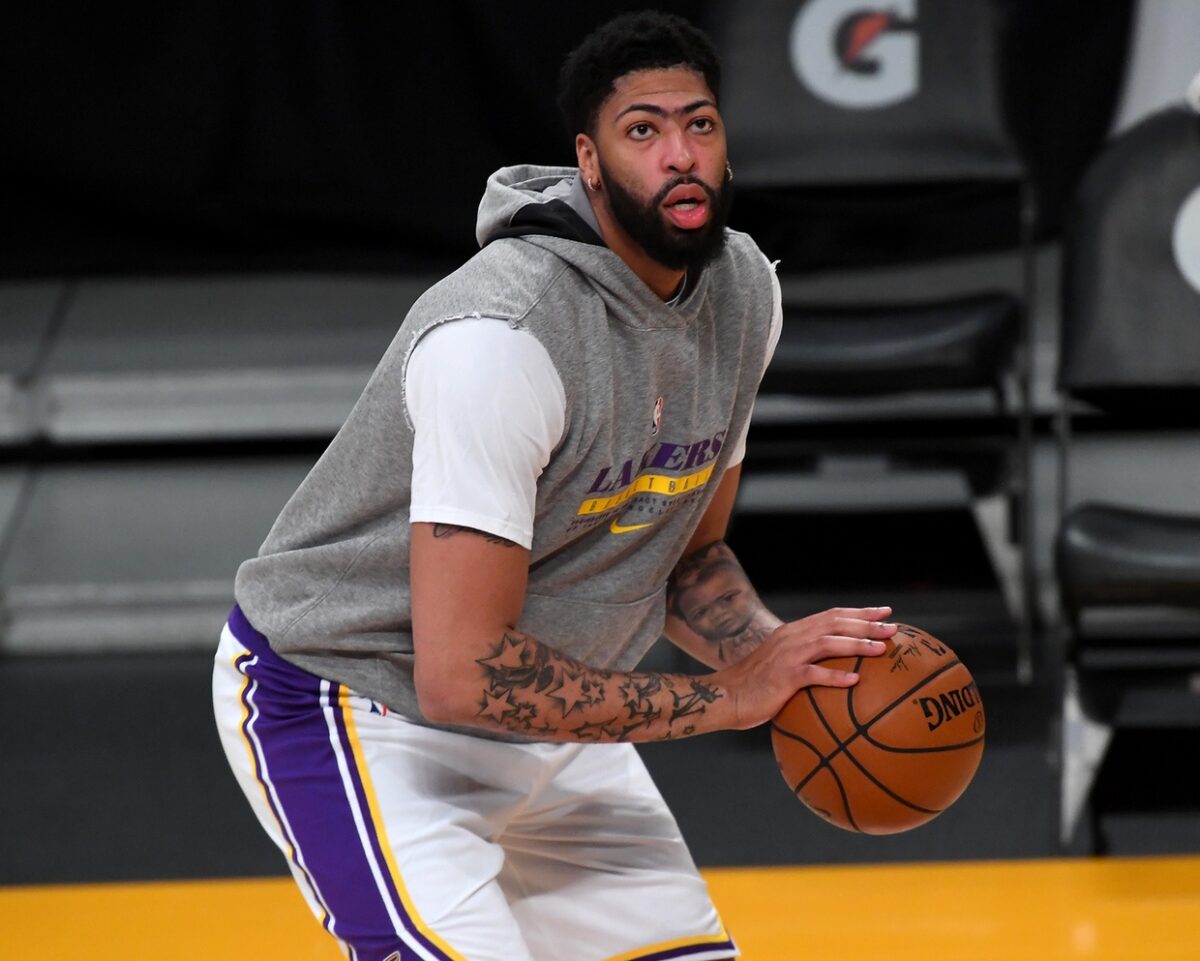

The Atlanta Hawks landed one of the league’s premier perimeter defenders on Sunday morning, and even though the Los Angeles Lakers were not among the three teams involved, the deal lands squarely in the middle of their offseason.
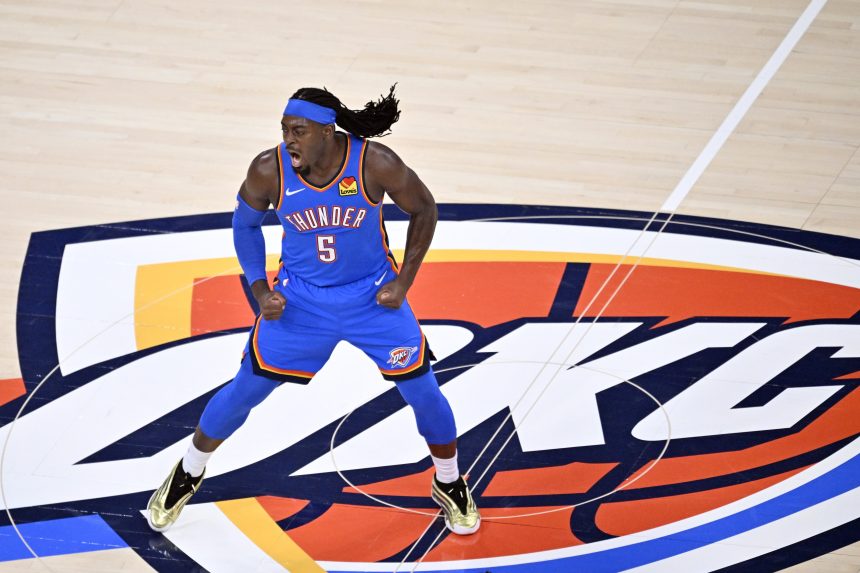
ESPN’s Shams Charania reported that the Oklahoma City Thunder are trading Lu Dort to Atlanta in a three-team agreement. The Hawks come away with Dort and guard Ryan Nembhard, the Thunder collect three second-round picks and the Dallas Mavericks, operating as the third team, land former No. 1 overall pick Zaccharie Risacher.
On its face, this is a story about the defending Western Conference power shedding money and a rising Eastern Conference team getting tougher. For the Lakers, it is something more specific. Atlanta is the franchise that holds the keys to the Jonathan Kuminga sign-and-trade Los Angeles has been chasing for two weeks, and the Hawks just told the entire league how they intend to operate.
What Atlanta’s Move Actually Says
Start with what the Hawks paid and what they protected. Dort arrives on the final season of his contract at $17.7 million, a figure Charania noted Oklahoma City had picked up rather than simply declining as part of a broader offseason teardown that has shed $224 million in payroll and tax. Because that money expires next summer, Atlanta absorbed an elite defender without touching its future books.
That distinction matters. Charania reported that the Hawks now pair the 27-year-old Dort with Dyson Daniels and Nickeil Alexander-Walker on the perimeter while still projecting more than $40 million in cap space next summer, adding that Atlanta “pursued several wings this offseason before landing Dort.”
Read those two facts together and the organizational philosophy is unmistakable. Atlanta wanted a finished, physical wing defender for the season ahead, and it wanted that player on money that disappears before the summer of 2027. The Hawks gave up a former No. 1 pick and draft capital to get exactly that profile rather than committing long-term salary to anyone.
The Kuminga Equation Just Moved
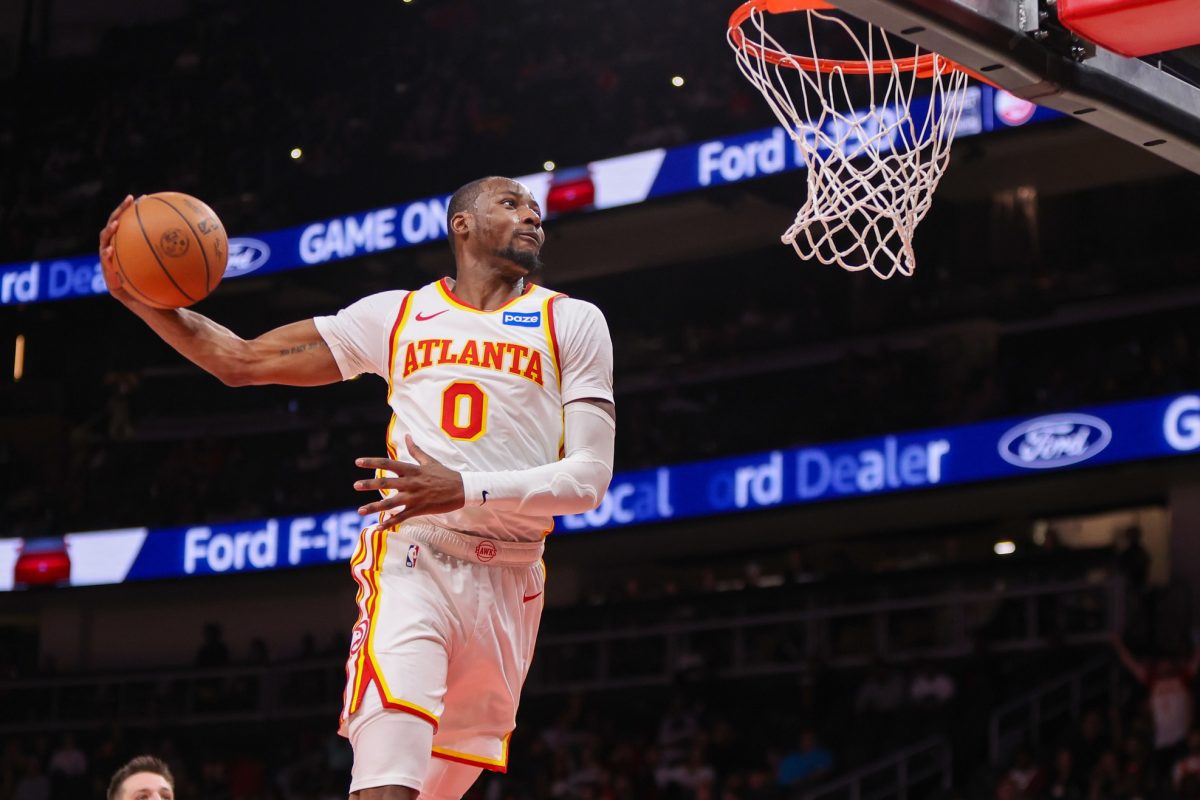
Now place Kuminga inside that picture. The unrestricted free agent remains the Lakers’ top remaining target, and the standing framework has been clear since Khobi Price of the California Post first detailed it: Kuminga to Los Angeles in a sign-and-trade built around Jarred Vanderbilt and a 2032 first-round pick swap, the only first-rounder the Lakers can legally move after sending two firsts and two swaps to Utah in the Walker Kessler deal.
The friction point has been just as clear. Jake Fischer of The Stein Line reported on July 10 that the Hawks have been resistant to taking back Vanderbilt, who is owed $12.4 million this season and holds a $13.3 million player option for 2027-28. To be fair to Atlanta’s position, that reluctance always had a logic to it, and Sunday’s trade spells the logic out. A front office guarding more than $40 million in 2027 space was never going to absorb a contract with a player option that bleeds into that exact summer.
Here is where the analysis begins, and it should be labeled as such, because no reporter has yet connected Sunday’s trade to the Kuminga talks. With Dort, Daniels and Alexander-Walker in place, re-signing Kuminga would give Atlanta an expensive fourth wing at a position it just spent real assets to address. The basketball case for bringing him back, already thin, is now close to nonexistent.
Because Kuminga is unrestricted, Atlanta’s only way to extract anything from his departure is to complete a sign-and-trade before he simply signs elsewhere. Sunday’s move arguably makes the Hawks more motivated to transact, not less.
What it does not do is make them flexible about the terms. The Vanderbilt door, cracked in Price’s original reporting and pushed shut in Fischer’s, is now bolted. That leaves the route Fischer flagged as the realistic one: a multi-team construction in which Vanderbilt’s salary is rerouted to a club other than Atlanta, freeing the Lakers to raise their offer while the Hawks collect the 2032 swap and draft compensation for their trouble.
A Shrinking Wing Board
There is a second, quieter cost to Sunday’s news, and it is about leverage. The Lakers themselves were in on Dort earlier this offseason.
“The Lakers have called the Thunder about swingman Lu Dort’s availability,” Fischer wrote in June, back when Los Angeles still had the cap room and roster space to act on that interest.
That version of the offseason is gone. The Lakers spent their space on the Kessler sign-and-trade, filled their final opening with Ziaire Williams on a veteran’s minimum and reached a full 15-man roster. Meanwhile, the supply of available two-way wings keeps contracting.
Oklahoma City’s cost-cutting has now moved Aaron Wiggins, Isaiah Joe and Dort in a matter of weeks, and every name that comes off the board strengthens the negotiating position of the most talented wing still without a contract. Kuminga’s camp understands that arithmetic.
Fischer has reported the forward is seeking a deal in the range of $25 million per year, while Price reported the Lakers’ willingness had reached only about $10 million annually. A market with fewer alternatives on both sides tends to force the question, and Sunday removed an alternative for everyone.
The One Path Left
So what does a resolution actually require? The mechanics have not changed, but the incentives around them have. Any sign-and-trade must run at least three years, with only the first fully guaranteed, which gives the Lakers a structure to offer real money up front without a punishing long-term commitment.
The Lakers are already hard-capped at the first apron of $209 million, so a Kuminga deal would not create a new constraint so much as it would have to fit inside one the front office already lives under, which is precisely why it has guarded every dollar of its remaining room. And because Atlanta will not take Vanderbilt, a third team with the appetite to absorb his money is the hinge on which the entire construction swings.
None of that is simple, and the gap between $10 million and $25 million is not closed by a single trade elsewhere in the league. But the direction of Sunday’s move favors patience from the Lakers’ side. Atlanta has now solved its wing problem without Kuminga, which means the Hawks’ best remaining outcome is the one where he leaves and they get paid for it.
The Lakers, holding the swap Atlanta wants and the interest Kuminga’s camp needs, remain the most natural counterparty. The Dort trade did not deliver the Lakers a player. It may have delivered them a more willing negotiating partner, and in a summer where the front office has consistently chosen flexibility over urgency, that might be the more valuable thing.