
The Los Angeles Lakers spent Monday handling the in-house part of their center question and saved the ambitious part for the morning the market opens.
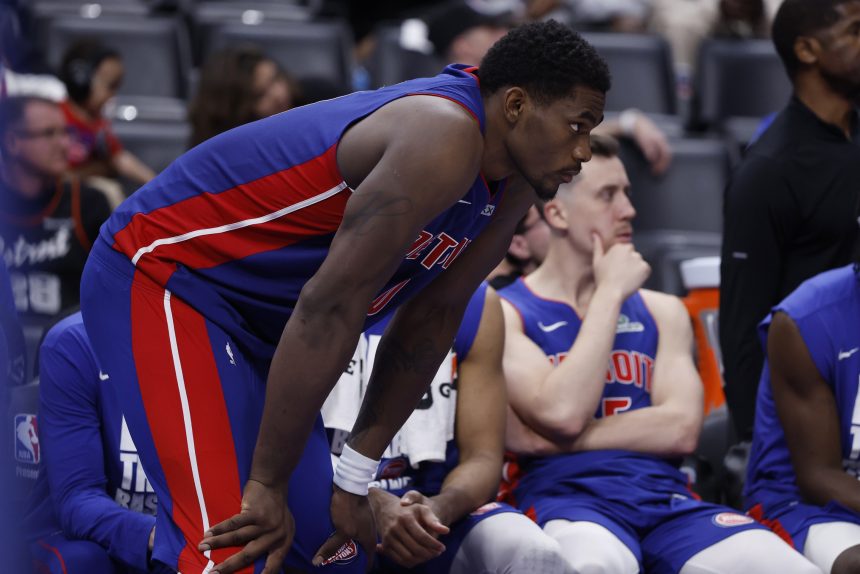
ESPN’s Dave McMenamin reported Monday night that the Lakers have a planned call with Detroit Pistons restricted free agent Jalen Duren on Tuesday, confirming earlier reporting from Sam Amick of The Athletic. The same report carried a heavy caveat: Detroit, to this point, has shown no interest in the sign-and-trade it would take to actually pull Duren out of Motown.
That call is the splashier of two center tracks the Lakers are running, and the less likely one to pay off. The other, quieter path runs through Mitchell Robinson.
Earlier Monday, the Lakers settled the smallest piece of the puzzle when Deandre Ayton picked up his $8.1 million player option for next season, keeping a stopgap in the middle while the front office chases the upgrade Luka Doncic has asked for.
The Duren call, and why it’s complicated
On paper, Duren is the dream. Amick reported that Duren was “underwhelmed” by Detroit’s initial offer and is prepared to explore sign-and-trade scenarios now that the window is open. He is 22, an explosive lob finisher and rebounder, and exactly the kind of vertical threat that turns Doncic’s pick-and-roll passing into easy points.
He is also coming off a season that earned him real money. Duren averaged 19.5 points and 10.5 rebounds per game while helping Detroit win 60 games and claim the East’s top seed, production that landed him on the All-NBA Third Team and made him eligible for a contract worth up to $287.1 million over five years. A rough postseason — his numbers fell to 10.2 points and 8.5 rebounds per game, and he was benched for overtime in a Game 5 loss to Cleveland — is part of why the two sides are apart on price.
The problem for Los Angeles is leverage, and Detroit holds almost all of it. As a restricted free agent, Duren can field offer sheets, but the Pistons can match any of them, and Amick noted they likely would.
A sign-and-trade is the only realistic way he changes teams, and that requires Detroit to both want to move him and like the package coming back. McMenamin’s reporting that the Pistons are uninterested in that route, plus a Lakers trade chest thinned out after committing big money this offseason, makes the Tuesday call look more like due diligence than a deal taking shape.
Why Robinson is the realistic path
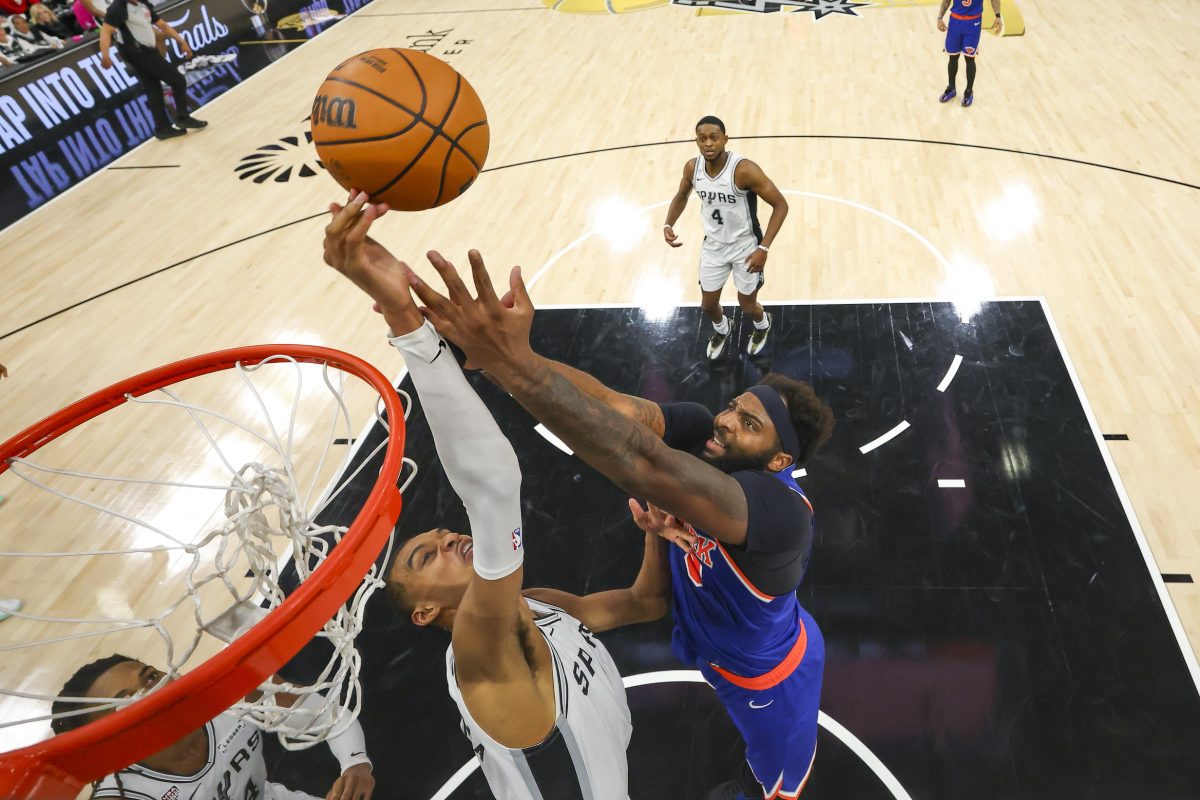
If Duren is the swing for the fences, Robinson is the base hit the Lakers can actually leg out. He is an unrestricted free agent, which means no other team controls his rights, and the reporting has him available.
Marc Stein and Jake Fischer of The Stein Line reported that the Lakers are “regarded as a likely suitor” for Robinson once free agency begins, citing growing pessimism that the New York Knicks can keep him.
That pessimism runs through New York’s front office. Stefan Bondy of the New York Post reported that it is unlikely Robinson returns to the Knicks, with owner James Dolan unwilling to pay into the luxury tax’s second apron to keep a bench rotation together. The longest-tenured Knick may have priced himself out of the only franchise he has known.
The fit mirrors what makes Duren appealing, at a fraction of the cost and complication. Robinson is a high-end offensive rebounder and rim protector who scores almost entirely on rolls and put-backs — he averaged 5.7 points per game across 60 appearances last season and shot 72.3 percent from the field.
The knocks are real: He has not held a full-time starting job since 2022-23, durability has long been a question and he can be hunted at the free-throw line late in games. But as a defensive anchor next to Doncic and Austin Reaves, he addresses the exact weakness Oklahoma City exposed in sweeping the Lakers out of the second round.
Ayton, the cap math and the LeBron overhang
Monday’s Ayton decision is the connective tissue. By keeping his $8.1 million on the books rather than letting him walk, the Lakers hold a tradable salary and avoid opening a hole they cannot immediately patch, but they also operate as an over-the-cap team.
Their cleanest tool to sign Robinson outright is the non-taxpayer mid-level exception, worth roughly $15 million a year — and that tool only exists if they stay under the first apron.
Cross that line, and the mid-level shrinks or disappears, which is why apron discipline is one of the quieter priorities of the Lakers’ week. Having already committed major money by re-signing Austin Reaves to a max, the front office has less room to maneuver, and it cannot fully set its center budget until the biggest question on the board resolves.
How the LeBron James decision plays out shapes the money available for everything else, and spending first on a center carries its own risk to that timeline.
The clock
None of it happens slowly. Teams can begin negotiating Tuesday at 6 p.m. ET, but contracts cannot be signed until the moratorium lifts on July 6, leaving several days of verbal agreements and posturing before anything is binding.
If the Lakers are serious about Robinson, they will likely need to move early, before rival contenders short on rim protection get to him — and they will use the Duren call to learn quickly whether the bigger swing is even on the table.
What’s at stake
The center spot has been the Lakers’ most persistent weakness across the Doncic era, and the front office has told its franchise player it intends to fix it. Ayton’s return buys insurance, not a solution.
With the window opening Tuesday, a long-shot call into Detroit and a realistic target in New York, the next few days will show whether the Lakers turn that promise into a signing — or head into another season hoping the answer is already on the roster.