
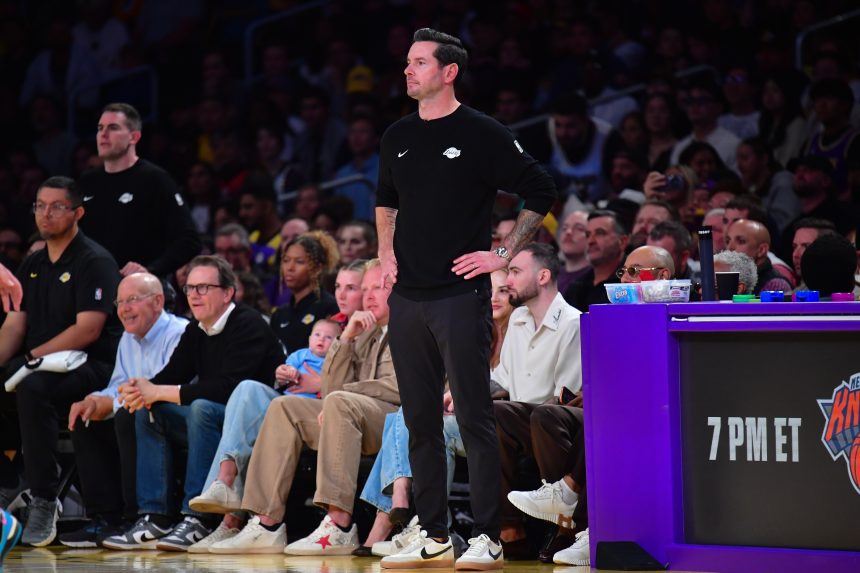
The Los Angeles Lakers open their preseason against the Sacramento Kings on Monday, and JJ Redick’s rebuilt defense has three connected jobs to demonstrate: contain the first drive, support Walker Kessler around the basket and keep those responsibilities clear when the lineup changes.
The Oct. 5 matchup tips off at 7 p.m. PT. It offers an initial test of whether the habits taking shape in practice can survive an opponent choosing where to attack.
Lakers Daily has already examined the combinations competing for two starting jobs. Tonight adds a different question: What should those groups actually accomplish defensively to make a convincing case?
A useful evaluation begins before a shot goes up. Where does the possession first break down? Who makes the next rotation? Does a contested miss become a Lakers rebound, or another chance for Sacramento?
Those sequences can reveal more about a developing defense than a final score shaped by preseason substitutions. Here are three tests to watch, with each player’s participation and workload determining how much evidence the opener provides.
1. Can the Lakers pressure the ball without opening a driving lane?
The first test belongs to the perimeter defenders. Getting close enough to bother a ball-handler is useful only if the other four Lakers can stay organized behind that pressure.
Redick has a plan to retain switching across positions 1 through 4 while increasing defensive aggression. That provides a starting point for watching the opener, rather than a guarantee that every group will use the same coverage.
Watch what happens when Sacramento brings a screener toward the ball. If the Lakers switch, the exchange should happen without both defenders following the dribbler.
If they stay with their assignments, the trailing defender has to recover quickly enough that the big man is not left defending two players indefinitely.
That distinction matters for the wings who have drawn Austin Reaves’ praise in camp. Matisse Thybulle and Ziaire Williams can make their minutes valuable by disrupting where an action begins, even on possessions that produce no steal.
For example, forcing a guard to receive the ball farther from the basket can leave less time for a second attack. Steering a drive toward the waiting help can make the next defensive decision simpler.
Reaching across a ballhandler and getting beaten, however, can create an immediate scramble.
Sacramento rookie Darius Acuff Jr., the No. 7 pick, is one potential matchup to watch. If he plays, the Lakers can test whether their pressure changes his route into the offense without giving him a clear lane past the first defender.
Keep an eye on fouls during those exchanges, too. A defender who stays attached through a screen and forces a reset has accomplished something meaningful. A defender who disrupts the same action by grabbing has ended the experiment before the rest of the unit can finish its work.
The encouraging pattern would be pressure followed by recovery: Sacramento’s first option becomes harder, and the Lakers still have five players in position to defend the next one.
2. Can Walker Kessler’s teammates finish the stops he helps create?
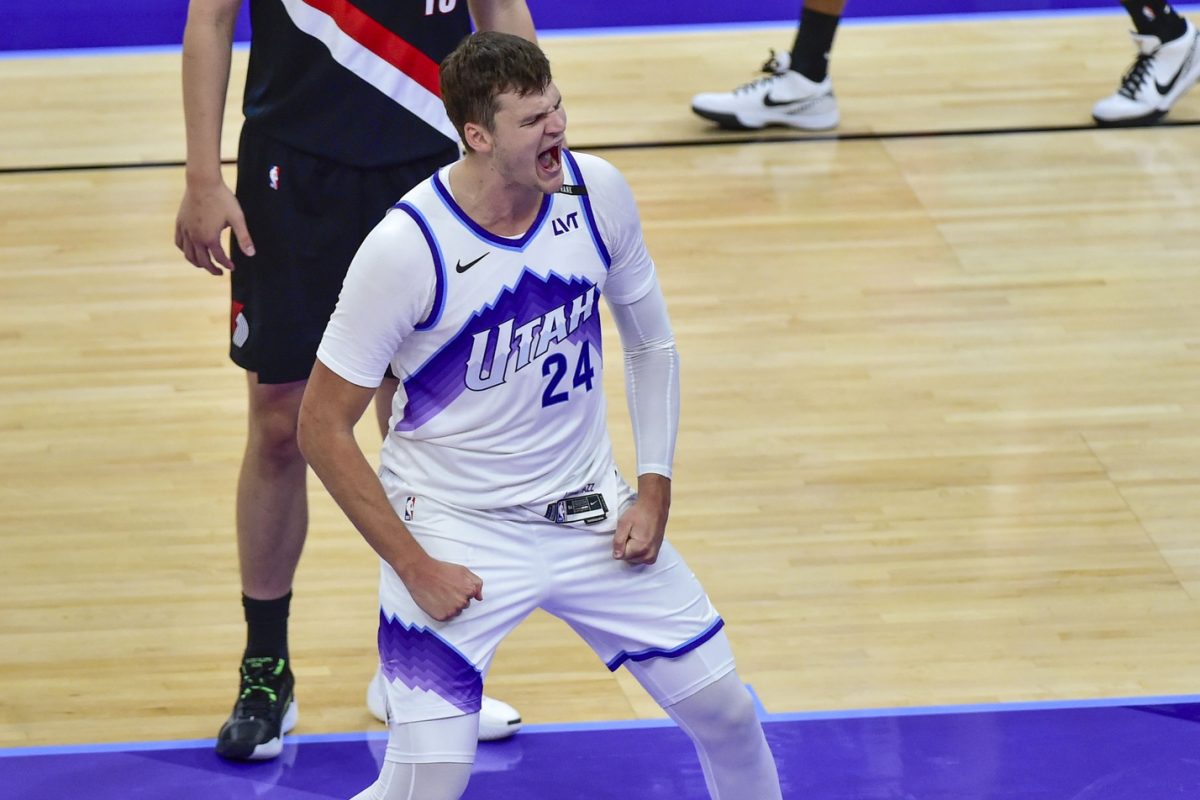
Kessler gives this evaluation a clear statistical reference. In 2024-25, he averaged 12.2 rebounds and 2.4 blocks per game across 58 appearances.
His 2025-26 season consisted of five games, so the longer sample is more useful when considering the defensive responsibilities he could handle. Neither sample tells the Lakers how quickly a new group will learn to work around him.
Thybulle addressed that coordination after Saturday’s practice.
“Just having an anchor,” Thybulle said. “You talk about gravity on offense with Luka and all of them, but on defense they kind of create that sense for us, on the rest of the teammates. Walker being able to tell us where to be and letting us know where he’s at. It lets us know how things are orbiting around him. Being intensive to that and learning, man to man, how we all are going to play together.”
That communication becomes especially important when Kessler steps toward a driver. Someone else has to recognize the space he has left, account for a cutter or rolling big and prepare to rebound if the shot misses.
A block followed by a Sacramento putback would show why those jobs belong together. Kessler could execute his part of the possession and the Lakers could still concede an easy basket because another player watched the contest instead of finding a body.
The opposite sequence would be more encouraging: Kessler discourages a layup, the ball moves outside and the Lakers recover without giving up an uncontested shot. He would receive no block for that possession, but the defense would have used his presence effectively.
Watch the defender on the side away from the ball. When that player moves toward the paint to help, can a teammate cover the vacated shooter? When the pass goes back outside, does the closeout stay under control, or does another drive start the same problem again?
These are shared responsibilities. Putting Kessler behind the perimeter group should give those defenders more options, but repeatedly asking him to erase an uncontested drive would leave little margin for error.
It also helps explain why Thybulle’s case for important late-game minutes involves more than disruptive individual plays. The Lakers need his decisions away from the ball to fit the center’s positioning, just as they need the center’s communication to support him.
For tonight, the most useful sequence to track is the entire stop: the initial challenge, the help behind it and the rebound that actually ends the possession.
3. Does the defensive organization survive the first substitutions?
The opener should also help separate a promising combination from a repeatable approach. Once Redick starts changing personnel, the Lakers need to remain clear about who is pressuring the ball, who is providing help and how they are defending screens.
That does not require every lineup to play identically. A group without Kessler might need a different answer to the same action. The test is whether all five players recognize that answer before Sacramento exploits the uncertainty.
If a reserve checks in and the next possession produces two defenders guarding one player, the mistake is worth examining even if the Kings miss. Likewise, a contested basket does not automatically invalidate a coverage that the group executed correctly.
Redick has emphasized the teaching time available this preseason. In a report from Saturday’s practice, the coach discussed the benefit of the schedule:
“I want to say we had six real practices in preseason last year,” said Redick. “This year we’ll have at least 12. Generally, we could get a more productive preseason and training camp … we can actually space things out a little bit more, get these guys more live play, really take our time with teaching.”
TLakers have five preseason games, compared with six last year. Monday can therefore provide specific possessions to revisit in practice: a late switch, a missed rebounding assignment or an unnecessary rotation that leaves a shooter open.
Sacramento’s personnel will shape those lessons. Ben Simmons is expected to make his Kings preseason debut Thursday against the Lakers or Saturday against Golden State. That report points toward a later debut, rather than an appearance tonight.
Any assessment should account for who actually plays on both sides. A productive stretch against one Sacramento combination should not automatically settle which Lakers deserve the same minutes against a different opponent.
The opening night evidence will be most useful when attached to specific actions. Can a new group communicate through a screen? Does the help arrive without abandoning the corner? After forcing a miss, does someone secure the ball?
If those habits carry through the substitutions, Redick will have something concrete to build on. If they break down, the value of the opener will be identifying where the next round of teaching needs to begin.