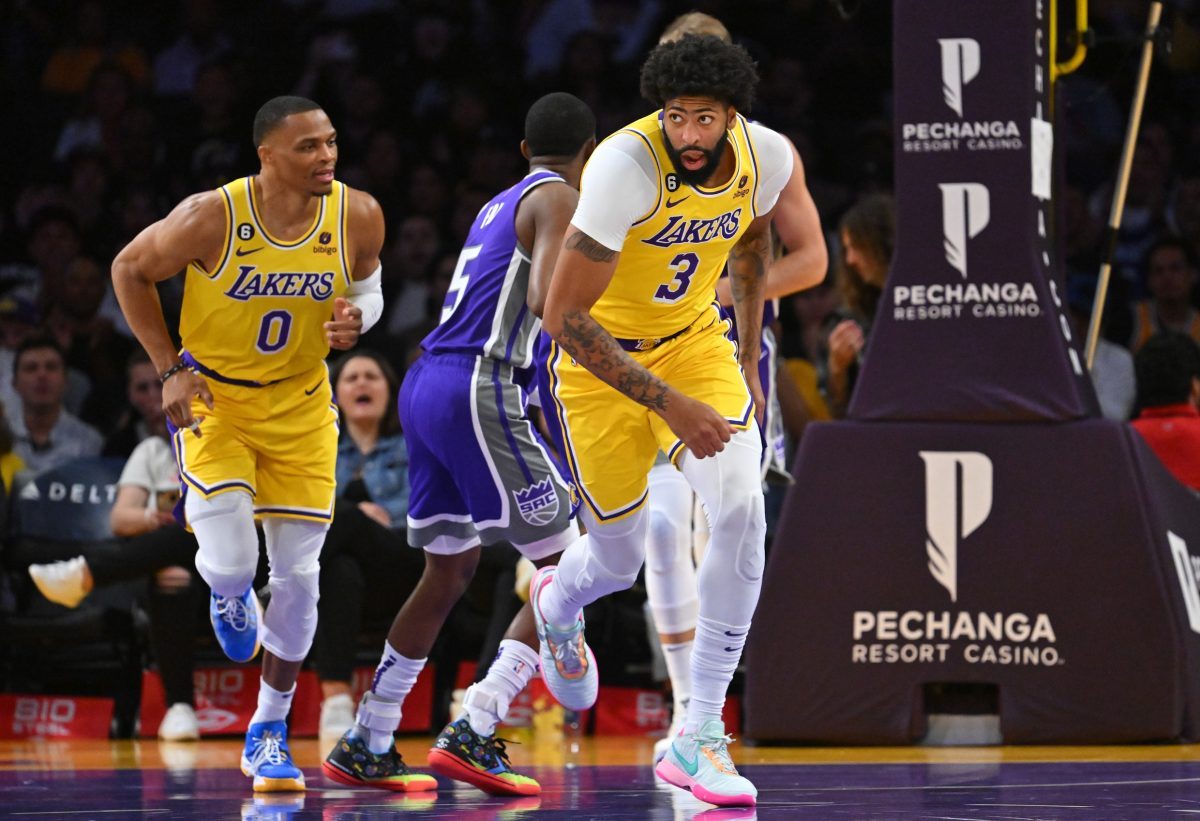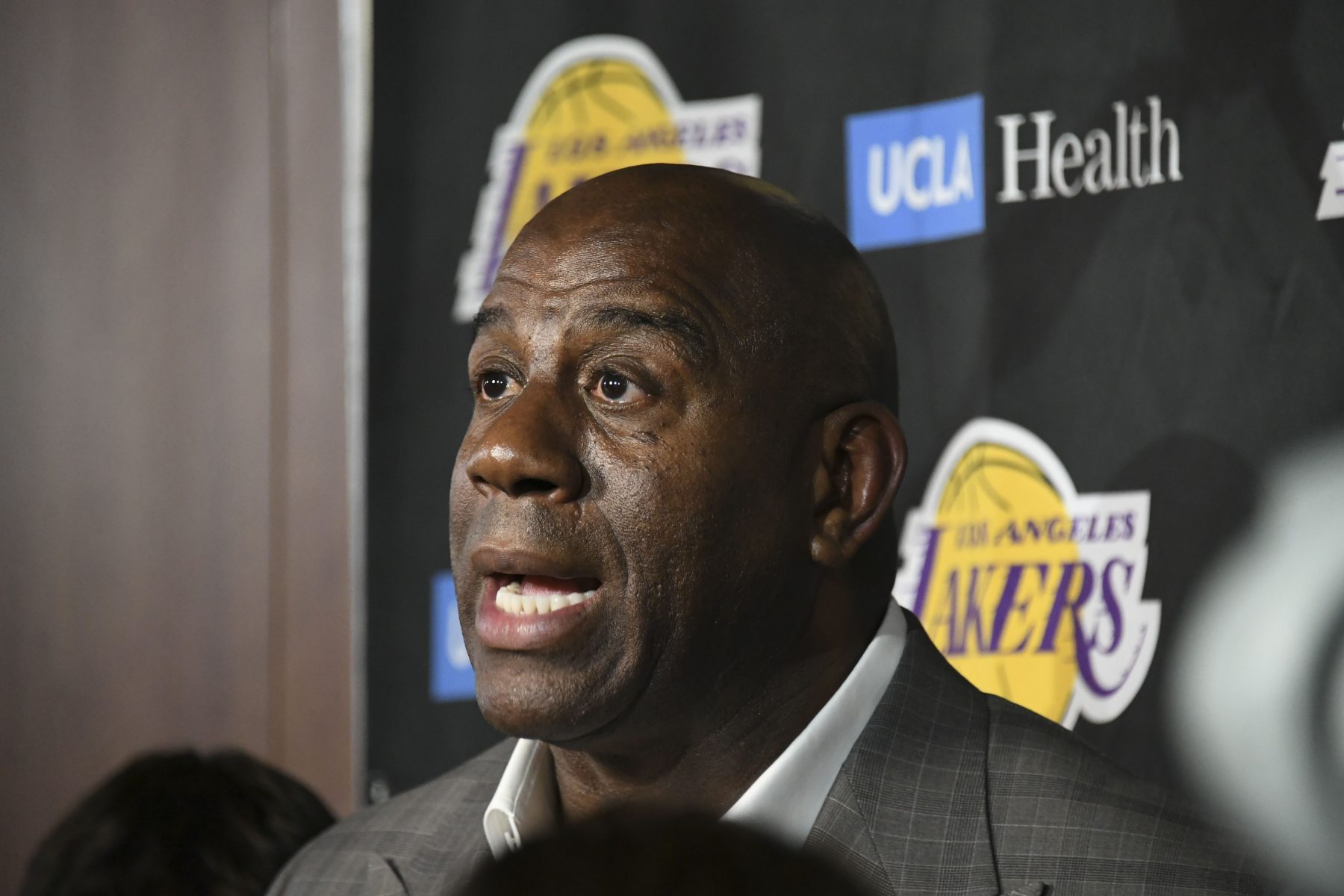

Magic Johnson spent the weekend applauding nearly every move Rob Pelinka made this summer. On Monday morning, he added the part Lakers fans probably didn’t want to hear.
In a series of posts on X, the Hall of Fame point guard cautioned that the most overhauled roster in recent franchise history will need time to come together, writing that the team “may not get off to a good start” while its wave of newcomers learns to play alongside Luka Doncic and Austin Reaves.
Lakers fans have to be patient though. These 7 new players have to learn how to play with superstar Luka Doncic and Austin Reaves, so we may not get off to a good start.
— Earvin Magic Johnson (@MagicJohnson) July 27, 2026
Coming from the franchise’s most relentlessly optimistic voice, the caution lands differently than it would from a national pundit — and a closer look at the roster suggests he has good reason for it.
What Magic Johnson Said About the New-Look Lakers
Johnson’s Monday posts capped a multi-day review of the Lakers’ offseason that began Sunday night, when he praised the front office for executing the exact blueprint he called for after the season ended. Johnson wrote that he had asked the Lakers to get “younger, more athletic, and faster” and credited Pelinka with delivering on all three, singling out Walker Kessler’s rim protection, Matisse Thybulle’s perimeter defense, the guard play of Collin Sexton and Quentin Grimes, Sandro Mamukelashvili’s outside shooting and first-round pick Cameron Carr’s summer league showing.
We got a young, athletic center in Walker Kessler who can score and is a great rim protector, and I was so happy they signed two-time All Defensive player Matisse Thybulle!
— Earvin Magic Johnson (@MagicJohnson) July 27, 2026
The Monday follow-up was the caveat. Johnson urged the fanbase toward patience, pointing out that seven new veterans still have to build on-court chemistry with Doncic and Reaves — a process he suggested could cost the Lakers early in the season.
He also placed the team honestly within the Western Conference pecking order, describing San Antonio and Oklahoma City as the favorites with the Lakers grouped among the challengers alongside Denver, Minnesota and Houston.
Both the Eastern and Western Conferences are stacked. Halliburton is coming back from the Pacers and they’ll be a great team once again. Giannis is now in Miami, the Pistons will still be a strong team again along with the Cavaliers. And if the trade goes through and Kawhi ends…
— Earvin Magic Johnson (@MagicJohnson) July 27, 2026
None of this reads as pessimism. Johnson clearly believes in the direction of the roster.
It reads instead as a franchise legend managing expectations for a team that will look almost nothing like the one fans watched three months ago — and the underlying numbers support him.
The Continuity Problem Is Real
Consider the sheer scale of the turnover. The Lakers signed Kessler, Grimes, Kevon Looney, Mamukelashvili, Sexton, Ziaire Williams and Thybulle this summer, and the total climbs to nine new pieces once the trade that brought in Jaden Hardy and the drafting of Carr are included.
Second-year forward Adou Thiero, who spent most of his rookie season in the G League, is also expected to compete for rotation minutes, which functionally adds a tenth unfamiliar element to JJ Redick’s nightly decisions.
Half a rotation’s worth of new faces means new defensive coverages to drill, new spacing patterns around Doncic’s pick-and-roll orbit and a new pecking order to sort out behind Reaves in the secondary creation hierarchy. Those things get installed in training camp, but they only get stress-tested in real games, against real coverage adjustments, in real late-clock situations.
Teams that turn over this much of their roster almost always spend October and November discovering which combinations actually work, and the Lakers open the season with more unanswered lineup questions than any contender-adjacent team in the conference.
The schedule of internal development matters here too. The organization spent the summer investing in exactly this problem, promoting Zach Guthrie into a player development leadership role on Redick’s staff, a move that looks increasingly central to how the front office expects this roster to improve — from within, over months, rather than through quick external fixes.
The Hard Cap Limits Pelinka’s Midseason Options
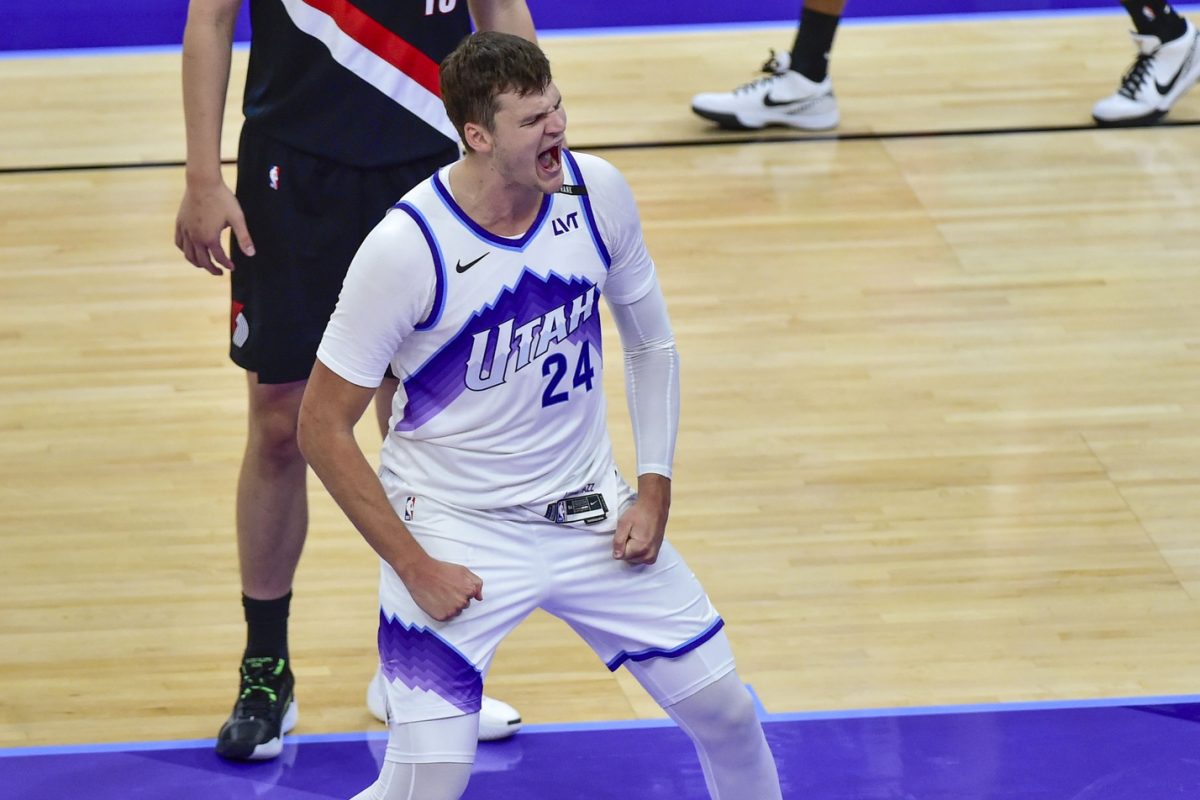
That internal-growth emphasis is not entirely a philosophical choice. Because the Lakers acquired Kessler by sign-and-trade, league rules hard-cap them at the first apron for the remainder of the league year, and the roster already sits at the edge of its limit after the summer’s volume of signings.
The practical effect is that if the fit issues Johnson is anticipating do surface in November, Pelinka cannot simply aggregate salaries into a midseason upgrade the way past Lakers front offices did. Flexibility exists, but it is thin, and every move has to clear the apron math first.
That is what makes Johnson’s patience plea more than a platitude. In previous eras, a slow Lakers start triggered a familiar cycle of trade speculation and February reinforcements.
This version of the team has largely committed to its answer. The group that opens the season is, in most scenarios, the group that will have to figure itself out.
The Case for a Faster Start Than Magic Expects
There is also a credible argument that the transition goes smoother than Johnson fears, and it is worth laying out honestly. The roster’s newness is real, but it is not total strangeness.
Kessler and Sexton spent multiple seasons as teammates in Utah, meaning the Lakers’ new starting center and one of their key bench guards arrive with a shared vocabulary already in place.
Kessler and Reaves overlapped on Team USA at the 2023 FIBA World Cup, so the two-man game between the Lakers’ returning co-star and their prized addition starts from familiarity rather than zero.
The core, meanwhile, is stable where it matters most. Doncic and Reaves return, Redick enters his third season with an established offensive identity built around Doncic’s playmaking, and veterans such as Looney and Thybulle have spent their careers slotting into defined roles on good teams.
Johnson himself noted he was thrilled the Lakers added a two-time All-Defensive selection in Thybulle, and role clarity is precisely what shortens integration timelines. If the new pieces are asked to do only what they already do well, the learning curve flattens considerably.
We got a young, athletic center in Walker Kessler who can score and is a great rim protector, and I was so happy they signed two-time All Defensive player Matisse Thybulle!
— Earvin Magic Johnson (@MagicJohnson) July 27, 2026
The counterpoint writes itself, though. Familiarity between two or three players does not solve 10-man rotation chemistry, and last season offered a harsh reminder of how thin the margin is: The Lakers’ playoff run ended against Oklahoma City with Doncic sidelined by a hamstring strain.
A roster this new cannot afford to spend two months finding itself in a conference where the Thunder and Spurs will be sprinting from opening night.
The Forward Spot Is the Real Variable
Buried inside Johnson’s roster review is the one question the offseason never answered. For all the additions, the Lakers still lack a settled starting forward between the wings and Kessler’s rim protection, and the front office’s continued monitoring of the free agent forward market — including the league’s most prominent unsigned name — underscores that the current group may not be the final one.
Whether the answer eventually comes from outside or from internal candidates such as Thiero forcing his way in or a Thybulle-heavy defensive look, that spot is the single biggest determinant of how the opening months go.
That, more than raw newness, is the sharpest version of Johnson’s point. Teams can survive integration pains when every role is defined and every player knows his lane.
The Lakers open camp with one lane conspicuously unclaimed, and unresolved competition at a starting spot is exactly the kind of thing that turns October basketball ragged.
Johnson has watched this franchise long enough to know how Lakers fans metabolize slow starts, which is presumably why he chose to say all of this in July rather than let the panic arrive on its own schedule in November.
The praise and the warning are the same message: the front office built the roster it set out to build, and now the only thing left to add is the one asset no front office can acquire — time.