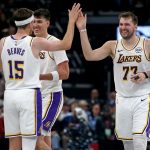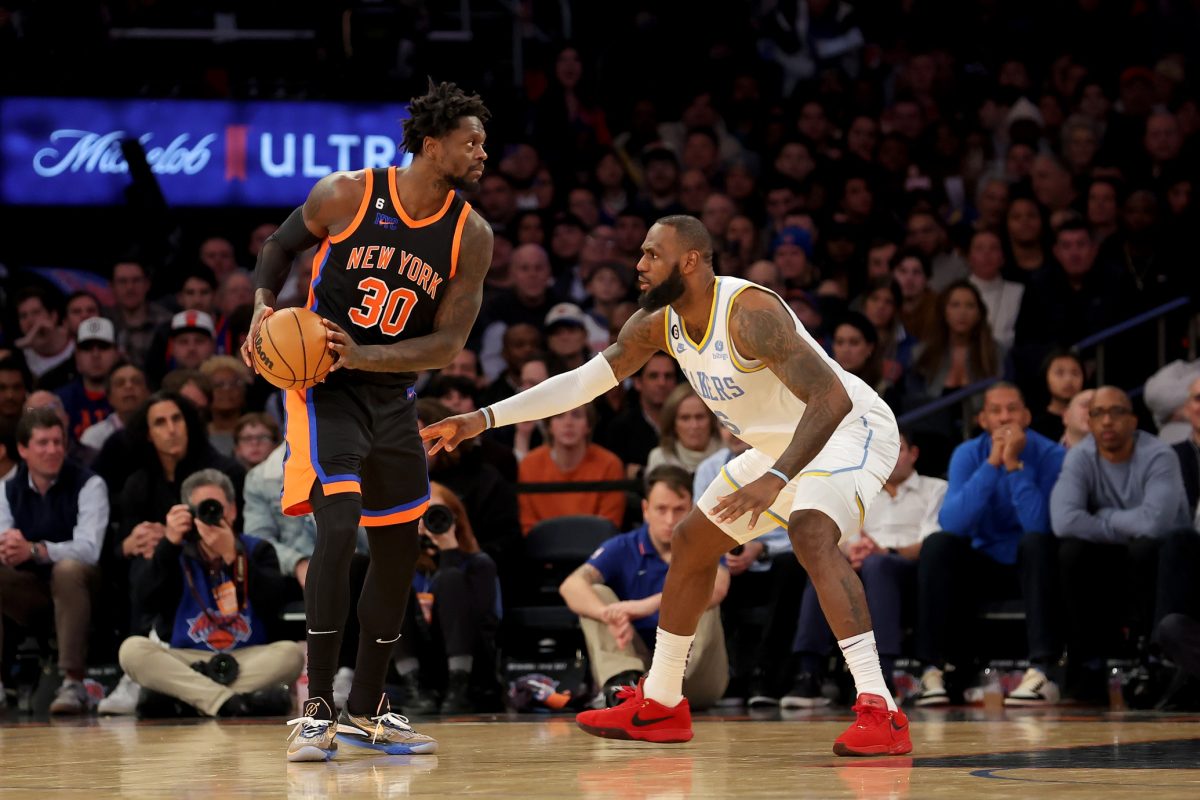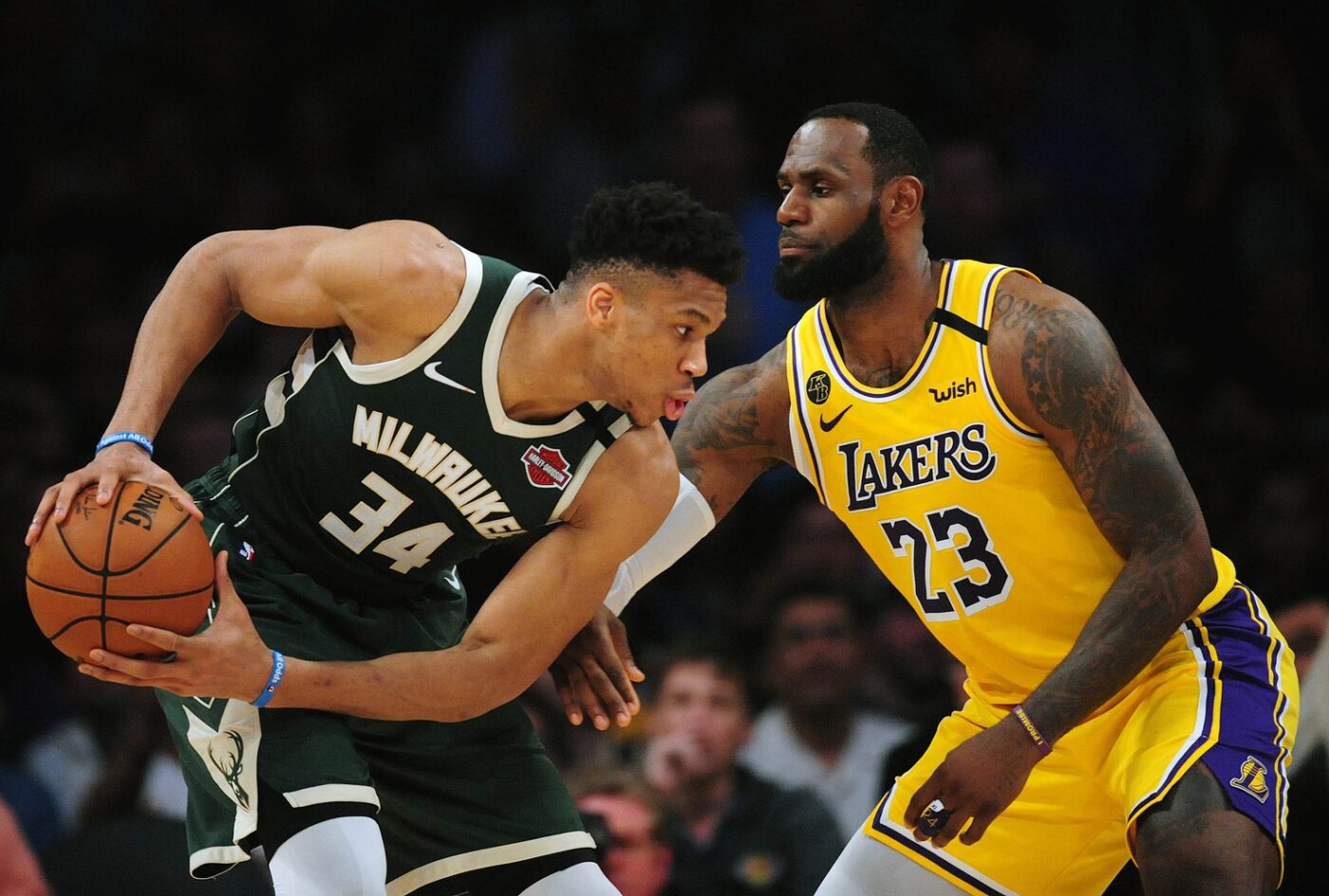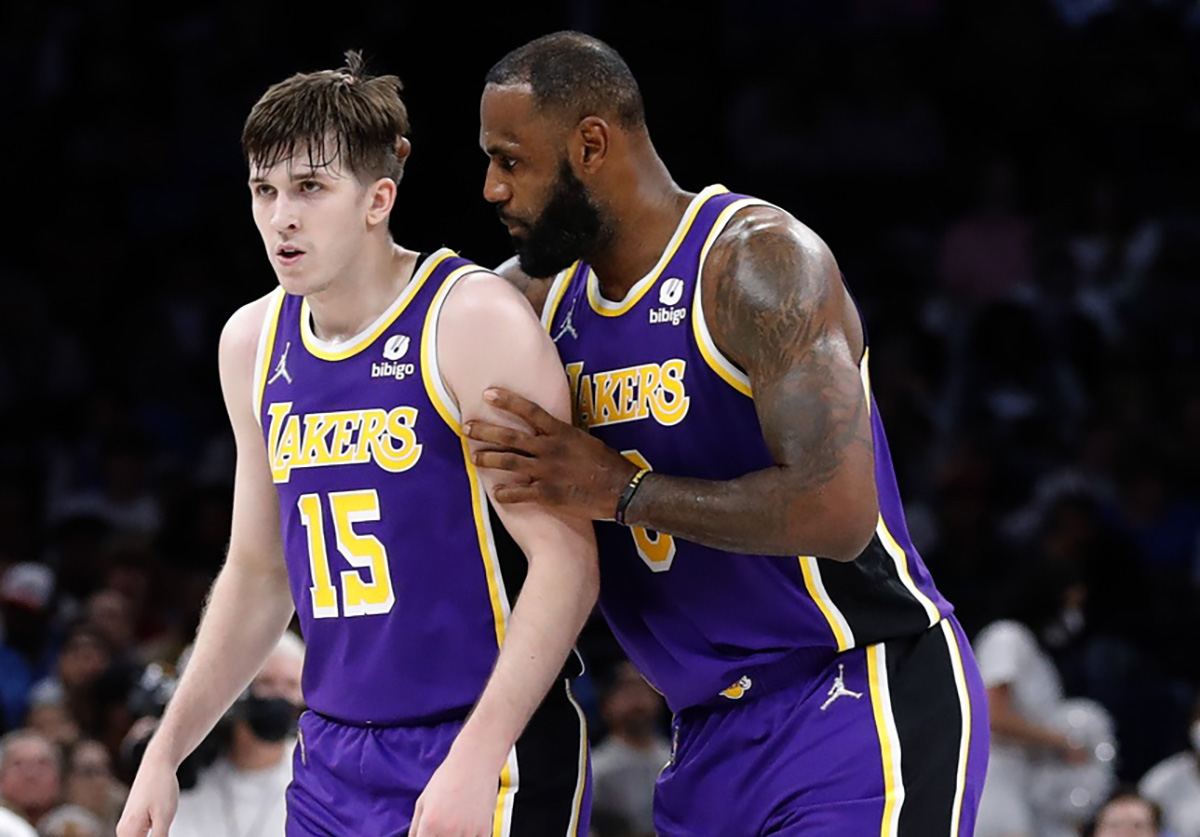

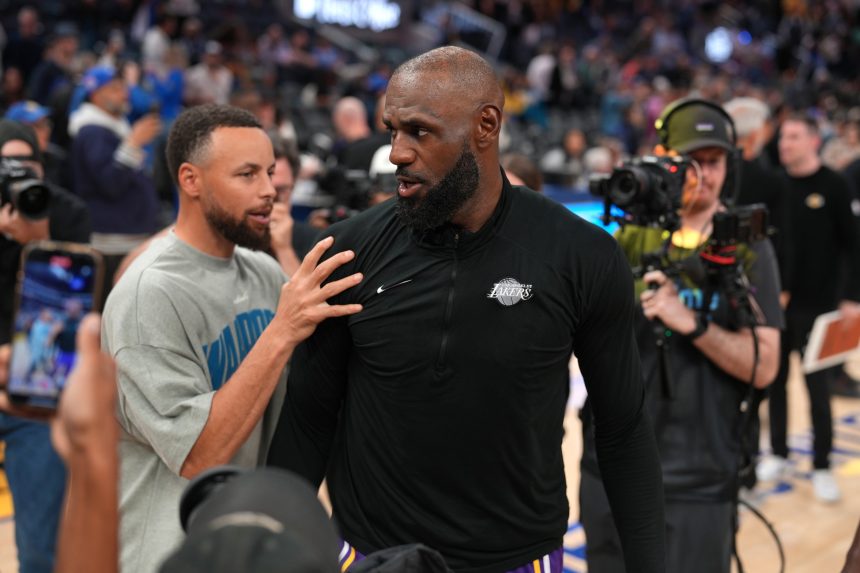
The Los Angeles Lakers may be facing a choice they’ve spent the entire offseason trying to avoid.
According to The Athletic’s Sam Amick, retaining both LeBron James and Austin Reaves is no longer a safe assumption, and the reason comes down to a single, uncomfortable reason: There might not be enough money to keep both stars happy. Appearing on the “Run It Back” podcast, Amick was asked to rate the odds that both James and Reaves are back with the Lakers next season on a scale of 1 to 10.
“Probably a six if we’re talking about both,” Amick said. “The Austin one, I think it’s done. Man, it’s just like it’s hard.”
That assessment alone would be notable. What Amick said next raises the stakes considerably.
What Could Push LeBron Out the Door
Amick laid out a scenario where re-signing Reaves at market value directly threatens the Lakers’ ability to keep James content, even if James wants to stay in Los Angeles.
“I think if Austin gets paid in the kind of way that keeps him in town, then there’s not enough money for LeBron to feel respected, and then I could see him going up the coast and maybe doing the Warriors thing,” Amick said. “So I feel like there’s just not enough money to make all those guys happy with the Lakers.”
That is a direct line from Reaves’ next contract to James potentially leaving Los Angeles. Most reporting on James’ free agency has centered on what number he would accept to stay. Amick’s comments reframe the question entirely: It’s not just about what James wants, it is about whether the Lakers can afford to make him feel valued once Reaves is paid.
Why Reaves’ Deal Changes Everything
Reaves is coming off a season in which he averaged 23.3 points, 4.7 rebounds and 5.5 assists per game, numbers that put him firmly in line for a significant raise. He carries a $20.9 million cap hold heading into free agency, which gives the Lakers roughly $50 million in projected cap space to work with before they would need to exceed the cap using Bird rights to sign him to a market-rate deal.
The problem, according to Amick, is that simply running back the roster with James, Reaves, Rui Hachimura and others does not actually improve the team.
“The Lakers, it’s challenging because they have got to get better,” Amick said. “And if they just re-sign LeBron, re-sign Austin, re-sign Rui, that’s not getting better. That’s maintaining, right? Well, all of their guys are signaling like I will stay if you don’t disrespect me with the number.”
That last line is the crux of the issue. James, Reaves and Hachimura are all reportedly willing to stay, but only at a number that reflects their value. With a limited pool of cap space to distribute across all three, something almost certainly has to give. Reaves’ case for a significant raise is not in question on the merits.
He has developed into the Lakers’ second-leading scorer behind Doncic, and his ability to create his own shot and operate as a secondary ball handler has made him increasingly difficult to replace. The Lakers’ own front office has signaled retention is the priority there, which is part of what makes the broader math so constrained. A bigger Reaves number is not a hypothetical risk to plan around. It increasingly looks like the starting point.
Where the Warriors Fit Into the Equation
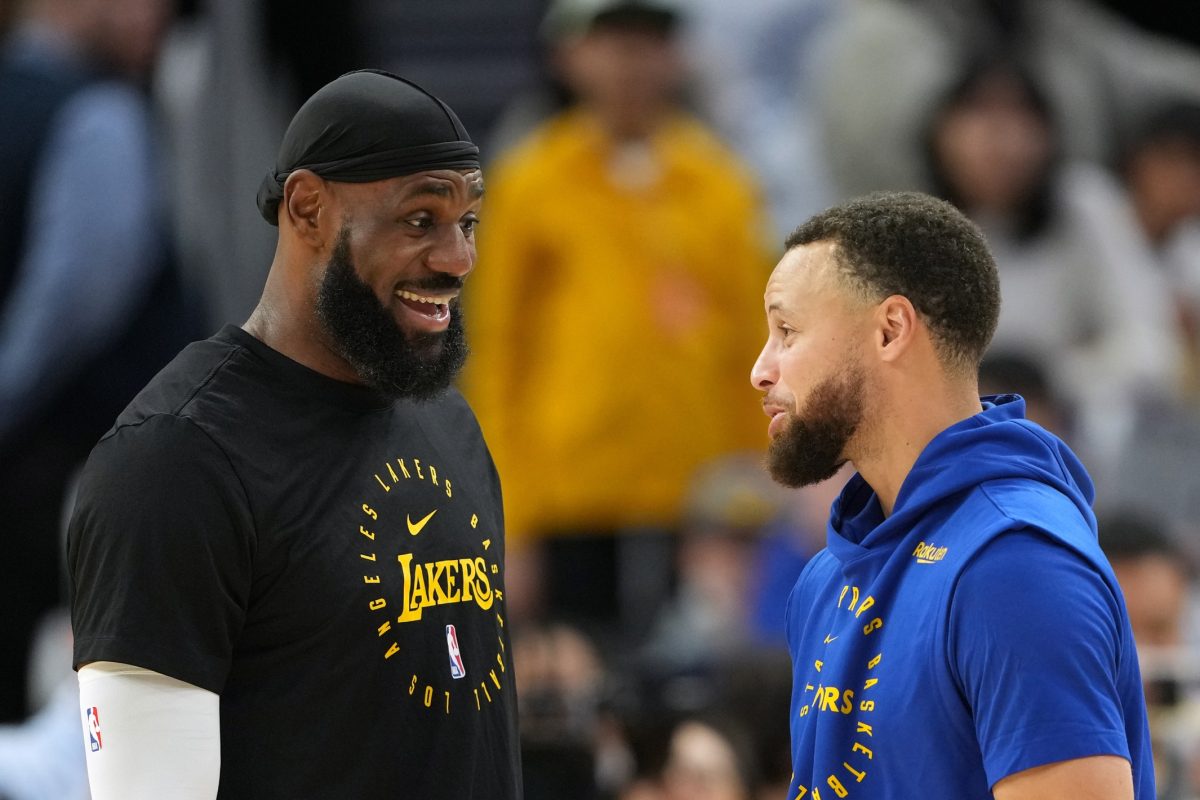
Amick’s comments arrive days after ESPN’s Anthony Slater detailed exactly what Golden State’s pitch to James would look like if the Lakers situation breaks down. According to Slater, the Warriors would clear room for the full $15.1 million non-taxpayer mid-level exception, an offer he described as a “team-friendly, low-risk bargain” for Golden State given the on-court and off-court upside of adding James.
The Warriors could theoretically attach a second-year player option and involve Stephen Curry directly in recruiting James, Slater reported, but Golden State has not pursued that avenue because there has been no indication James is open to it. That detail matters in light of Amick’s comments.
The Warriors’ interest is real but conditional. They are positioned to act if the Lakers situation sours. Amick’s reporting suggests the conditions for that scenario, the Lakers being unable to satisfy both James and Reaves financially, may already be forming.
What the Lakers Are Actually Weighing
The math facing the front office is straightforward to describe and difficult to solve. Los Angeles has roughly $50 million in cap space tied to Reaves’ cap hold before exceeding the cap to re-sign him. James, who earned more than $50 million last season, has been reported elsewhere to be open to a reduced number, but Amick’s framing suggests that number has a floor tied directly to how much the Lakers commit to Reaves.
Add in Hachimura, who also holds Bird rights and has been part of the same retention conversation, and the Lakers are trying to satisfy three players who all believe they have earned a raise, with one shared pool of money to do it. For a team that was swept by the Oklahoma City Thunder in the Western Conference semifinals last season, simply re-signing the same group at higher prices would represent standing still rather than improving around Luka Doncic.
That tension, between paying for continuity and actually upgrading the roster, is what makes Amick’s 6-out-of-10 odds feel less like a confident prediction and more like a genuine coin flip. There is also a timing element working against the Lakers.
Doncic is entering his prime, and the front office has made clear in other reporting that the roster needs immediate upgrades at center and on the wing to take advantage of that window. Every dollar spent retaining the same core at a higher price is a dollar that cannot go toward addressing those needs through free agency or a trade. That is the real cost of a crowded cap sheet, not just whether James, Reaves and Hachimura all return, but what the Lakers give up elsewhere to make it happen.
What to Watch Next
Free agency opens June 30, and neither James nor Reaves can officially sign a new deal with the Lakers before then, even as negotiations continue in the background. How the front office sequences those two contracts, and whether either player is willing to take less than market value to make room for the other, will likely determine whether this becomes a clean retention summer or the first real crack in the Doncic-era roster.
Amick’s comments do not guarantee any specific outcome, and the Lakers remain the favorites to retain James according to most reporting around the league. But the framing matters. This is no longer simply a question of where James wants to play. It is a question of whether the Lakers can structure three separate contracts in a way that leaves everyone, including Doncic, in a better position than they started.
Until that math gets solved, every other storyline this offseason, from the draft to potential trades, sits downstream of these two negotiations.