
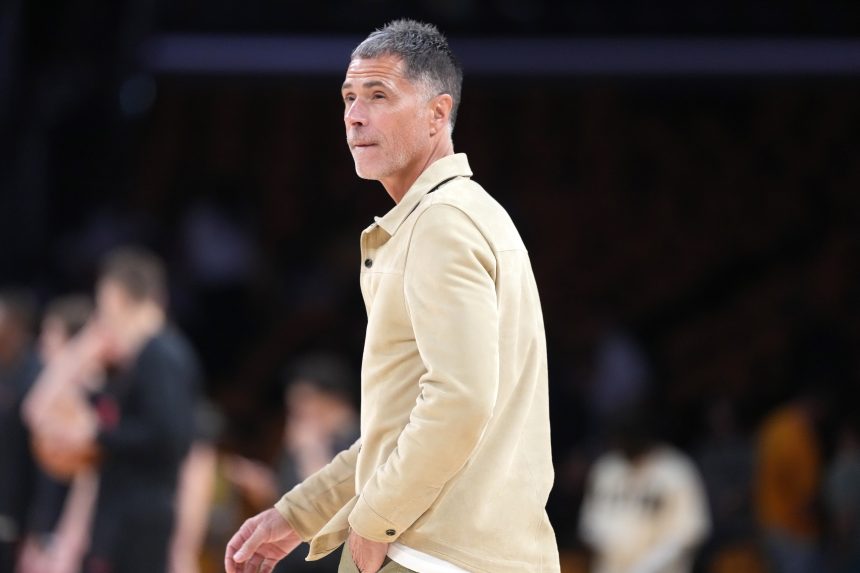
The Lakers have a full roster, a spent cap sheet and two brand-new wings, and none of it has changed the defining habit of Rob Pelinka’s summer.
The Lakers general manager is still working the phones, according to ESPN’s Anthony Slater, and the front office is not treating its offseason as finished business.
Anthony Slater on the Lakers:
"Rob Pelinka keeps calling about Jonathan Kuminga" pic.twitter.com/8IRbAW41s2
— Oh No He Didn't (@ohnohedidnt24) July 23, 2026
“I can tell you that they keep calling Jonathan Kuminga,” Slater said Thursday on ESPN’s “NBA Today.”
Slater framed the front office as unfinished, saying the team is still chasing at least one more addition and acknowledging that the offer on the table has not yet been rich enough to win a commitment.
He then pointed to the one variable neither side controls, tying Kuminga’s market directly to LeBron James’ pending free agency decision and noting that where James lands will shape what kind of money remains available elsewhere.
“Rob Pelinka keeps calling about Jonathan Kuminga,” Slater said.
That is the second time in just over two weeks that Slater has described Los Angeles as the most persistent team in this chase, and the circumstances around the persistence are what make Thursday’s comments newsworthy. The Lakers did not pause their offseason while they waited on Kuminga. They kept building, filled the position anyway and are still calling.
A pursuit that survived a full roster
The timeline explains why this stands out. After the Atlanta Hawks declined Kuminga’s $24.3 million team option on June 29, the forward met virtually the next day with Pelinka and head coach JJ Redick, who sold him on a vision of heavy minutes on the wing next to Luka Doncic.
The Lakers then spent nearly all of their remaining financial flexibility in one burst, locking in commitments to Walker Kessler, Sandro Mamukelashvili, Quentin Grimes and Collin Sexton before the first week of free agency was over.
What followed would normally read as a team moving on. Los Angeles added Ziaire Williams and Matisse Thybulle on modest one-year deals, two wings who occupy the same positional real estate Kuminga would. Signing replacements at a target’s position is usually how a front office signals the end of a negotiation rather than the continuation of one.
Instead, Pelinka has stayed in regular contact with Kuminga’s agent, Aaron Turner, nudging the offer upward while stressing a probable starting job and a central place in the roster being built around Doncic. Multiple people inside the organization, players included, have reached out to recruit him directly.
Kuminga’s camp has held out anyway, betting that better money surfaces as the rest of the offseason sorts itself out. The forward has already turned down a Lakers offer in the range of two years and $20 million, which helps explain the stalemate: the interest is mutual, and the number is not.
None of this is new affection. Kuminga has been the Lakers’ top wing choice since early July, a preference that dates to his Golden State years. What is new is the durability of the pursuit, which has now outlasted a spending spree, two positional overlap signings and a filled-out roster.
The LeBron domino is the real lever
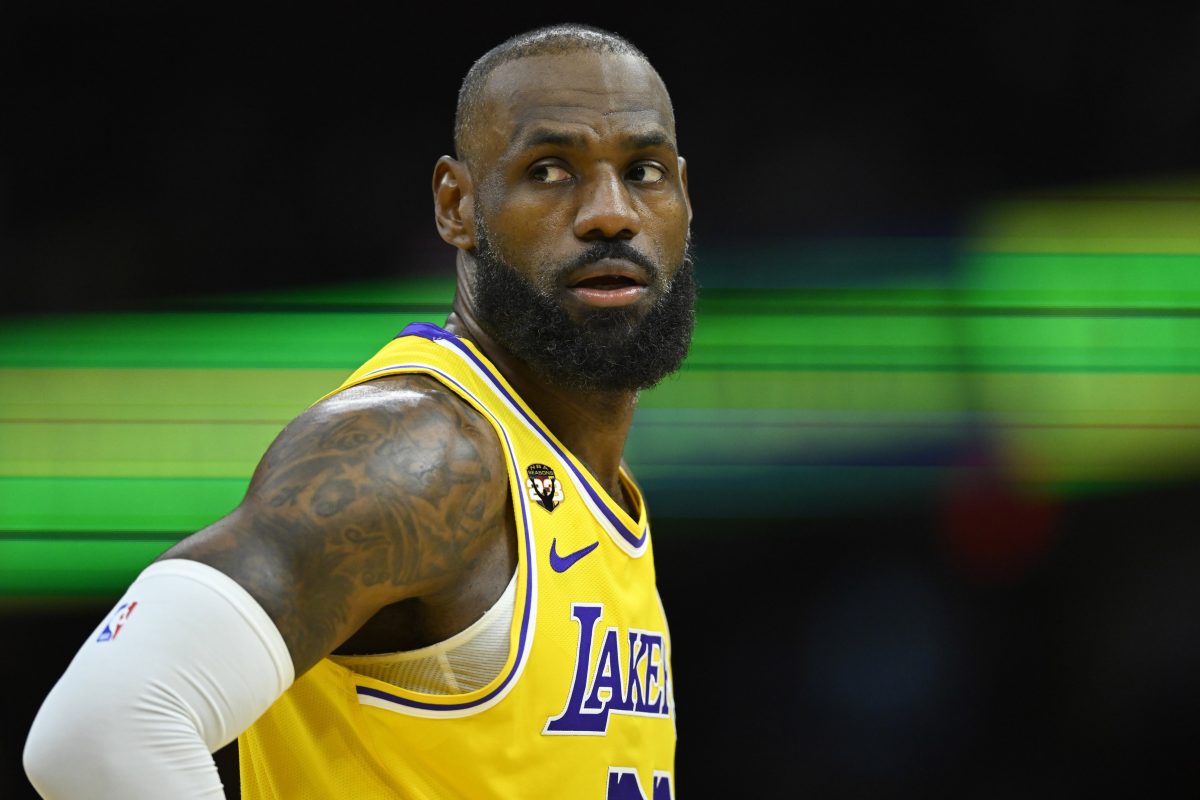
Slater’s most important point Thursday was not that the Lakers are calling. It was why the call might eventually get answered. He described James’ decision as the domino that determines what Kuminga may or may not be able to get, and the mechanics behind that are straightforward.
The Cleveland Cavaliers are the only other team currently connected to Kuminga with real intent, and their interest has a personal foundation: Kuminga has a strong comfort level with Cavaliers coach Kenny Atkinson, who worked with him as a Golden State assistant during his first three NBA seasons.
But Cleveland’s front office remains consumed by its own recruitment of James, and Slater reported earlier this month that the LeBron chase is precisely what has left Los Angeles as Kuminga’s most aggressive suitor while the market waits.
That creates two clean branches. If James chooses Cleveland, the Cavaliers’ flexibility and attention get spent on him, and Kuminga’s best alternative to the Lakers effectively closes.
If James goes elsewhere, Cleveland re-enters the picture with genuine motivation, and Kuminga’s camp — which has been holding out for a stronger deal all month — finally gets the competing bid it has been waiting for. Either way, the stalemate that has defined July resolves only after the biggest free agent on the board moves, which is likely why Pelinka’s approach has been persistence rather than ultimatum.
What Pelinka can actually put on the table
The constraint on all of this is arithmetic. The Lakers are hard-capped at the first apron as a result of the Kessler sign-and-trade, and with the roster full and the cap room gone, the money left over is minimum-level unless salary goes out the door first.
That is where the sign-and-trade machinery comes back in. Atlanta has signaled openness to facilitating a deal that would let Kuminga keep his Bird rights and land the contract he wants, but Hawks general manager Onsi Saleh would need to be compensated for playing middleman.
The Lakers’ outgoing options start with Jarred Vanderbilt, Dalton Knecht and Jaden Hardy, and any package built around those contracts would likely require sweetening from a thin asset cupboard of three second-round picks and a 2032 first-round pick swap. The framework has been mapped before, and the sticking points have not moved: Atlanta wants the swap, and Los Angeles has resisted paying it.
There is also a quieter branch in which none of this happens. ESPN’s reporting left open the possibility of Kuminga returning to Atlanta on a friendlier structure than the option it declined, though that reunion is not being actively discussed, and the Sacramento Kings have checked in without the financial means to do more than ask.
What comes next
For a fanbase that has spent a month refreshing feeds for a LeBron decision that refuses to arrive, the takeaway from Thursday is that the front office is not idling alongside them.
The Lakers do not consider their offseason complete and see the wing rotation as the soft spot in an otherwise remade roster, and the behavior matches the assessment: The calls have continued through every signing that should have ended them.
The resolution timeline belongs to James, not Pelinka. But the Lakers have positioned themselves as the suitor still in the room whenever the music stops, and in a negotiation where the alternative bidder is distracted and the clock favors whoever can wait, that may be the entire strategy.
The roster is full, the money is tight and the general manager keeps dialing anyway. That is not how teams behave when they are done.