
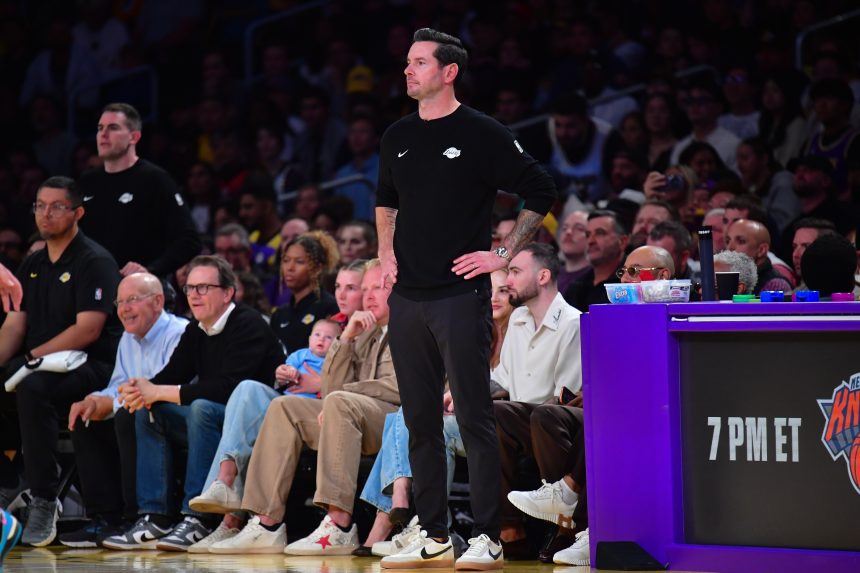
JJ Redick believes the Los Angeles Lakers have assembled a roster that makes more sense together than either of the previous two groups he coached. His explanation centers on Walker Kessler’s arrival, clearer responsibilities and a competition for minutes that will require players to deliver on those assignments.
Speaking at Thursday’s preseason press conference, Redick said this was the first time in his three seasons with the Lakers that he had felt that way about the roster.
“I think we’ve always tried to give our players clearly defined roles, and I think this group is probably the first time in my three years here that I feel like the pieces actually fit together, and so those roles probably get even more crystallized,” Redick said.
The assessment offers a window into how Redick intends to organize the team around Luka Doncic and Austin Reaves. Instead of treating depth as a reason to promise everyone playing time, he described it as a way to hold players to specific standards.
Why Walker Kessler matters to the Lakers’ new approach
Rob Pelinka’s explanation of the offseason helps put Redick’s comments in context. The front office wanted to keep Reaves, secure a long-term answer at center and surround its core with younger players capable of handling the ball, passing and shooting.
“We wanted to retain Austin Reaves,” Pelinka said. “That was a really big thing for us. We wanted to find a way to acquire a franchise center, and then we wanted to develop a roster of JJ Redick dribble-pass-shoot players that were younger and add depth to our roster.”
That plan preserves two offensive creators while changing the jobs around them. A center who can finish possessions near the basket and protect the other end gives the guards a different kind of support than another player who needs to initiate the offense.
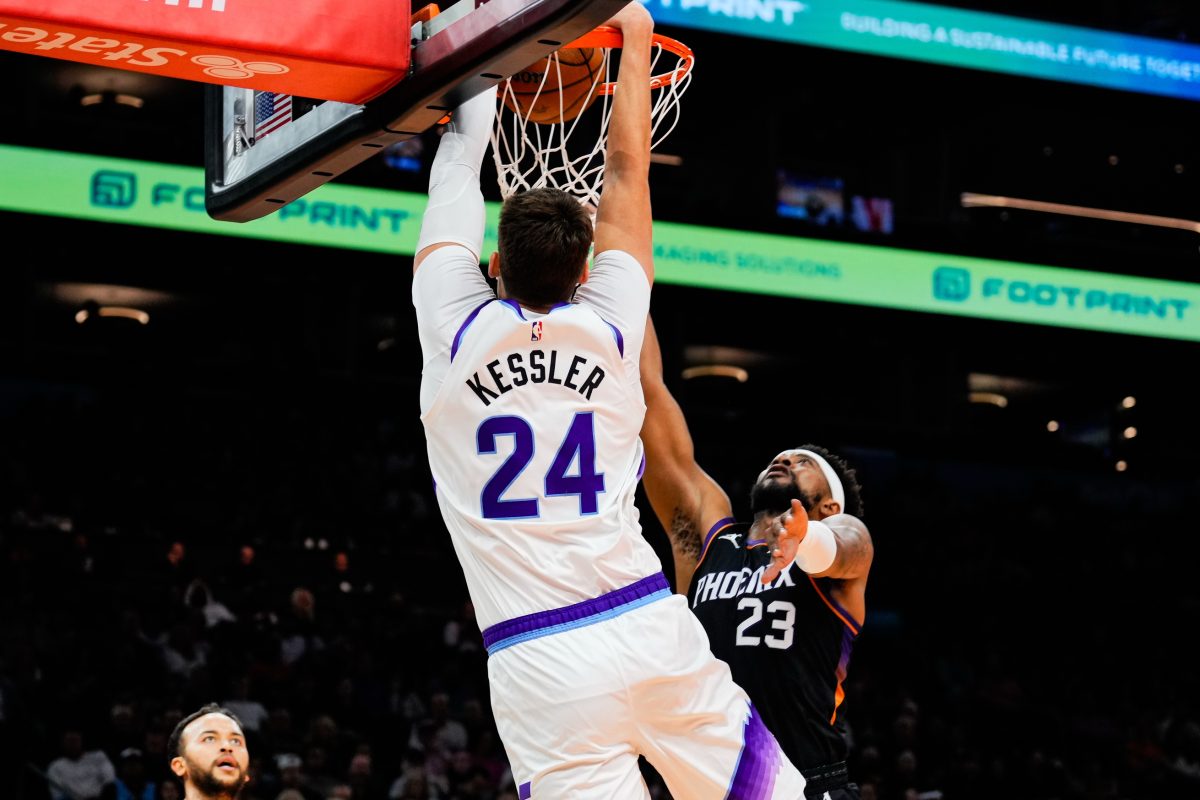
Kessler averaged 12.2 rebounds and 2.4 blocks per game in 2024-25, before his injury-shortened 2025-26 season.
Those numbers establish a record of rebounding and shot blocking. Turning those skills into better team defense will also depend on how the Lakers position him and how much help their perimeter players require.
Redick wants Kessler closer to the basket after the Lakers relied heavily on switching. Redick identified interior defense as a weakness when discussing his new center.
“I think Walker is a perfect fit for Luka and AR, just in terms of his rim protection and really being an anchor for our defense,” Redick said. “That’s an area we’ve struggled with.”
Keeping Kessler near the rim would give Los Angeles a back line for possessions when the first defender gets beaten.
It would also put responsibility on the wings to pursue shooters and recover through screens, rather than assuming the center will take over every matchup.
Clear roles will determine who plays
Redick’s message to his wings was direct: Their minutes will depend on whether they meet the requirements of their roles. Redick said those conversations had already begun with players that week.
For a player who fails to meet those expectations, Redick said, “then you’re not going to play.”
That makes the competition more specific than a contest to score the most points during camp. For a defensive option such as Matisse Thybulle, the question is how effectively his contributions fit into possessions involving the team’s primary creators and center.
As explored in Thybulle’s path to a closing role, disrupting an opponent is only part of the assignment. He also has to give the Lakers useful choices when his defender leaves him to help elsewhere.
A timely cut, a quick pass or taking an available shot can preserve an advantage that Doncic or Reaves creates. The value of those decisions may be less obvious than a scoring total, but they help explain why role clarity matters.
The roster itself may still change. Pelinka has left open the possibility of a two-for-one trade, adding another layer to the evaluations ahead.
Redick also cautioned Thursday that constructing the team around Doncic would take more than a single offseason.
His confidence in the current group therefore comes with an unfinished task: finding combinations that carry these complementary responsibilities into games.
Camp will test that distinction. Having a clearer job for each player gives Redick a starting point; earning his trust will require players to perform those jobs together.