
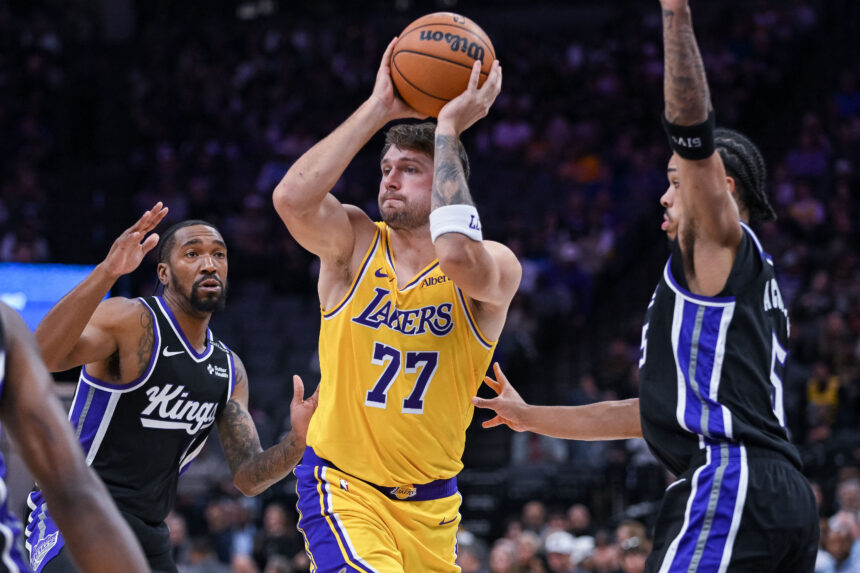
JJ Redick is trying to make Luka Doncic’s job easier before the Lakers even get into their offense.
Following Wednesday’s win over the Sacramento Kings, Redick explained that Los Angeles is using other players to advance the ball and screens to free Doncic before he receives it.
The intent is to spare him some of the work that comes with repeatedly facing pressure on the way up the court.
“He’s doing a great job of playing off the ball,” Redick said.
JJ Redick talks to the media about Luka's hot start to the season 🔥🔥🔥#LakeShow pic.twitter.com/UkL2UGifOn
— Spectrum SportsNet (@SpectrumSN) November 5, 2026
That approach addresses a different part of Doncic’s workload than his shot attempts or playing time. Another Laker can start a possession, move the defense and then deliver the ball to Doncic in position to attack.
He can still make the decisive play without having to organize every step leading up to it.
It also puts responsibility on the players around him. A possession that starts with somebody else has to create an advantage, rather than simply delay the moment when Doncic receives the ball and has to solve the same defensive problem.
Why sharing the ball-handling matters for the Lakers
Pressure has already been an issue for this team. After the Lakers’ October loss to Golden State, Dan Woike reported that opposing players viewed trapping and pressuring Los Angeles as an effective approach.
That gives Redick’s explanation practical significance beyond managing his star’s energy. If opponents can determine where an offense begins, they can position their defenders accordingly.
A team that always waits for the same player to cross half court with the ball gives the defense a familiar starting point. Using a different ball handler changes that picture.
Doncic’s defender has to account for his movement away from the ball, while the defender guarding the player advancing it has a separate job. A screen can add another decision before Doncic begins his dribble.
There are several possible outcomes. A defender trailing around a screen can leave room for a catch and immediate attack. A
switch can create a matchup the offense wants. Aggressive denial can open a cut toward the basket.
None guarantees a good shot, but each gives the Lakers a way to begin without asking Doncic to create everything from a stationary position.
The tradeoff is that the supporting players must make clean decisions. Moving the ball out of Doncic’s hands does little good if the next player struggles to complete the entry pass or lets the offense stall.
Redick’s plan requires both purposeful movement and dependable ball handling.
The Lakers were working on this before the season
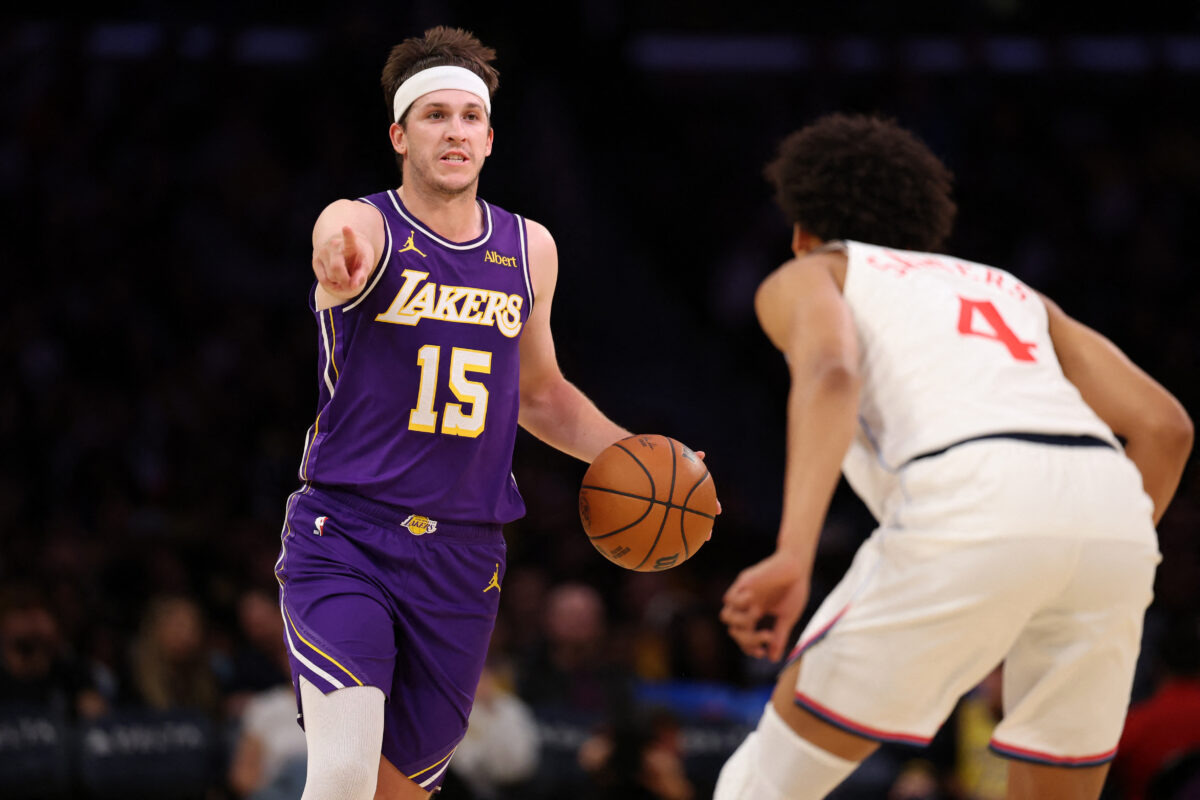
The idea predates Wednesday’s game. An Oct. 14 film breakdown by Silver Screen and Roll’s Raj Chipalu documented preseason possessions designed to involve Doncic after another teammate initiated the action.
One example began with a pass to Austin Reaves and a screen from Kevon Looney that helped Doncic receive the ball on the move. The possession eventually became a pick-and-roll, showing how an off-ball start can lead back to a familiar action.
Another featured a handoff from Jake LaRavia. When two defenders committed to Doncic, he found LaRavia cutting toward the basket. Chipalu also highlighted a possession in which Sandro Mamukelashvili advanced the ball and connected with Doncic on a backdoor cut.
Those examples help explain the range of options available. Doncic can receive the ball to score, draw extra attention and pass, or punish a defender who overplays the catch. His teammates participate in creating the opening instead of waiting for him to generate it alone.
Wednesday’s comments therefore describe how Redick is using an existing part of the offense. They do not establish that the Lakers installed a new system after their recent problems against pressure.
Redick wants other Lakers attacking, too
In the same postgame session, Redick emphasized getting into the lane. Quentin Grimes, Collin Sexton, Reaves and Doncic were players he identified that he wants attacking the defense off the dribble.
“We’re a more dynamic team when we can touch the paint,” Redick said.
That instruction gives the other ball-handlers a purpose beyond delivering the ball to Doncic. A drive can pull a help defender away from a teammate and force the defense to recover.
The next pass then reaches a player facing a moving defense rather than five opponents already set in their assignments. Shooting decisions matter at the end of that sequence.
Redick recently warned that players could lose minutes for declining open 3-point opportunities, citing missed chances to shoot following the Toronto game.
The two messages fit together: Attack when there is a lane, and take the available shot when the defense gives one up.
Passing an open opportunity back to Doncic can undo the benefit of the movement that created it, particularly if the defense has time to recover.
Luka Doncic’s scoring remains central
Doncic’s recent production:
| Opponent | Points |
|---|---|
| Toronto | 45 |
| Miami | 42 |
| Sacramento | 40 |
Those totals show why reducing the work of initiating possessions should not be confused with reducing his importance. The Lakers still need Doncic to finish possessions and make difficult reads; they are looking for ways to distribute the work surrounding those moments.
The scoring alone cannot establish how much this approach has helped. It would take possession-level tracking to separate the effects of off-ball actions from shot-making, matchups and other factors.
What Redick has explained is the intended benefit: teammates can help get Doncic into the action, leaving him to attack the defense from there.