
Ziaire Williams turned 25 on Saturday, and the Lakers marked it with a birthday post that doubled as a reminder of how quickly he has moved from afterthought signing to training-camp storyline. Five days earlier, asked by Ryan Ward of Lakers On SI whether Jonathan Kuminga’s decision to sign with Minnesota had opened a real path for him to start, Williams didn’t hedge.
Happy Birthday, Ziaire 🎉 pic.twitter.com/rRBEci7rqg
— Los Angeles Lakers (@Lakers) September 12, 2026
“Yeah, I do, and I mean that’s the GM’s job, right to put the best pieces together to try to win a championship,” Williams said. “I don’t think it’s altered whether or not Kuminga was here. I wish him the best of luck in Minnesota, but as a team, we’re focused on the guys we have and making a deep playoff run and winning an NBA championship and I think we have the tools to do so.”
That answer has been recirculating all week, and the argument around it has hardened into a consensus: With Luka Doncic, Austin Reaves, Quentin Grimes and Walker Kessler widely assumed to hold four spots, Williams is the trendy pick for the fifth. What the consensus skips is the part that actually decides it.
The Lakers didn’t sign him to be a hopeful. They handed him a job description, and whether he starts on opening night comes down to three things he has to show between now and then.
The job description is already written
Williams’ role was defined before he played a minute. In his first conversations with JJ Redick and Rob Pelinka, he told Benjamin Royer of the Southern California News Group, the ask was specific.
“First and foremost, being a main defender, point-of-attack defender,” Williams said.
That is not a throwaway line on this roster. The Lakers let Marcus Smart leave for Houston in free agency, moved Gabe Vincent at last season’s trade deadline and built a backcourt around two players, Doncic and Reaves, whose offensive load has never been in question and whose ability to hold up at the point of attack has.
When Jovan Buha of The Athletic released a new Lakers mailbag on Friday, one of the questions on his rundown was, “Why is everyone so low on the defense?”
That is the environment Williams is walking into. The roster’s most obvious hole is the one he was hired to fill.
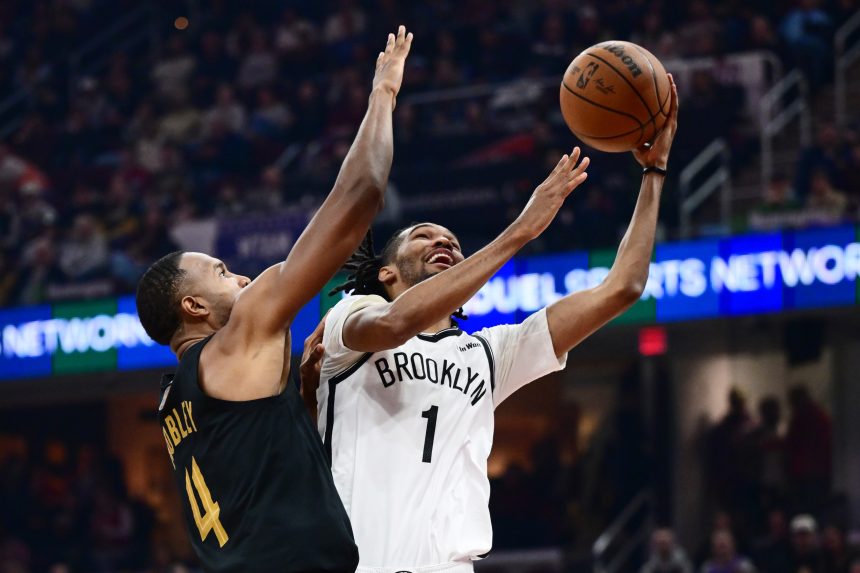
The numbers give him a foundation. Williams averaged 1.4 steals in 22.9 minutes per game last season with Brooklyn, which works out to roughly 2.2 per 36 minutes. He had a six-steal game against Golden State on March 25 and a five-steal night against Houston on New Year’s Day.
At 6-foot-9 with the length to switch across three positions, the profile fits the ask. The question is whether he can do it every night against the players Redick would actually assign him.
1. The shot has to hold
The defensive assignment gets him on the floor. The shot keeps him there next to Doncic. Williams is a career 32.2 percent three-point shooter, and last season’s 34.3 percent was the best mark of his five years.
That is the number that separates a starter from a defensive specialist off the bench, because the fifth Laker will spend most possessions parked in a corner while Doncic and Reaves run the offense.
Williams knows it. Asked what he worked on most this summer, he told Ward about getting stronger first, then ran through the offensive checklist: simpler reads, more efficient shooting, finishing at the rim and better decisions attacking closeouts.
He described his fit to Royer in similar terms, saying his job around the two primary ball handlers would be to shoot, cut and run in transition. The encouraging evidence is in his starts.
Williams started 13 games for the Nets last season and, going game by game through that log, averaged 13.1 points per game across those starts while making 23 threes, roughly 1.8 per night. Over one five-game stretch as a starter from March 20 through March 27 he scored 17, 18, 16, 19 and 16 points, the last of those coming against the Lakers at Crypto.com Arena.
He also scored 17 points on 7-of-11 shooting against Los Angeles on Feb. 3. Two of his better games last season came against the team that then signed him, which is either coincidence or exactly the kind of tape a front office remembers.
The threshold is not complicated. If Williams shoots in the mid-30s from three on four or five attempts per game, Redick can keep him on the floor in a lineup that already has enough scoring.
If he slips back toward his career mark, Jake LaRavia, who played all 82 games last season and has a full year in Redick’s system, becomes the easier call.
2. Stay on the floor
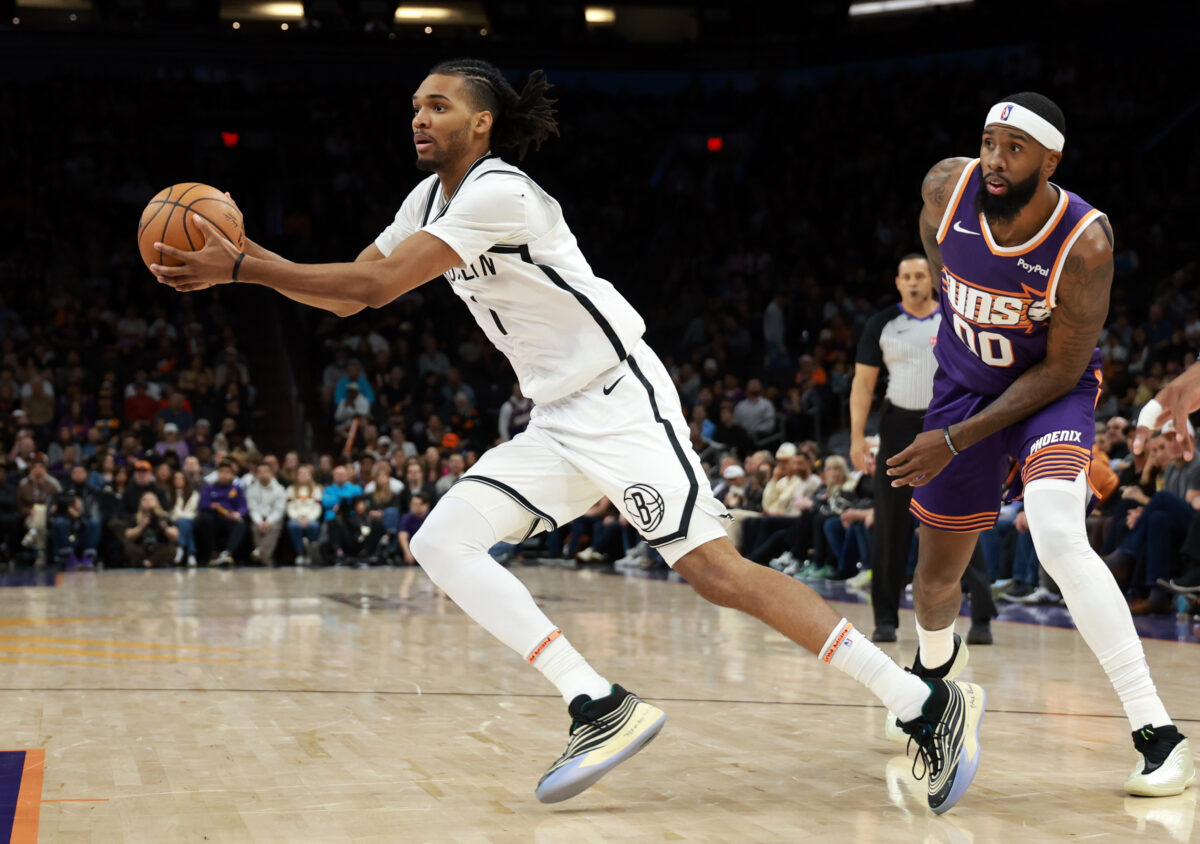
Williams has never played more than 63 games in a season. He missed 26 games last season, 19 the year before and 31, 45 and 20 in his three seasons in Memphis, and he did not appear in a game for the Nets after April 3.
For a player whose entire pitch is being the point-of-attack defender every night, the availability history is the loudest counterargument. He has addressed it the only way a player can in September, which is physically.
Williams told Royer he was up to around 215 pounds after a summer built around strength work, up from the 185 he was listed at in Brooklyn, and his first answer to Ward about his offseason was about durability before it was about skill.
The Lakers can’t verify any of that until the games count. But a 30-pound frame change on a wing whose job is to absorb screens and hold position against bigger forwards is the kind of detail that tends to show up in preseason before it shows up in a box score.
3. Beat the incumbents in Redick’s system
This is where the case gets honest. Williams is competing against players who already know the playbook. LaRavia started when the Lakers were shorthanded last season and never missed a game.
Jarred Vanderbilt has been in the building since 2023, Matisse Thybulle was brought in for his defense and Sandro Mamukelashvili gives Redick a floor-spacing frontcourt look Williams can’t replicate.
What Williams is not fighting for is his roster spot, and that distinction matters. The Lakers are carrying 16 standard contracts and have to shed one before the regular season, and that conversation has centered on Dalton Knecht, not on a wing the front office signed in July with a defined role.
Williams is on a one-year deal after Brooklyn declined his $6.25 million team option, which means he plays this season for his next contract.
Nothing about that arrangement guarantees him a start. It does mean the Lakers have every reason to find out early what they have.
What the Lakers can actually decide in camp
The national read on this roster all summer was that the Lakers built a high floor with a capped ceiling, and Norman Powell’s “most overrated” jab found an audience for the same reason. The fifth starter doesn’t change that verdict by himself.
What he changes is whether the Doncic-Reaves backcourt can get through a first quarter defensively without Redick reaching for a three-guard look or asking Kessler to cover for everyone. That is why this camp battle is worth watching in a way roster-spot fights usually aren’t.
Williams’ claim isn’t that he’s the most talented option, and he was careful with Ward to frame the decision as the front office’s. His claim is that the job Redick and Pelinka described is a job he already does.
Preseason is where that gets tested, first against LaRavia for the opening-night nod and then, if he wins it, against the opposing point of attack every night.
The Lakers will be looking for three things before the games count: whether the shot holds at 34 percent or better, whether the added weight keeps him on the floor, and whether the point-of-attack defense they asked for shows up against starters rather than second units.
Williams said he believes there is a real opportunity in front of him. The people who decide that have already told him what it looks like.