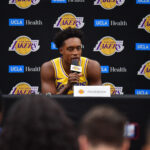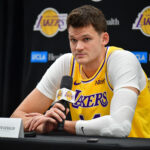

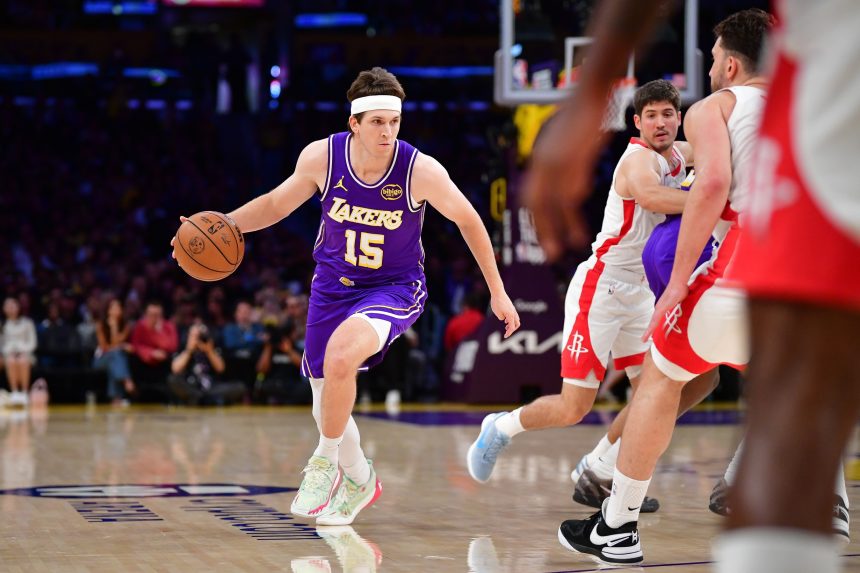
Austin Reaves went undrafted in 2021 and signed a two-way deal with the Los Angeles Lakers that August. Five years and one calculated contract gamble later, the payoff arrived in full.
Reaves intends to sign a four-year, $185 million maximum contract to remain with the Lakers, with a player option for the 2029-30 season, sources told ESPN’s Shams Charania. The agreement is the biggest contract in NBA history for an undrafted player, and it locks one half of the Lakers’ backcourt in place alongside Luka Doncic for the foreseeable future.
It also set off the loudest argument of the Lakers’ offseason. The reaction split immediately between those who saw a deserved payday for a homegrown star and those who balked at a maximum salary going to a guard who has never made an All-Star team. The number is real, and so is the debate. What it is not, according to the people who model these things for a living, is a cap-sheet disaster.
The deal, in full
Reaves declined his $14.9 million player option for next season to pave the way for the new contract. The structure is notable in two directions. He secured a full maximum on average annual value, yet he agreed to four years rather than the five-year deal worth up to $241 million that only the Lakers could have offered, leaving the fifth season and a chunk of guaranteed money on the table in exchange for reaching the open market a year sooner.
The Lakers moved quickly to prevent that open market from ever developing. Reaves was expected to draw maximum-level interest from rival teams, including the Detroit Pistons, so Los Angeles stepped up on Wednesday to lock in its homegrown guard rather than risk a bidding war. The Lakers and Reaves’ representatives, Aaron Reilly and Reggie Berry of AMR Agency, worked through discussions over the previous 10 days, the window in which teams were permitted to negotiate with their own free agents ahead of the formal opening.
Rob Pelinka had signaled this outcome at the team’s exit interviews.
“He started his journey here as a Laker and has made it very clear to us that he wants his journey to continue as a Laker,” the Lakers president of basketball operations said. “We want his odyssey to continue to unfold in the Purple and Gold.”
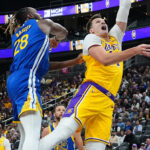
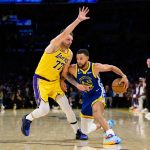
The production backs the price. Reaves averaged a career-high 23.3 points on 49.0 percent shooting, along with 5.5 assists, 4.7 rebounds and 1.1 steals per game last season, emerging as Doncic’s most reliable offensive partner. He appeared in a career-low 51 games after calf and oblique injuries, the latter of which cost him the start of the first-round series against the Houston Rockets, then averaged 20.0 points and 5.8 assists per game across six playoff games before Los Angeles fell in the second round to the Oklahoma City Thunder.
Why $185 million does not break the Lakers’ cap
The sticker price suggests a team boxing itself in. The mechanics say the opposite, and the distinction comes down to the difference between an agreement and an official signing.
Until Reaves formally signs, he counts against the books at a cap hold of roughly $20.9 million rather than his $41.3 million first-year salary. That lets the Lakers operate as a cap-space team first, spend their available room on outside additions, and then circle back to re-sign Reaves over the cap using his Bird rights. He will sign last, after the room is used.
The league’s most-cited cap analysts lined up behind that reading, as compiled by Heavy. ESPN front office insider Bobby Marks said the agreement has no impact on the Lakers’ flexibility this summer. Yossi Gozlan of The Third Apron projected Los Angeles at roughly $48 million in cap space even with the Deandre Ayton and Marcus Smart player options factored in, plus access to the $9.4 million room mid-level exception once that space is spent. Spotrac’s Keith Smith noted the contract starts at the max and climbs with 8 percent raises, which is why it could not be structured as a declining deal.
In practical terms, the Lakers preserved their summer rather than spending it. The Reaves deal was the rare max agreement that changed almost nothing about what the front office can still do next.
What the flexibility is actually for
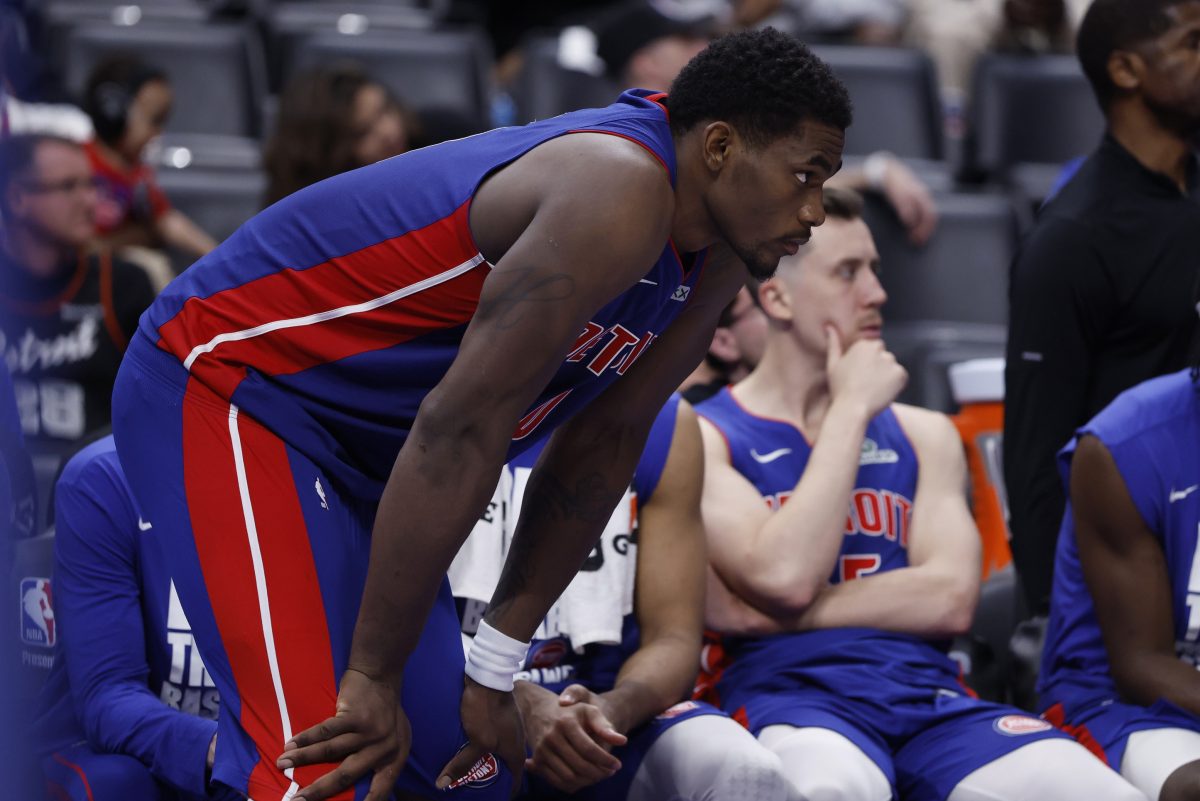
The obvious use is the position the Lakers have been chasing all offseason. Doncic has been direct about his priority, with a source telling ESPN that “Luka’s first and foremost desire is an A-list center,” and the draft did not deliver one. Los Angeles spent its lone pick trading up one spot to take Baylor wing Cameron Carr, a 6-foot-5 3-and-D prospect rather than a big man.
That pushes the center search squarely onto free agency and the trade market. Ayton, last season’s starter, holds an $8.1 million player option he must decide on by June 29, and team sources have pointed toward wanting a more traditional, more athletic center to pair with Doncic.
ESPN has reported the Lakers did their due diligence on restricted free agents Jalen Duren of the Pistons and Walker Kessler of the Utah Jazz, either of whom would fit the A-list directive, with New York’s Mitchell Robinson among the unrestricted options. The catch with any restricted free agent is the 48-hour match window, which can freeze the Lakers’ money while the player’s current team decides.
If the open market does not produce a center, the trade route remains. Having used their 2026 first-round pick on Carr, the Lakers still hold their 2031 and 2033 first-rounders as trade capital and can attach salary such as Jarred Vanderbilt’s $12.4 million, or Ayton’s deal if he opts in, to bring one back. The $48 million in projected room is the engine behind all of it.
And then there is LeBron James
The Reaves agreement sharpens, rather than settles, the franchise’s other defining question. James is an unrestricted free agent and has not announced whether he will play a 24th season, and the Lakers’ cap path now runs through his decision.
If Los Angeles operates as a cap-space team, the cleanest route to that roughly $48 million involves renouncing James’ Bird rights, then attempting to bring him back afterward on the $9.4 million room exception. ESPN has reported the Lakers could instead beat a rival offer with a deal in the $20 million to $30 million range while still re-signing Reaves and filling out the roster, but every dollar committed to James is a dollar subtracted from the center pursuit. The order of operations this summer matters as much as the targets.
What Lakers fans are saying
The reaction has been loud and split. Supporters framed the contract as earned, celebrating a player who went undrafted in 2021 and climbed to the richest deal ever handed to an undrafted player, and many called the chemistry with Doncic reason enough on its own.
The pushback centers on two points. Some question whether Reaves belongs in the same financial bracket as traditional max stars, and others worried about the defense of a Doncic-Reaves starting backcourt against elite playoff guards. Once the cap analysts weighed in, a third thread emerged: relief that the deal did not actually drain the Lakers’ flexibility, and impatience to see that flexibility turned into the center Doncic keeps requesting.
For two seasons the Lakers told Doncic to wait for the “summer of ’26.” It is here, and the first major move is done. Reaves is staying, the backcourt is set, and the cap room survived intact. The harder questions, at center and with James, are the ones the next stretch will answer.